


Views: 0 Author: Site Editor Publish Time: 2025-06-16 Origin: Site


In the fast-paced world of textile and garment manufacturing, cutting fabric efficiently, precisely, and reliably is one of the most important steps in the production line. While design and sewing are often emphasized, it is the cutting process that lays the foundation for the quality and efficiency of the final product. For factories that deal with high production volumes, choosing the right industrial fabric cutting machine is a decision that can significantly affect output, cost, and quality.
With a wide variety of machines available—each designed for specific materials, production scales, and technical requirements—it is essential to make an informed choice. In this article, we’ll explore the different types of industrial fabric cutting machines, the key factors to consider when purchasing, and how the right investment can boost your factory’s performance and competitiveness.
Fabric cutting is more than just slicing through material. It is a precision-based process that directly impacts fabric utilization, garment fit, seam alignment, and even labor efficiency in downstream operations. Mistakes at this stage can lead to material wastage, costly rework, or inconsistencies in the finished product.
In an industrial setting, where thousands of pieces must be cut daily with minimal errors, manual cutting methods are no longer sufficient. Industrial fabric cutting machines offer speed, consistency, and accuracy, reducing the chances of human error and helping factories meet tight deadlines and quality standards.
Understanding the types of machines available is the first step toward making the right choice for your factory.
Straight knife machines are among the most common cutting tools used in factories. They consist of a vertically mounted blade that moves rapidly up and down while being guided manually or semi-automatically through layers of fabric.
Advantages:
Ideal for cutting multiple layers
Versatile and easy to operate
Affordable for small to medium production
Limitations:
Less precise for complex shapes
Can cause fraying on delicate fabrics
Manual handling may reduce consistency
Round knife machines feature a circular blade that rotates as it moves through the fabric. They are used for light to medium materials and are typically employed in cutting curved patterns.
Advantages:
Smooth cuts on curves
Better visibility for the operator
More compact and lightweight than straight knives
Limitations:
Limited to small stacks of fabric
Less effective on thick or stiff materials
These machines use a continuous loop blade, similar to a bandsaw. The fabric is fed into the blade, making them suitable for cutting curves, notches, and complex patterns with greater control.
Advantages:
High accuracy
Ideal for intricate designs
Safer to operate with fixed blades
Limitations:
Higher initial cost
Takes more space and maintenance
Die cutting involves pressing a pre-formed shape (die) into layers of fabric using hydraulic pressure. It is ideal for repetitive shapes like patches, pockets, or small garment parts.
Advantages:
Very fast and efficient for mass production
Consistent shapes
Minimal waste
Limitations:
Requires separate dies for each shape
Less flexibility in changing patterns
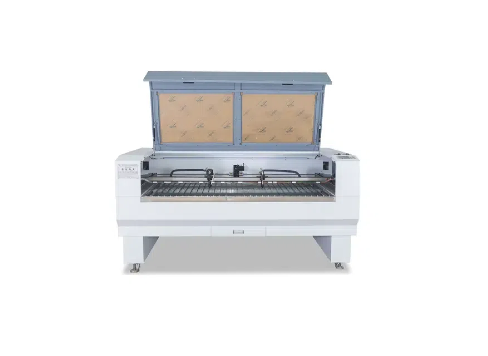
Laser cutters use concentrated light beams to cut or engrave fabric with high precision. They are ideal for synthetic materials that melt slightly at the edges, sealing the cut line to prevent fraying.
Advantages:
Extreme precision
No contact with the material (reduces wear and tear)
Can cut, engrave, and perforate in one go
Limitations:
High energy consumption
Requires ventilation for fumes
Expensive initial investment
These machines are fully automated systems capable of cutting through dozens or even hundreds of fabric layers at once. They use knife, laser, or ultrasonic technology and are often integrated with CAD systems for digital pattern input.
Advantages:
Ideal for high-volume factories
Significantly reduces labor needs
Ultra-fast cutting with minimal errors
Limitations:
High upfront cost
Complex maintenance
Requires trained operators
Before making a purchase, it’s crucial to analyze your production needs, fabric types, and operational goals. Here are some factors to guide your decision:
Different machines handle different materials better. For example, laser cutters are excellent for polyester and synthetic blends, while straight knife cutters may struggle with slippery fabrics like silk. If your factory processes heavy-duty materials like denim or canvas, opt for machines with high cutting power.
Factories with high daily output should invest in automated or multi-layer cutting machines. These models can process hundreds of garments in a single session, reducing lead times and labor costs. Smaller operations may benefit more from manual or semi-automatic systems.
If your designs are complex or involve tight tolerances, prioritize precision. Laser cutters and band knife machines are especially good for achieving fine detail and repeatable results.
Advanced machines require skilled technicians to operate and maintain. Ensure your workforce is trained, or plan for training sessions after installation. Simpler machines may be better suited for factories with less technical expertise.
In today’s digital environment, integration with CAD/CAM software is essential for flexibility and speed. Choose machines that can import patterns directly from design software, allowing quick changes and custom orders.
While budget is always a concern, it's important to look beyond initial cost. An expensive machine that cuts faster and wastes less fabric may pay for itself in a year or two. Consider the total cost of ownership, including maintenance, energy use, and downtime.
Choosing the right machine isn't just about faster cutting—it also brings several strategic benefits to your operation:
Higher productivity: Automated machines can work longer hours with minimal supervision.
Better quality control: Consistent cuts mean fewer defects in finished garments.
Reduced fabric waste: Precision cutting helps you get more usable material from each roll.
Increased customer satisfaction: Better garments mean more loyal customers.
Enhanced competitiveness: Faster production times allow you to meet urgent or large orders easily.
As fashion cycles get shorter and customer demands more personalized, factories need machines that can adapt quickly to new styles and sizes. Future-proof your factory by selecting machines that are upgradable, modular, or software-compatible. This flexibility allows your business to grow without replacing the entire system.
Additionally, look for sustainability features, such as energy-efficient motors or waste management systems, to stay aligned with global green initiatives. Many international buyers now prioritize sustainable sourcing, and eco-friendly factories have a stronger competitive edge.
One often-overlooked factor is after-sales service. A reliable supplier should offer installation, training, maintenance support, and spare parts availability. Partnering with a company that understands your needs can prevent long downtimes and ensure smooth operation.
The decision to invest in the right industrial fabric cutting machine is one of the most critical choices a factory can make. It not only affects day-to-day production but also shapes your ability to stay competitive, reduce costs, and maintain quality.
By understanding the different types of machines and aligning their capabilities with your factory’s needs—such as fabric type, production scale, design complexity, and operator skill—you can make an informed decision that pays off in both the short and long term.
Whether you’re upgrading your existing equipment or setting up a new production line, selecting the ideal cutting machine will ensure your factory runs efficiently, meets growing demand, and produces high-quality garments consistently.
For reliable and expert support in sourcing the most suitable fabric cutting machinery for your operation, Suzhou Yunwen Imp. & Exp. Trading Co., Ltd. offers a wide range of cutting solutions, tailored advice, and dependable after-sales service to help your business thrive in a competitive textile market.


