


Views: 0 Author: Site Editor Publish Time: 2026-04-28 Origin: Site


Manual cutting on the shop floor creates dangerous daily hazards. Operators risk severe finger injuries when using manual bandsaws. Traditional methods also yield highly inconsistent material tolerances. These exact inconsistencies inevitably create major production bottlenecks. Such delays quickly disrupt strict Kanban or Just-in-Time manufacturing schedules. You need a better way to scale production safely. The Automatic Cutting Machine bridges the critical gap between digital CAD/CAM design and physical production. We engineer these systems to completely remove human error from repetitive tasks. They process materials significantly faster and safer than any manual alternative. Shifting focus to the evaluation stage requires a strategic mindset. You must clearly understand the underlying mechanics driving these systems. We will assess the true return on investment to justify the initial capital expenditure. Finally, we will navigate the specific technical specifications required to shortlist the right equipment for your exact manufacturing needs.
Core Function: Automatic cutting machines translate digital blueprints into precise physical cuts using programmable controllers, advanced nesting algorithms, and specialized drive systems.
ROI Drivers: Beyond labor reduction, the primary financial return stems from minimized material waste (optimized nesting) and a drastic drop in customer rejection rates.
Feed Dynamics: Choosing between a static table and a conveyor system dictates your capacity for high-volume roll processing versus high-value, low-volume precision work.
Risk Mitigation: Successful adoption requires factoring in operator training, calibration protocols, and predictive maintenance to prevent costly machine downtime.
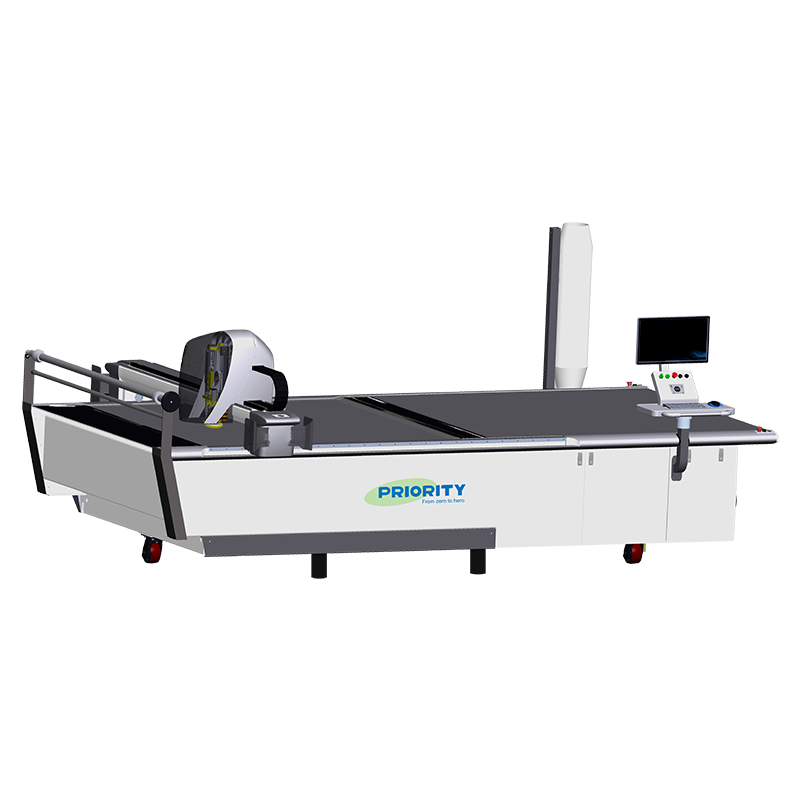
We rely on specific physical mechanics to automate complex cutting processes. An automated system fully replaces human hands. It uses digital blueprints to precisely guide physical tools. We call this foundation the triad of automation.
Rigid Structural Frame: Heavy-duty steel bases control high-speed vibration. They keep the entire machine perfectly stable during intense, continuous operations.
Programmable Controller: This component acts as the digital brain. It translates complex CAD/CAM files into precise electrical signals.
Cutting Terminal: This represents the active tool. It might use hardened blades, focused lasers, or high-pressure waterjets to slice raw materials.
You need highly accurate movements across multiple dimensions. Precision drive systems make this exact control possible. Microcontrollers send rapid electrical pulses to stepper or servo motors. Servo motors provide vital closed-loop feedback. They constantly verify the exact position of the active cutting head. This dynamic ensures highly repeatable movements along the X, Y, and Z axes. The cutting head always lands exactly where it should.
Before the machine makes its very first cut, specialized software takes control. Material nesting algorithms mathematically analyze your digital parts. The software dynamically rotates and tight-packs these diverse components. It fits them onto a single sheet or roll. This intelligent digital step mathematically maximizes your total yield. You drastically reduce raw scrap before physical production even begins.
You must look beyond simple labor replacement when calculating your return on investment. Automation serves as a powerful risk mitigation tool. You remove human operators from highly hazardous cutting zones. This critical safety upgrade prevents expensive workplace injuries. Machines also standardize your daily manufacturing output. They produce identical parts across all working shifts. You no longer worry about varying worker skill levels.
Material yield directly impacts your operational bottom line. Traditional hand cutting generates significant raw scrap. Automated systems maintain incredible precision tolerances. Typical error margins fall well below 1%. Software-driven nesting directly lowers your raw material overhead. You buy less raw stock to produce the exact same volume of finished goods.
We also must consider several hidden financial returns. Perfect edge quality directly reduces downstream assembly issues. Your fabrication team spends much less time fixing jagged component edges. Consistent part dimensions significantly lower end-user return rates. Customers reject fewer finished products.
High-mix, low-volume shops face completely different payback periods than mass-production floors. You must carefully balance your initial capital expenditure against long-term operational savings. Let us compare the distinct cost drivers between manual and automated workflows.
Production Metric | Manual Cutting Process | Automated Cutting Process |
|---|---|---|
Labor Costs | High (Requires multiple skilled technicians) | Low (One operator manages multiple machines) |
Material Waste | High (Dependent on human visual estimation) | Very Low (Optimized by algorithmic nesting) |
Output Consistency | Variable (Declines due to worker fatigue) | Perfectly uniform across all production shifts |
Safety Risk Profile | High (Direct exposure to open blades/saws) | Low (Enclosed operations with safety interlocks) |
Different production environments require distinctly different material handling approaches. You must carefully match the feed system to your specific material flow.
Static table systems utilize a large, fixed cutting bed. You place individual sheets onto the working surface. These tables work best for extremely high-value materials. Operators can manually inspect expensive sheets before processing begins. They program the machine to avoid visible material defects easily. Static tables do require significant floor space. They suit low-volume batches or high-mix production runs perfectly.
Continuous production demands completely different mechanics. Conveyor and track systems process long or rolled materials highly efficiently. They are essential for massive production quotas. For example, a commercial Fabric Cutting Machine utilizes synchronized conveyor belts. It pairs these heavy-duty belts with specialized tension-control feeders. These mechanisms grip the delicate textile firmly. They actively prevent any material stretching or distortion during continuous runs. You achieve flawless cuts across thousands of yards of fabric without stopping.
Complex geometric parts require specialized motion control. Rotary processing attachments spin rigid pipes and tubes for precise intersection cuts. Some modern facilities deploy advanced 6-axis robotic arms. Engineers use sophisticated offline programming software to plot complex 3D profiles. They simulate the entire robot path digitally beforehand. This smart practice prevents costly machine crashes on the busy shop floor.
Selecting the perfect equipment requires strict technical evaluation. You must scrutinize specific criteria before shortlisting any vendor.
Material Handling Interfaces: You must evaluate the feed mechanisms carefully. Fragile materials like medical tubing or polished metals require special care. Specify polyurethane rubber rollers instead of knurled metal rollers. Rubber prevents permanent surface scratching during the intake process.
Software & Recipe Management: Lengthy changeover times rapidly drain your daily productivity. Evaluate the integrated software platform thoroughly. The machine must store multiple production recipes locally. Operators should instantly recall batch parameters via an industrial touch interface to minimize delays.
Tooling & Consumables: Assess the daily maintenance requirements realistically. Look for quick-release blade systems to speed up routine tool changes. Evaluate the true lifecycle costs of your specific consumables. Tungsten carbide blades cost significantly more upfront. However, they drastically outlast standard tool steel options over time.
Integration Capabilities: Your new equipment should communicate seamlessly across the facility. Can the system integrate seamlessly with your existing ERP software? Isolated systems usually require manual data entry. Human data entry inevitably introduces costly transcription errors.
Evaluation Category | Standard Feature | Premium Upgrade to Look For |
|---|---|---|
Software | Basic CAD import | Dynamic real-time nesting & ERP sync |
Drive Motors | Stepper motors (Open-loop) | AC Servo motors (Closed-loop feedback) |
Tooling | Bolt-on tool steel blades | Quick-release tungsten carbide modules |
Automated systems boldly solve many manufacturing problems. However, they introduce entirely unique implementation challenges. You must proactively manage these new operational risks.
A single miscalibration carries severe financial penalties. These precise machines completely eliminate manual variability. They repeat programmed actions perfectly every single time. A wrong parameter input will accurately ruin an entire batch of material rapidly. You must establish strict verification protocols before running large jobs.
We must strongly address the operator training gap. Moving from manual craftsmanship to digital operation shocks many traditional workers. Technicians no longer push saws manually. They must now understand complex software calibration deeply. They need to interpret digital sensor feedback correctly. You must invest heavily in comprehensive vendor-led training programs.
Best Practices for Predictive Maintenance:
You cannot rely on simple reactive maintenance anymore. Automated systems require strict preventative maintenance schedules.
Apply correct lubrication to all moving linear guides weekly.
Clean optical sensors daily to prevent confusing false fault codes.
Rotate cutting blades strictly based on verified machine hour logs.
Common Mistakes to Avoid:
Ignoring these simple steps always leads to catastrophic mid-cycle downtime. A seized servo motor halts your entire production line for days. Running dull blades forces the drive motors to overheat rapidly.
Upgrading your facility to an automatic cutting machine represents a massive strategic shift. You move away from labor-intensive variability. You embrace data-driven, scalable precision instead. This technology protects your workforce while drastically shrinking your raw material waste.
We recommend taking specific action steps to ensure a successful purchase:
Conduct a comprehensive material audit detailing exact types, thicknesses, and daily volumes.
Request detailed vendor demonstrations using your facility's actual raw materials.
Provide your own complex CAD files to verify real-world tolerances during the demo.
Calculate your projected ROI by factoring in reduced scrap and lower customer return rates.
A: Industrial automatic cutting systems offer exceptional precision. Standard deviations usually fall well under 1%. Depending on the specific drive mechanism and cutting terminal, machines typically maintain tight tolerances of +/- 0.15mm.
A: Yes, many machines offer excellent versatility. Systems equipped with quick-change blade modules easily switch between textiles, foams, and rubbers. However, heavy-duty structural machines are usually purpose-built for single materials like thick steel plates.
A: Automatic cutting describes the specific application of severing material. CNC (Computer Numerical Control) is the underlying digital method governing the movement. Therefore, most industrial automatic cutters are actually CNC machines operating a cutting tool.
A: Nesting software uses complex algorithms to analyze part shapes. It dynamically rotates and spaces these shapes tightly together on a digital canvas. This algorithmic spacing fits more parts onto a single sheet, drastically reducing raw material scrap.


