


Views: 0 Author: Site Editor Publish Time: 2026-02-13 Origin: Site


Selecting the right fabric cutting machine is one of the most significant investment decisions a garment manufacturer will make. In an industry where efficiency, precision, and material utilization directly dictate profitability, the cutting room serves as the foundation of the entire production chain. With the transition from manual labor to intelligent manufacturing, the market offers a variety of technologies—ranging from multi-layer mechanical systems to high-precision lasers. Choosing the "best" machine is not about finding the most expensive model, but about finding the system that perfectly aligns with your production volume, fabric types, and operational goals.
The first step in choosing a fabric cutting machine is a deep analysis of your current and projected production volume. Different machine architectures are engineered to handle varying scales of output, and selecting the wrong one can lead to either a bottleneck or an underutilized asset.
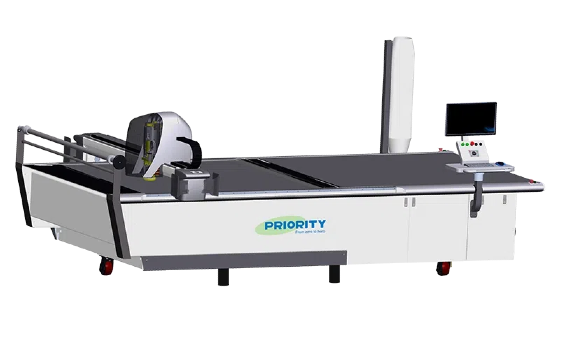
For large-scale manufacturing facilities that process massive orders, a Multi-Layer Fabric Cutting Machine is often the optimal choice. These machines are designed to cut through dozens of plies of fabric simultaneously, maintaining uniform accuracy from the top layer to the bottom. By streamlining high-volume operations, these systems can boost efficiency by 4 to 5 times compared to manual methods, making them essential for meeting demanding deadlines and achieving a rapid return on investment.
If your facility focuses on bespoke tailoring, custom orders, or frequent sampling, a Single-Ply Fabric Cutting Machine is the superior option. Unlike multi-layer systems, single-ply machines prioritize agility and meticulous accuracy for individual fabric layers. They allow for rapid changes in design patterns and are ideal for processing complex textile components where every millimeter counts.
Not all fabric cutting machines are created equal when it comes to material handling. The physical characteristics of your textiles—such as thickness, weave, and chemical composition—will determine which cutting technology is required.
Most traditional textiles, including cotton, denim, and various blends, are best handled by mechanical automatic cutting machines equipped with high-speed blades. When evaluating these machines, it is crucial to look for core components that ensure durability, such as German-engineered cutting blades and Japanese motors. These components provide the mechanical strength needed to slice through tough or thick composite materials that often cause manual tools to fail.
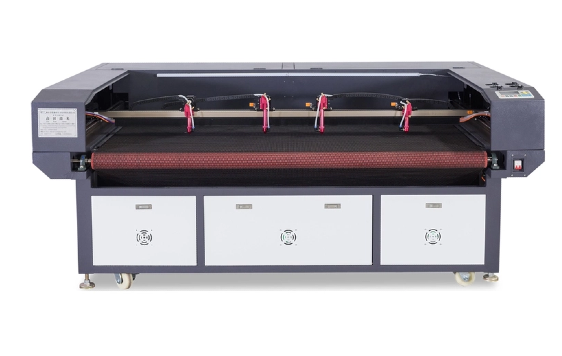
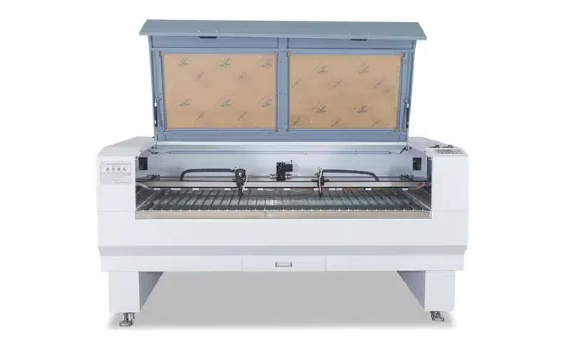
For materials that are prone to fraying, such as synthetics, or those requiring extremely intricate detailing, a Fabric Laser Cutting Machine represents the state-of-the-art solution. Laser technology uses a non-contact method, meaning the fabric is never distorted by physical pressure. Furthermore, the heat from the laser beam seals the edges of synthetic fabrics during the cut, eliminating the need for secondary finishing processes and ensuring material integrity for high-end activewear or complex textile designs.
In modern manufacturing, a fabric cutting machine is only as good as the software that controls it. Material costs often represent the largest expense in garment production, making "nesting" efficiency a critical metric for selection.
The best fabric cutting machines integrate sophisticated nesting algorithms that calculate the most efficient layout for patterns. This technology minimizes "dead space" between pieces, significantly reducing material waste. When choosing a machine, ensure the software can handle complex nesting and has the capability to detect flaws in the fabric, allowing the cutting head to adapt in real-time.
Traditional manual cutting is prone to human error, which can lead to inconsistencies in garment sizing. An intelligent automatic cutter reduces these errors nearly to zero. By ensuring that every piece is an exact replica of the digital design, manufacturers can guarantee consistent quality across thousands of units, a feat that is impossible to achieve with manual labor alone.
A comprehensive evaluation of a fabric cutting machine must include the total cost of ownership and the impact on the workspace environment.
Automation in the cutting room can replace up to 70% of manual labor. When selecting a machine, calculate the potential savings in skilled labor and the reduction in production time. Modern energy-optimized designs also minimize power consumption, which, combined with reduced labor costs, typically leads to a significant reduction in localized production expenses (often between 40%-60% compared to older, less efficient technologies).
Modern fabric cutting machines transform a high-risk workshop into a safe, collaborative space. Look for machines with intuitive interfaces that simplify complex tasks, making it easier for staff to transition from manual cutting to machine operation. Safety features, such as emergency stops and obstruction sensors, are non-negotiable for maintaining a worker-friendly environment.
The "best" fabric cutting machine is the one that serves as a catalyst for your factory's growth. Whether it is the sheer power of a multi-layer system for mass production, the meticulous precision of a single-ply cutter for custom work, or the innovative sealed edges provided by a laser, the right technology will liberate creativity and maximize efficiency. By focusing on premium components, software intelligence, and material compatibility, manufacturers can move beyond mere equipment upgrades and step into the future of intelligent, sustainable manufacturing.


