


Views: 0 Author: Site Editor Publish Time: 2025-06-09 Origin: Site


In recent years, the textile industry has experienced a wave of innovation driven by digitalization and automation. One of the most impactful advancements is the rise of fabric laser cutting machines. These machines have become increasingly popular in textile manufacturing thanks to their unmatched precision, speed, and versatility. Whether producing fashion garments, technical fabrics, or home textiles, manufacturers today rely on laser cutting technology to meet the growing demands for accuracy, customization, and efficiency.
This article explores the role of fabric laser cutting machines in modern textile production. It highlights how laser cutting has transformed fabric handling, why it is more effective than traditional methods, and the wide range of benefits it offers for various applications.
A fabric laser cutting machine is a type of automated equipment that uses a focused laser beam to cut textiles into specific shapes or patterns. Instead of using mechanical blades, it relies on thermal energy to vaporize or melt through the fabric, guided by computer-controlled designs.
The most common type of laser used in fabric cutting is the CO₂ laser, known for its ability to cut organic and synthetic materials with high speed and accuracy. The laser is typically integrated with a computer-aided design (CAD) system, allowing the machine to follow complex cutting paths with pinpoint precision.
Unlike conventional cutting tools, laser cutters do not physically touch the material. This contactless cutting method helps prevent wear and tear on the fabric and the cutting components, resulting in longer equipment life and cleaner edges.
Fabric laser cutting machines offer numerous advantages that make them superior to traditional mechanical cutters. Here's why many modern textile factories are making the switch:
1. Exceptional Cutting Accuracy:
Laser beams can achieve cutting tolerances as fine as 0.1mm, enabling highly accurate and repeatable cuts. This level of precision is difficult to achieve with manual or blade-based methods, especially on intricate patterns.
2. Smooth and Sealed Edges:
The heat from the laser slightly melts the edges of synthetic fabrics like polyester, nylon, or acrylic. This creates a sealed edge that prevents fraying, which is a common problem with traditional cutting. This also reduces the need for additional stitching or hemming.
3. High Cutting Speed:
Laser cutters can move rapidly across the fabric, often completing patterns in a matter of seconds. Their non-contact operation allows them to handle thin and delicate materials without damage, even at high speeds.
4. Versatile Pattern Capabilities:
Because the machine follows digital input, it can cut any shape or design. Designers have unlimited freedom to experiment with lace-like details, complex curves, or sharp angles that would be difficult to replicate by hand or blade.
5. Automation Compatibility:
Fabric laser cutting machines integrate easily into automated production lines, allowing for continuous operation, reduced labor requirements, and seamless scaling from prototypes to mass production.
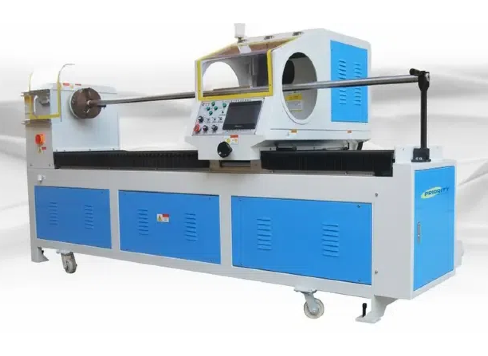
The flexibility and speed of fabric laser cutting machines make them suitable for a wide range of textile applications. Here are a few areas where they are making a major impact:
In fashion, precision and design complexity are vital. Laser cutting enables designers to cut fine, intricate patterns that enhance the aesthetics of garments, such as lace overlays, decorative panels, and layered textures. Because the laser can handle thin and stretchy fabrics without distortion, it's perfect for fashion materials like chiffon, satin, lycra, and mesh.
Additionally, laser cutting is ideal for custom clothing and made-to-order items, as the digital setup allows rapid adjustments without the need for retooling.
Laser cutting machines are widely used in the production of high-performance sportswear and activewear. These garments often involve multiple materials, ventilation zones, and precision components such as logos or reflective strips.
With laser cutting, manufacturers can cut ventilation holes, bond components without stitching, and produce seamless garment elements that improve comfort and durability for athletes.
Curtains, upholstery, rugs, and bed linens all benefit from clean laser-cut edges, especially when using synthetic fabrics that tend to fray. Laser cutters are also used to create decorative patterns or textures in curtains, lamp shades, or table runners, adding artistic value to functional items.
In industries such as automotive, aerospace, and medical, textile components must be produced with extreme accuracy and consistency. Laser cutters are used to manufacture seat covers, filters, insulation layers, and medical bandages from both woven and nonwoven materials.
Because laser cutting eliminates dust and fabric distortion, it's ideal for sterile or safety-critical applications.
One of the standout benefits of fabric laser cutting machines is their ability to save time and labor. Traditional cutting methods often require a skilled technician to trace patterns manually, stack and align fabrics, and cut them one at a time or in small stacks.
Laser cutters eliminate much of this process. Once the material is placed on the cutting table and the design is uploaded, the machine performs all the work. Some advanced models include automatic feeders, conveyors, and material rollers, allowing the machine to work unattended for extended periods.
This automation significantly reduces the number of personnel required for the cutting stage and frees up human workers for more strategic tasks like quality inspection or machine monitoring.
Material efficiency is crucial in the textile industry, where fabric costs make up a large portion of production expenses. With fabric laser cutting machines, waste can be dramatically reduced.
Nesting software enables designers to arrange patterns optimally on the fabric, ensuring maximum usage of every roll. Since the laser cuts with pinpoint accuracy, there's no need for extra buffer space or allowances that are common with manual cutting.
Less waste means lower costs and a more sustainable production model, aligning with the growing demand for eco-conscious manufacturing in fashion and home goods.
Although laser cutting machines involve a higher initial investment than manual tools, they require minimal maintenance and have low running costs over time.
The absence of physical blades means there’s no need for frequent replacements or sharpening. The laser source, typically CO₂ tubes, has a long lifespan when properly maintained. Daily upkeep is usually limited to cleaning lenses, filters, and the cutting surface.
Additionally, since the machine does not create mechanical stress on fabrics, it experiences less wear and tear, resulting in longer operational life and lower repair costs.
For creative professionals, fabric laser cutting opens new frontiers of design. It allows for:
Micro-perforation for breathability and visual appeal
Laser engraving to add textures, patterns, or logos
3D layering effects in fashion and accessories
Customization in product design without expensive molds or dies
These capabilities enable textile companies to offer unique, value-added products that stand out in competitive markets. Customization is especially valuable for small brands, promotional products, or limited-edition collections.
Laser cutting is considered a clean technology because it doesn’t require inks, chemicals, or physical dies. Unlike blade cutting, which can create fiber dust, a laser burns cleanly through the material, and integrated exhaust systems remove fumes and particles.
This cleaner process reduces workplace hazards and aligns with green manufacturing goals. Furthermore, many manufacturers now look for energy-efficient laser systems that minimize environmental impact while maintaining high productivity.
The evolution of fabric laser cutting machines has ushered in a new era of precision, efficiency, and design freedom in the textile industry. With their ability to cut intricate patterns with flawless edges, speed up production, minimize waste, and reduce labor dependence, these machines are quickly becoming an essential tool in both small-scale studios and large industrial factories.
As global demand for customization, sustainability, and high-quality textiles continues to grow, fabric laser cutting machines will play an increasingly important role in shaping the future of garment and textile production.
For textile manufacturers aiming to remain competitive and innovative, investing in laser cutting technology is not just a trend—it's a strategic step toward higher standards, smarter production, and sustainable growth.


