


Views: 0 Author: Site Editor Publish Time: 2026-04-30 Origin: Site


Many industry leaders mistakenly view the cutting process as the most critical phase in the cutting room. However, spreading actually dictates material yield and overall garment assembly success. Poor spreading causes uncorrectable defects deep within the material plies. These hidden errors can easily inflate your garment manufacturing costs by up to 10%. For scaling apparel manufacturers and high-volume operations, relying on manual spreading is no longer financially sustainable. Pulling heavy fabric requires multi-person teams, which drains resources and introduces severe variability.
You need a reliable way to scale production while maintaining tight quality control. Transitioning from manual labor to smart automation protects your raw materials and improves factory output. We will explore how modern automated equipment completely transforms your daily workflow. Let us look at the top five benefits of implementing a fabric spreading machine to optimize labor, prevent stretching defects, and ensure long-term production scalability.
Labor Optimization: Transitions spreading from a 4-to-6 person manual task to a highly controlled 1-to-2 person operation.
Waste Minimization: Electronic edge alignment and marker optimization can push material utilization rates up to 78%–87%.
Defect Prevention: Tension-free feeding eliminates fabric stretching, preventing post-cut dimension distortions (especially in knits).
Method Agility: Seamlessly switches between Zigzag, One-way, and Multiple-length spreading to handle diverse orders without bottlenecking.
Audit Readiness: Elevates factory presentation and perceived technical maturity, aiding in winning contracts from global brands.
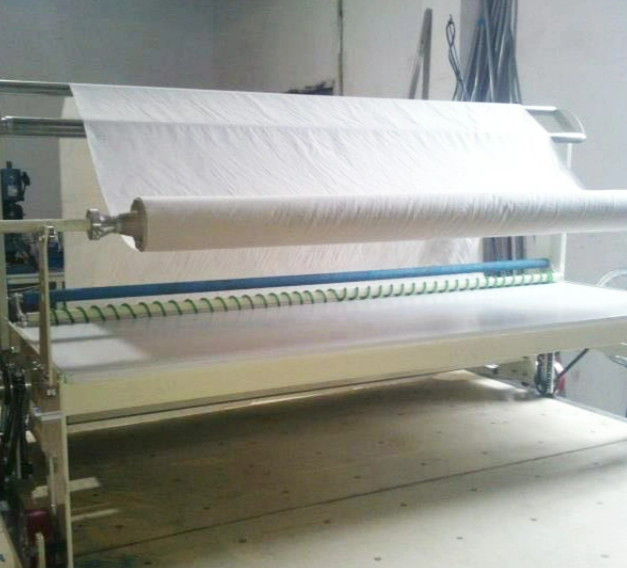
The baseline reality in many traditional cutting rooms involves chaotic, physically demanding labor. Manual spreading often requires an "all hands on deck" approach. Workers must pull, stretch, and align incredibly heavy fabric rolls across long tables. This intense physical exertion naturally leads to high fatigue levels. As the work shift progresses into the afternoon, tired workers inevitably produce inconsistent output. They miss edge alignments, accidentally stretch the fabric, or slow down the entire production line.
Modern spreading machines eliminate this bottleneck by operating on a highly efficient "1+1 model". You only need one primary operator to program the unit's interface. A second assistant simply walks alongside the table to monitor the ends and smooth out occasional fabric creases. This setup completely removes the heavy lifting from the equation.
To evaluate the cost-to-outcome ratio, you must calculate the immediate reallocation of human capital. Transitioning to automation allows you to strategically shift your workforce. You transform a variable labor cost into a fixed, predictable throughput metric. Here is how you can reallocate your freed-up staff:
High-Value Quality Assurance (QA): Move experienced pullers into defect inspection roles to catch fabric flaws before they reach the cutting stage.
Preventative Maintenance: Train tech-savvy workers to service and calibrate cutting room automation tools.
Front-End Fabric Management: Assign staff to properly categorize incoming fabric rolls by width and dye lot, ensuring smoother automated runs.
Manual spreading guarantees wavy edges and inconsistent overlaps across multiple plies. When workers manually drag fabric, they cannot maintain a perfectly straight edge over a ten-meter table. This variance directly translates to wasted raw material. Factories must build large buffer zones into their marker plans to compensate for this human error. At the end of every ply, those extra inches end up on the cutting room floor as useless scrap.
When evaluating hardware dimensions, you must look for equipment featuring electronic edge sensors. High-quality positioning devices actively guide the fabric roll during the spreading process. They can maintain an impressive alignment tolerance of within 1/8-inch. This level of precision is physically impossible for human hands to replicate consistently.
This precision unlocks massive scalability and return on investment. You achieve the best results when integrating this exact edge alignment closely with CAD/CAM marker planning. Precise alignment practically minimizes the necessary buffer zones between your pattern pieces. Industry data confirms this automated synergy pushes fabric utilization significantly higher. Every inch saved drops directly to your bottom line as raw material savings.
Evaluation Metric | Manual Spreading | Automated Machine Spreading |
|---|---|---|
Edge Alignment Tolerance | Highly variable (often exceeds 1 inch) | Strictly controlled (within 1/8-inch) |
Marker Buffer Zones | Large buffers required to prevent short cuts | Minimal buffers; parts can sit edge-to-edge |
Material Utilization Rate | Typically peaks around 65% - 70% | Consistently pushes up to 78% - 87% |
Stretching fabric during the laydown process introduces a massive implementation risk known as "fabric memory". When operators pull fabric tightly across a table, they force the fibers out of their natural relaxed state. You might cut a perfectly measured pattern piece from this stretched ply. However, hours later, the fabric memory triggers a snapback effect. The cut piece shrinks back to its original dimensions. A perfectly cut piece that shrinks post-cut completely ruins the garment assembly process.
To solve this, you need a technical approach centered on tension-free feeding. Modern equipment utilizes a specialized "Positive Feed System". This tensioning mechanism actively unrolls the fabric synchronously with the machine's travel speed. If the unit travels at 90 meters per minute, it feeds exactly 90 meters of fabric per minute. It never drags or pulls the material from the heavy roll.
Certain fabric profiles demand this technology as a non-negotiable success criterion. High-stretch knits, lycra, and technical synthetics will warp instantly under manual tension. Woven fabrics are generally more forgiving, but knits require absolute care. Please note that some highly volatile fabrics may still require off-roll pre-relaxing steps. However, a proper positive feed system preserves that delicate relaxed state throughout the entire laydown process.
A successful factory experiences constant order profile changes. You might run heavy denim on Monday and delicate velvet on Tuesday. Your equipment must adapt to these shifts immediately. Programmable spreading units handle specific manufacturing requirements automatically. They offer distinct solution categories based on the fabric and the pattern requirements.
Buyers should evaluate software capabilities carefully. You want to ensure quick changeovers between different spreading modes without requiring extensive mechanical reconfiguration. A smart interface allows the primary operator to switch methods with a few screen taps.
Spreading Method | How It Works | Ideal Fabric & Scenario |
|---|---|---|
Zigzag (Face-to-Face) | Lays fabric back and forth continuously without cutting at the ends. Plies face each other. | Symmetrical fabrics lacking a distinct up/down pattern. Used for maximum speed and bulk production. |
One-Way Spreading | Lays fabric in one direction, cuts it automatically with a knife box, and returns empty. | Directional prints, velvet, or corduroy. Absolutely essential to prevent shading or color mismatching. |
Multiple-Length Spreading | Executes staggered, mixed-size marker runs across different sections of a single long table. | Complex markers and mixed-size orders. Maximizes material usage on specialized short-run batches. |
Beyond raw production metrics, high-tech automation serves as a powerful visual asset for your business. Global apparel brands routinely conduct rigorous factory audits before awarding lucrative manufacturing contracts. They walk the floor looking for signs of stability, safety, and modern management practices. A chaotic cutting room filled with exhausted workers pulling fabric sends a negative message.
You project immense trust and authority when auditors see a cutting room outfitted with automated systems. Upgrading to advanced spreading units, air flotation tables, and AI-driven defect inspection signals mature cost-control. It proves you prioritize worker safety by eliminating heavy lifting. It also guarantees a level of quality assurance that manual operations simply cannot promise.
We must frame this machine as the foundational step toward Industry 4.0 cutting rooms. Upgrading your initial spreading process allows for seamless future integration. Once your laydown is perfectly controlled, you can easily add automated labeling, CNC cutting machines, and digital inventory systems. This technology future-proofs your facility against rising labor costs and tightening quality demands.
Investing in automated spreading technology represents a necessary shift from manual variability to engineered predictability. You eliminate wavy edges, stop fabric stretching, and protect your margins from hidden waste. By replacing exhausting physical labor with programmable precision, you empower your workforce to focus on quality rather than brute force.
However, you must remember that machines are not magic bullets. They require proper front-end fabric management to realize their full potential. You must still sort your rolls by width and dye lot before loading them. Furthermore, you need compatible infrastructure, like vacuum or air flotation tables, to move heavy stacks efficiently to the cutter.
To take immediate action, we recommend these three next steps:
Audit your current cutting room scrap rates to identify baseline material waste.
Calculate your specific monthly labor-hour expenditures dedicated purely to manual spreading.
Request a manufacturer demonstration using your most notoriously difficult, high-stretch fabrics.
A: Yes, but configurations vary. Wovens are easily handled by standard models. However, high-stretch knits require specialized tension-free relaxing features and positive feed mechanisms to prevent dimensional distortion during the laydown process.
A: Beyond the machine itself, factories must invest in appropriate spreading surfaces. You need pin tables for precise pattern matching, or air flotation tables to easily move heavy, multi-layered spreads directly into the cutting zone without friction.
A: While timelines vary by volume, most mid-to-large facilities achieve ROI within 12 to 18 months. This rapid return happens through a combination of reclaimed fabric waste from tighter markers, reduced labor overhead, and accelerated daily throughput.


