


Views: 0 Author: Site Editor Publish Time: 2026-04-27 Origin: Site


In the garment industry, spreading represents the first irreversible production phase. Misaligned edges directly multiply into cutting defects. Incorrect tension creates staggering material waste. You simply cannot fix a poorly stretched lay during the subsequent cutting process. Upgrading to the right fabric spreading machine shifts your cutting room operations fundamentally. It transforms a labor-heavy bottleneck into a data-driven, margin-saving asset.
Selecting the correct equipment minimizes costly end-loss. It aggressively protects your fabric yield while optimizing labor distribution. We designed this guide to provide production managers and facility owners an evidence-based framework. You will learn to evaluate, shortlist, and implement spreading machines based on material behavior and production scale. By the end, you can confidently match your facility's unique fabric requirements to modern mechanical capabilities.
Fabric costs outweigh labor in garment manufacturing; a machine's ability to control end loss and splicing directly dictates its ROI.
Pure automation isn't universally optimal: small, multi-style runs often benefit more from advanced manual equipment than full automation.
The highest risk in procurement is failing to match the machine's tension control system (e.g., differential V-cradles) to the specific fabric type (knits vs. wovens).
True machine cost extends beyond the sticker price to table infrastructure (air flotation) and residual resale value.
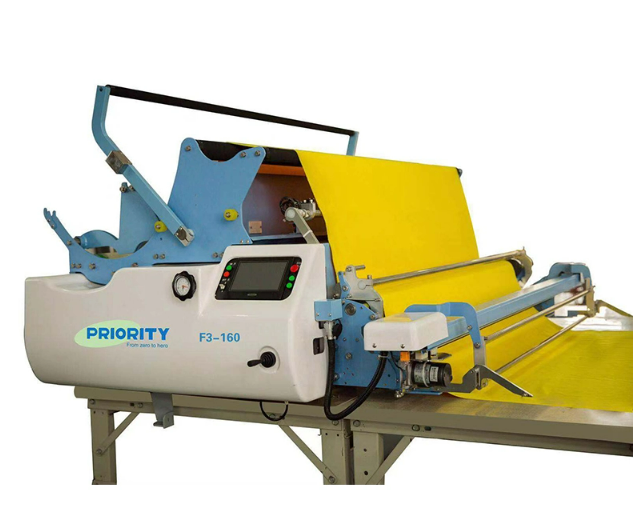
Spreading accuracy matters far more than cutting speed. Manufacturers often obsess over acquiring fast computerized cutters. However, a flawless cut on improperly stretched fabric ruins the product. Once operators cut the stretched lay, the fabric relaxes. The garment panels deform instantly. You lose the entire batch. This irreversibility makes spreading the most critical quality control checkpoint in your factory. You must prioritize tension-free spreading over raw processing speed.
Fabric rolls present a unique physical challenge during unrolling. As a roll unrolls, its diameter steadily decreases. Traditional manual pulling methods struggle to handle this change. Pulling fabric from a shrinking roll requires variable force. This constant fluctuation causes uneven tension across the lay. Operators cannot physically adjust their pull strength perfectly every single second. Modern mechanical solutions synchronize feeding speeds to solve this exact physical inconsistency.
Manual spreading hides massive operational costs. Dual-operator manual setups rely heavily on human coordination. Two workers pull fabric down a long table. They rarely pull at the exact same speed. This mismatch causes inconsistent edges. It causes localized stretching. Ultimately, it drastically increases material waste. Contrast this chaotic process against single-operator mechanical precision. A single machine aligns the edges flawlessly. It eliminates the costly human variables driving up your scrap rates.
You must match your equipment to your actual production scale. Over-automating a high-mix facility causes operational friction. Under-automating a high-volume facility leaves money on the table. We categorize the market into three primary tiers.
Industrial manual machines perfectly serve small-to-medium factories. They handle high-mix, low-volume production effectively. They bridge the operational gap between hand-pulling and full automation. These setups eliminate the need for two operators. The machine chassis bears the heavy roll weight entirely. Operators simply push the lightweight track assembly. The equipment utilizes mechanical edge alignment and expander bars to lay fabric tension-free. You gain immediate quality improvements without massive capital expenditure.
Fully automatic machines dominate high-volume, standardized production runs. They require strict digital oversight. These systems utilize PLC-controlled parameters. They execute synchronized positive feeding. They seamlessly perform bidirectional (zigzag) or face-one-way (FOW) spreading based on your marker requirements. Operators act as technicians rather than laborers. They monitor the integrated flaw management systems while the machine handles the physical unrolling.
Some applications demand highly specialized mechanical designs. Tubular knitting frames prevent internal folding when processing seamless knitwear. Heavy-duty configurations handle 300kg-plus capacities required for denim and industrial textiles. Standard machines simply collapse under these extreme weights. Always verify your heaviest roll weight before exploring equipment options.
Machine Category | Best Production Fit | Core Mechanical Features | Operational Labor |
|---|---|---|---|
Industrial Manual | Small factories, high-mix runs | Expander bars, manual track push | 1 Operator (Physical push) |
Fully Automatic | High-volume, standardized runs | PLC controls, automated flaw management | 1 Operator (Technical monitor) |
Specialized (Tubular/Heavy) | Denim, industrial textiles, knits | 300kg+ capacity, internal frames | 1-2 Operators (Depending on roll size) |
Procuring a machine requires looking past the brand name. You must evaluate the underlying mechanical systems. Focus strictly on these four technical pillars.
Tension Control and Feed Mechanisms: Look for dual-motor V-cradle systems. Engineers call this a cradle feed. These systems offer differential overfeeding. The machine feeds fabric slightly faster than it travels down the table. This prevents stretching. It proves absolutely critical for highly elastic knits. It also compensates nicely for poorly wound or elliptical fabric rolls originating from the mill.
Edge Alignment and End-Catchers: Assess the precision of the integrated photoelectric sensors. These sensors manage automatic edge alignment. Perfect edge alignment minimizes side waste. Precision end-catchers clamp the fabric securely at the end of each run. They allow the machine to reverse direction without losing tension.
Flaw Management and Splicing: Evaluate advanced features like marker projection. The system projects the digital marker directly onto the fabric. Operators pre-identify flaws easily. They eliminate tedious post-cut inspection entirely. Programmable splicing tolerances minimize overlap waste. The machine calculates exactly where to overlap a new roll to prevent wasted yardage.
Software Ecosystem and Analytics: Prioritize systems utilizing modern operating systems. Windows-based smart tablets currently dominate the high-end market. They allow industrial engineers to track yardage meticulously. Managers can monitor machine uptime remotely. The software records real-time material utilization for precise cost accounting.
Best Practice: Always request a live demonstration using your most difficult fabric. Let the vendor prove their tension control mechanism handles your specific elasticity.
Facility owners frequently fall into the material mismatch trap. This represents the most common procurement failure in the industry. Buyers purchase a machine optimized purely for rigid wovens. They attempt to use it for high-stretch knits or non-wovens. This creates chronic tension issues. Knits require advanced overfeeding mechanisms. Wovens tolerate standard bar feeds. You must audit your woven-to-knit ratio before signing any purchase order.
Automated equipment requires highly specific table conditions. You cannot simply place a modern spreader on an old wooden table. Worktables must typically measure 10 inches wider than the fabric itself. This accommodates the mechanical tracks and edge guides.
Furthermore, you must install multi-zone air flotation tables. Air tables reduce friction significantly during material movement. They allow operators to glide heavy, multi-ply lays effortlessly toward the automated cutter. You also need integrated vacuum capabilities. The vacuum system compresses the porous fabric layers tightly before cutting. This prevents the fabric from shifting beneath the oscillating knife.
Common Mistake: Failing to budget for table upgrades. Table infrastructure often adds thousands of dollars to the final installation cost.
Expect a significant shift from physical labor to technical oversight. Modern single-operator setups require extensive training. Your staff must learn digital parameter setting rather than physical fabric handling. They must understand how to program splicing tolerances into the PLC interface. They must interpret digital tension graphs. Do not underestimate this learning curve. Dedicate ample time for software training during the initial installation week.
Modern equipment changes your headcount requirements drastically. Calculate the shift from two or three manual handlers down to a single operator. This single operator functions primarily as an inspector. You can quantify the reduction in labor hours per spread immediately. Reallocate your surplus labor to quality control or sewing operations. This labor efficiency alone often justifies the initial equipment purchase for mid-sized factories.
Frame your ROI primarily around the reduction of end loss. End loss represents the fabric wasted at the ends of the table during each pass. Human operators easily waste two inches per ply. A machine reduces this to mere millimeters. Across a 100-ply spread, mechanical precision saves massive yardage. Improved splice mapping further reduces overlap waste. Material savings consistently outpace labor savings in the garment sector.
Advise your finance team to consider the machine's lifespan and resale potential. Established tier-one brands maintain incredibly strong secondary market values. Industrial liquidator data shows premium machines often retain thousands of dollars in resale value decades later. You protect this residual value by maintaining core parts. Keep the end-catchers calibrated. Service the photoelectric edge guides regularly. Well-maintained mechanical assets provide excellent long-term financial flexibility.
Choosing a fabric spreading machine requires deep operational honesty. It remains an exercise in matching mechanical tension control to fabric physics. You cannot solve a knit fabric tension problem with a machine built for rigid wovens. You must align your equipment capabilities with your material behavior.
We recommend three strict next steps. First, audit your current end-loss percentages manually. Find out exactly how much fabric your team wastes per lay. Second, define the exact woven-to-knit ratio of your facility. This ratio dictates your necessary feed mechanisms. Finally, measure your existing cutting room table infrastructure. Verify you have the necessary 10-inch clearance. Completing these steps ensures you contact vendors armed with hard data. You will procure an asset uniquely suited to drive your profitability forward.
A: Open-width machines handle flat fabric rolls cleanly unrolled across the table. Tubular machines handle fabric knitted in a continuous tube. Tubular machines require specialized internal wire frames. These frames slide inside the fabric tube during spreading to prevent internal creasing and edge folding.
A: Air tables are helpful but not strictly necessary for the manual spreading process itself. However, they become absolutely necessary for moving heavy, multi-ply lays down the table to an automated cutter. If you cut manually on the same table, you can skip the air flotation upgrade.
A: Cradle feeds support the entire weight of the fabric roll on synchronized conveyor belts. The belts unroll the fabric at a precise speed to eliminate all pulling tension. Traditional bar feeds pass a metal bar through the roll core. They rely on pulling force, which often stretches delicate fabrics.


