


Views: 0 Author: Site Editor Publish Time: 2026-05-04 Origin: Site


Fabric spreading bridges the gap between raw material inventory and precision cutting operations. It establishes the exact baseline for your entire garment manufacturing workflow. Many factory managers view the spreading process as simply unrolling material onto a table. In reality, it acts as a critical tension-management and waste-reduction step. Selecting the wrong equipment leads directly to dimensional instability. You will inevitably face excessive scrap and severe production bottlenecks at the cutting phase.
This article provides a comprehensive, vendor-neutral breakdown of the market's available equipment. You will learn how to categorize different systems based on production volume and material behavior. We also cover supporting infrastructure requirements and specific evaluation criteria for procurement teams. By understanding these core concepts, you can make smarter purchasing decisions and optimize your factory floor.
The primary types of fabric spreading machines range from manual systems to Industry 4.0 computerized solutions, dictated largely by production volume and fabric stretch characteristics.
Fully automatic spreading machines can achieve speeds of up to 140 m/min while maintaining tight edge-alignment tolerances (often within 1/8 inch).
High-stretch materials (like Lycra or Spandex) require specialized zero-tension, computerized feeding cradles to prevent post-cut shrinkage.
Capital investment must account for supporting infrastructure, including air flotation tables or vacuum tables, which critically impact heavy-duty or highly compressible fabrics.
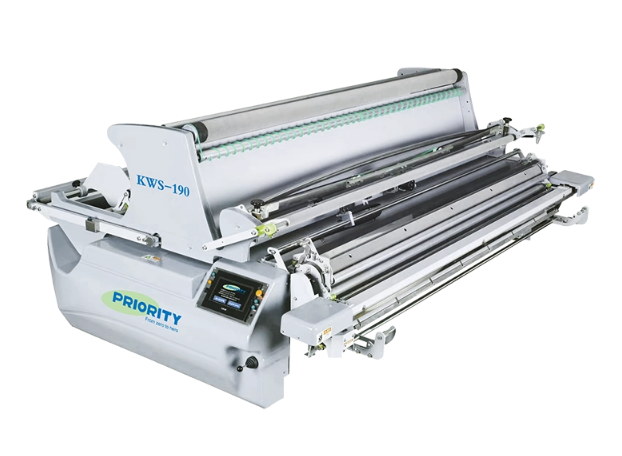
The garment industry relies on several distinct categories of spreading equipment. Production volume and material characteristics typically dictate your ideal category. Below, we break down the four primary classifications.
Manual machines represent the most basic entry point for garment factories. The fundamental mechanism involves operator-driven roll movement. Workers push the roll across basic spreading tables or stationary racks. You manually align the edges and cut the ends.
This setup works best for low-volume, bespoke production. It also suits specific tasks requiring intense manual pattern alignment. For example, matching complex plaids and stripes requires human eyesight. The primary limitation is a high labor dependency. Manual pulling creates inconsistent ply tension. You also suffer from a very low output speed.
Semi-automatic systems introduce motorized assistance. The mechanism uses motorized movement combined with electronic clutches. These machines provide basic edge-alignment capabilities. However, they still require operators for roll loading, cutting, and end-treatment tasks.
Mid-sized operations often choose this category. It balances capital expenditure against consistent tension control. You gain better speed than manual methods. The main limitation is continuous human dependency. Operators must actively intervene at the end of every ply.
High-volume apparel manufacturing demands fully automatic systems. Their mechanism features advanced automatic tensioning. Lay height sensing elevators adjust the feed height as the stack grows. These machines execute complex step-laying programs autonomously. They also feature automated end-cutting blades.
When you deploy a fully automatic fabric spreading machine, you eliminate most manual intervention. Performance metrics are highly impressive. These units are capable of continuous operation. They routinely hit speeds up to 140 meters per minute.
Industry 4.0 systems represent the peak of spreading technology. The mechanism integrates directly into CAD and ERP systems. The machine parses ISO files directly from your design department. It manages multi-step laying programs spanning over 100 steps or colors.
These systems generate real-time material utilization reports. You receive instant scrap data. Digitally integrated smart factories rely on these machines. They prioritize strict data tracking. They also achieve absolute maximum yield optimization.
Summary Chart: Categories of Spreading Equipment
Category | Primary Mechanism | Ideal Use Case | Key Limitation |
|---|---|---|---|
Manual | Operator-driven movement | Low-volume, bespoke, plaids | Inconsistent tension, slow |
Semi-Automatic | Motorized drive, electronic clutches | Mid-sized balancing cost/control | Requires end-of-ply human action |
Fully Automatic | Auto-tension, step-laying, auto-cut | High-volume apparel | Requires consistent material prep |
Industry 4.0 | CAD/ERP integration via ISO files | Digitally integrated smart factories | Requires high technical training |
Standard spreading machines sometimes fail when processing unconventional textiles. Niche materials require entirely distinct hardware configurations to prevent fabric damage.
Standard spreaders routinely cause center creases in tubular fabrics. These creases ruin the material integrity before cutting begins. Tubular knits require a completely different approach.
The solution involves specialized hardware. These machines come equipped with an internal driving frame. This frame navigates the inside of the fabric tube directly. They pair this frame with active feeding rollers. This combination eliminates all tension. You can seamlessly lay double-layered fabric without forming a single crease.
Bedding and home goods operations face massive scale challenges. Home textile materials require massive roll capacities. Standard garment spreaders simply cannot hold the weight.
Engineers solve this by designing heavy-duty machines. These wide-width spreaders easily accommodate fabric rolls up to 300kg. They also handle extended working widths reaching up to 4 meters. To move this massive weight, they utilize robust four-wheel drive systems. They also feature specialized anti-sag grips to keep the wide material perfectly flat.
Purchasing spreading equipment requires deep technical analysis. Procurement teams must look beyond basic speed metrics. You should evaluate machines based on three critical pillars.
Heavyweights (Denim/Canvas): These materials exert immense strain on mechanical parts. Evaluate the machine’s chassis rigidity carefully. Check the motor torque ratings. You must verify its capacity for large, dense roll weights.
High-Stretch (Spandex/Elastane): Stretch fabrics deform easily during pulling. Look for active unwinding technology. Check for vibration distribution systems. You absolutely need driven cradles to guarantee true zero-tension spreading.
Slippery/Lightweights (Silk/Synthetics): These materials slide unpredictably. Assess the built-in static elimination capabilities. Look for specialized soft-grip catchers to secure the delicate edges.
Photocell Electronic Sensors: Edge alignment dictates cutting accuracy. Look for high-quality photocell electronic sensors. Ensure lateral edge alignment tolerances are kept strictly under 1/8 inch.
Infrared Defect Detection: Quality control should start at the spreading table. Verify the presence of infrared defect sensors. Confirm thickness detection capabilities. These sensors halt production automatically before flawed fabric is laid.
Native CAD Parsing: Software bridges the physical and digital gap. Assess if the machine's native software supports direct CAD file parsing. This eliminates manual data entry errors.
Reporting Capabilities: Data drives modern factory floors. Evaluate the comprehensive reporting capabilities. Ensure the system generates end-of-roll waste reports. This continuous tracking helps measure your efficiency gains.
A spreading machine is only as effective as the surface beneath it. You must evaluate table options based on your specific material flow requirements. The wrong table completely negates the benefits of a high-end machine.
Air Flotation Tables: Heavy plies generate massive friction against flat tables. Air flotation tables utilize targeted air currents. They blow air upward through tiny perforations. This reduces friction drastically. Operators can move heavy, multi-ply lays to the cutting zone effortlessly.
Vacuum Tables: Compressible materials pose unique cutting challenges. Vacuum tables are critical for fluffy, quilted, or high-loft fabrics. They pull air downward aggressively. They can compress materials by up to 75%. This extreme suction prevents any shifting during the spreading and cutting processes.
Conveyorized & Tracked Tables: Precise tension control requires mechanical synchronization. These tables feature synchronized tracks. They lock directly into the spreading machine’s gearing. This lock maintains absolute tension control across the entire run. Manufacturers often construct them using water-resistant MDF and rigid aluminum guide rails.
Upgrading your spreading room introduces new operational complexities. Factory managers must anticipate specific hardware and human challenges. Planning for these realities ensures continuous production uptime.
Modern equipment relies heavily on delicate optical sensors. You must address the reality of sensor drift. Optical edge sensors and tension controllers require careful baseline calibration. Over time, vibrations cause these sensors to drift from their baselines. Drifting sensors lead directly to fabric jams. They also cause misaligned plies. Operators must verify calibration settings routinely.
Industrial machinery demands strict upkeep protocols. You must establish a rigorous preventative maintenance schedule. Deep-cleaning dust from photocell sensors is mandatory. Textile dust blinds optical readers quickly. You should also inspect driving belts every 3 to 6 months. Proper lubrication of moving parts prevents premature motor failure. Keep a healthy stock of replacement cutting blades on hand.
Technology transitions always face human resistance. Acknowledge the operator adoption curve early. Upgrading from manual to Industry 4.0 systems requires significant retraining. Workers must learn to interpret complex software diagnostics. They must also actively bypass their traditional manual handling habits. A skilled manual puller needs time to become a proficient machine supervisor.
Selecting the right spreading machine bridges the gap between raw fabric inventory and precision cutting operations. Proper equipment stabilizes material tension, ensures tight edge alignment, and eliminates pre-cutting distortion. This creates a predictable, efficient flow for your entire factory.
We recommend starting your procurement process by defining the two most challenging fabrics in your current inventory. Demand vendor demonstrations specifically for those materials. They must prove zero-tension handling capabilities under realistic factory conditions.
As a final next step, encourage your team to conduct a material waste audit. Measure the scrap generated by your current manual or semi-automatic processes. Use this hard data to justify your future automation upgrades and track long-term efficiency gains.
A: They utilize active feeding cradles combined with synchronized unwinding belts. Photocell sensors and electronic dancer bars constantly monitor the material. These components communicate in real time to adjust the feed speed. By matching the feed speed perfectly to the machine movement, they prevent any stretch or sagging.
A: Flat spreading involves laying plies of equal length directly on top of each other. Stepped spreading requires programmable machines. It lays plies in varying lengths to accommodate different marker requirements in a single lay. This technique optimizes fabric use for highly complex orders.
A: Operators should perform daily wipe-downs of optical sensors to remove textile dust. Comprehensive maintenance should typically occur every 3 to 6 months. This deeper maintenance includes belt tension checks, motor lubrication, and blade replacement. Your exact schedule will depend heavily on your factory's operational shifts.


