


Views: 0 Author: Site Editor Publish Time: 2026-05-08 Origin: Site


Navigating the crafting and manufacturing equipment market often triggers decision fatigue. Upgrading from a standard rotary cutter represents a significant investment. However, finding the absolute best machine is rarely a one-size-fits-all answer. We frequently see a frustrating gap between marketing claims—like promising speeds ten times faster—and actual operational reality. The right choice depends entirely on your specific workflow. Are you cutting infinite custom appliqués, mass-producing standard quilt blocks, or slicing through heavy industrial yardage? Different projects demand entirely different tools. This guide bypasses surface-level features to evaluate each fabric cutting machine category based on production volume, hidden bottlenecks, and actual time saved. We will help you align your equipment choice with your distinct production goals. You will learn exactly how to identify your true workflow constraints. From there, you can confidently select a machine tailored to solve them.
Workflow Dictates Technology: Digital blade machines excel at custom, intricate shapes but struggle with volume. Die-cutting machines dominate high-volume, standardized block production.
Beware of Hidden Bottlenecks: Digital cutters require significant preparation time (starching, adhering to mats), while die-cutters involve high ongoing costs for proprietary molds.
Ergonomics Over Speed: For many users, the primary ROI of a cutting machine is injury prevention (protecting wrists and shoulders from repetitive strain) rather than pure speed.
Commercial Scaling: Small businesses handling thick layers or high yardage should bypass craft machines entirely in favor of an automatic fabric cutting machine or electric rotary cutter.
Before purchasing new equipment, you must accurately diagnose your current production limits. Buying a high-speed machine solves nothing if your real issue is design inflexibility. We recommend evaluating your workflow across three primary success criteria. These criteria draw from basic lean manufacturing principles. They focus on eliminating waste and maximizing output.
Time-to-Cut vs. Preparation Time: You must evaluate the entire workflow from start to finish. A digital device might slice a complex shape in mere seconds. However, you might spend five minutes preparing the material. Smoothing raw textiles onto an adhesive mat takes effort. Booting up software takes time. Peeling delicate shapes off sticky surfaces requires patience. If preparation eats up your clock, the net time saved remains minimal.
Precision vs. Waste: Manual hand-cutting routinely leads to sliding rulers. This causes ruined blocks and wasted yardage. You need to assess material efficiency. Look at how different machines handle fabric yield. Digital nesting software arranges shapes closely together. This maximizes your raw goods. Conversely, manual die alignment requires careful placement. You often rough-cut material slightly larger than the die, which creates minor offcuts.
Ergonomics and Accessibility: Traditional cutting takes a severe physical toll. Gripping a manual blade strains the wrist. Pressing down on acrylic rulers fatigues the shoulder. You must evaluate manual crank systems against electric motorized options. Injury prevention is a massive factor. This applies specifically to users managing arthritis, limited mobility, or repetitive strain injuries (RSI). Protecting your joints often provides the highest return on investment.
Digital plotters represent the ultimate solution for creative versatility. Brands like Cricut, Brother ScanNCut, and Silhouette dominate this space. They operate much like standard desktop printers. However, they use a sharp blade instead of ink.
You design or upload your pattern using proprietary digital software. You then press your material onto a specialized sticky mat. The machine pulls this mat through rollers. An automated drag-blade or micro-rotary blade follows the software path. It slices your design exactly as programmed. You can alter sizes instantly on your computer or tablet.
These machines thrive in low-volume, high-complexity environments. We highly recommend them for intricate appliqués and personalized custom shapes. They also excel at mixed-media crafting. You can swap the blade to cut vinyl, cardstock, leather, and textiles. One single tool manages multiple crafting disciplines. If you constantly alter sizes or design irregular shapes, digital flexibility is unbeatable.
Despite their creative freedom, digital devices exhibit severe limitations during production scaling. You will face several distinct hurdles.
Extremely Slow for High Volume: Real-world user tests expose severe speed limits. Cutting hundreds of small standardized shapes can take hours. The machine works meticulously but slowly.
Single Layer Limits: You can only process one thin layer of material at a time. The blade cannot penetrate thick stacks.
High Friction in Preparation: The prep phase demands intense labor. Textiles often require backing or liquid stabilizers to prevent fraying. Adhesive mats degrade rapidly. Threads stick to the glue, destroying the tackiness. You will spend considerable time cleaning or replacing these consumable mats.
When you need to produce thousands of identical pieces, digital plotters fail. Die-cutting machines step in to fill this gap. Brands like AccuQuilt and Sizzix cater specifically to high-volume makers and quilters.
These devices utilize a physical steel-rule die embedded in foam. You lay your material directly over the die. You place a hard acrylic cutting mat on top to create a "sandwich". You then feed this sandwich through a mechanical roller. You can use a manual hand-crank or push a button on an electric model. The pressure forces the steel blades through the textiles. It punches out perfect shapes instantly.
Die-cutters serve quilters processing massive amounts of standardized shapes. If you need hundreds of half-square triangles or hexagons, this is your tool. The steel blades compress the fibers during the punch. This results in zero fraying on the edges. The accuracy remains absolute every single time.
This category offers incredible throughput. However, the business model relies heavily on ongoing accessory purchases.
Unmatched Throughput: You can stack and process up to six layers of pure cotton simultaneously. Specialized dies include automatic "dog-ear" clipping. They also feature built-in quarter-inch seam allowances. These tiny details drastically speed up your downstream sewing process.
The Vendor Lock-In Factor: You lose all digital flexibility. You are strictly restricted to the exact shapes and sizes of the dies you own. You cannot simply shrink a pattern by ten percent. You must buy a completely new die.
Hidden Budget Impact: The base machine is generally durable and reasonably priced. However, purchasing individual die boards for every new pattern represents a significant long-term financial commitment. Building a versatile die library takes serious funding.
Feature Matrix | Digital Blade Cutters | Die-Cutting Systems |
|---|---|---|
Primary Mechanism | Software + Drag/Rotary Blade | Steel-Rule Mold + Roller Pressure |
Design Flexibility | Infinite (Scalable via Software) | Rigid (Limited to Owned Molds) |
Material Prep Required | High (Adhesive mats, stabilizers) | Low (Simply fold and stack) |
Max Layer Count | 1 Layer | Up to 6 Layers (Cotton) |
Primary Consumable | Sticky Mats & Replacement Blades | New Physical Dies & Acrylic Boards |
Crafting machines eventually hit a hard ceiling. Small apparel businesses, upholstery shops, and heavy yardage manufacturers need serious power. If you try running hundreds of yards through a craft cutter, the motor will burn out. You must scale up to industrial equipment.
These are handheld, motorized commercial tools. They are specifically designed to slice through thick stacks of yardage. You can push an electric straight knife through several inches of denim effortlessly. Apparel manufacturing relies heavily on these tools for rough pattern blocking. They demand a heavy-duty table. Operators must wear safety chainmail gloves. The exposed blades are extremely dangerous. They prioritize raw severing power over intricate shape detailing.
Prosumer and commercial laser beds offer unique advantages. A laser provides true zero-displacement cutting. The material never moves because no physical blade touches it. Furthermore, the heat automatically cauterizes synthetic edges. This prevents nylon or polyester from fraying entirely. However, lasers introduce specific risk factors. They carry a high upfront cost. They also require rigorous exhaust and ventilation systems. Vaporizing certain textiles releases toxic fumes. You cannot run these safely in an unventilated spare bedroom.
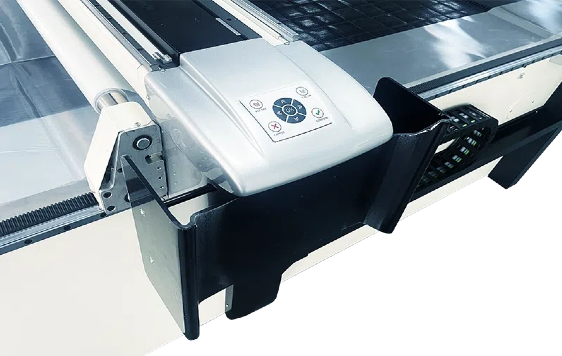
When you transition from manual labor to automated factory production, you need a CNC flatbed. This represents the true Automatic Fabric Cutting Machine for modern small factories. These massive tables utilize vacuum suction to hold yardage perfectly flat. A robotic gantry moves rapidly across the surface. It deploys rapid oscillating blades to slice patterns with industrial efficiency. They integrate directly with professional CAD software. They handle everything from canvas to silk. This equipment eliminates human error entirely.
Industrial Machine Type | Ideal Material / Thickness | Core Advantage | Major Constraint |
|---|---|---|---|
Electric Rotary/Straight Knife | Multi-ply stacks (Apparel) | Unmatched raw severing power | Requires extreme safety protocols |
Laser Bed Cutters | Synthetics, single/double ply | Cauterizes edges, zero shifting | Toxic fumes require heavy venting |
CNC Flatbed (Oscillating) | High-volume rolled yardage | Total automation, vacuum hold | Requires large factory floor space |
We designed this shortlisting logic based on common buyer profiles. Find the profile matching your current daily routine. Use these targeted recommendations to guide your next step.
Recommendation: Digital Blade Cutters (Examples: Cricut Maker 3 or Brother ScanNCut).
Why: You need infinite design freedom. Your projects change daily. You might cut paper on Monday and silk on Tuesday. You enjoy a low upfront cost for trying new shapes. Speed is not your primary metric. You value customization over mass production.
Recommendation: Electric Die-Cutting Systems (Example: AccuQuilt GO! Big).
Why: You process hundreds of standard blocks. You need to eliminate joint pain completely. This system cuts six layers simultaneously. It ensures absolute piecing accuracy. The built-in seam allowances save you countless hours at the sewing machine. The speed improvement justifies the ongoing die purchases.
Recommendation: Industrial Electric Rotary Knives or an entry-level CNC Flatbed Cutter.
Why: Craft machines will immediately bottleneck your production line. You require raw, multi-ply cutting power. You prioritize severing thick stacks of raw goods over trimming detailed decorative shapes. You need equipment built for continuous daily operation.
The ideal fabric cutting machine directly targets your specific workflow bottleneck. We have explored how different technologies solve entirely different problems. If your constraint is design flexibility and mixed materials, you should go digital. If your issue is pure output speed and physical joint pain, you must go with a die-cutter. If you process thick layers of commercial raw goods, you should look immediately to industrial electric tools.
Take these practical steps before finalizing any purchase:
Audit your last three completed projects.
Calculate the exact hours spent strictly on cutting versus actual sewing.
Write down the recurring geometric shapes you use most often.
Assess your personal tolerance for buying ongoing consumables, like adhesive mats or physical dies.
A: It depends heavily on the machine and operator skill. Die-cutters require rough-cutting fabric slightly larger than the mold. This leaves small offcuts. However, it eliminates human error and ruined blocks entirely. Preventing these catastrophic mistakes often saves more aggregate material than the machine's small waste margin.
A: Most digital plotters, like the Cricut family, require proprietary software. You need an active internet connection and a computer or tablet. Alternatively, machines like the Brother ScanNCut feature built-in LCD screens and scanning capabilities. This allows for fully offline, computer-free operation in your studio.
A: Yes, but with strict caveats. Digital machines require special deep-point blades and handle only one thin layer. Heavy-duty die-cutting machines manage denim and soft leathers easily. You must use manufacturer-approved heavy dies and limit your layer count. For thick commercial leather, you require industrial clicker presses.


