

Views: 0 Author: Site Editor Publish Time: 2026-06-30 Origin: Site


Fabric accounts for 50% to 70% of total garment production costs. Inefficient handling leads directly to margin erosion. Material waste and severe cutting-room bottlenecks drain factory profitability quickly. A slow start ruins the entire production line schedule.
Apparel manufacturers are rapidly shifting from semi-automatic processes to fully automated cutting rooms. However, investing in a high-performance cutter means nothing if your fabric spreading machine cannot keep up. Manual methods cause dangerous microscopic tension variations. They also consistently slow down factory output. Factory managers need a smarter approach to material preparation.
This article provides a vendor-neutral, evidence-based framework for evaluating modern spreading equipment. We will explore how to match machines to specific fabric types and current production realities. You will learn the exact evaluation criteria to look for. This knowledge ensures maximum material utilization and sustainable factory scaling.
Matching machine capabilities to fabric behavior (specifically stretch and weight) is the most critical factor in preventing dimensional distortion.
An Automatic Knit Woven Spreader Machine offers versatility, but specialized production lines may require dedicated equipment.
Evaluation must go beyond top speed; edge alignment precision and tension-free feeding are the true drivers of fabric savings.
Long-term equipment value relies heavily on operator training requirements, existing table compatibility, and local parts availability.
The spreading process almost always dictates overall factory throughput. Your automatic cutter can process layers at incredible speeds. However, if the cutter waits for new lays, spreading becomes your primary bottleneck. Factories lose thousands of dollars in idle machine time. An automated cutting head is useless without a steady supply of perfectly prepared material. Upgrading your spreading equipment eliminates this delay. It ensures your most expensive cutting assets run continuously.
Manual spreading causes significant microscopic tension variations. Human operators pull and stretch materials unevenly as they walk down the table. When you cut stretched fabric, it eventually relaxes. It shrinks back to its natural resting state. This causes severe sizing inconsistencies across the garment panels. You ultimately face higher reject rates and poor fit quality. Automated machines eliminate this human error. They lay down material at a consistent, mathematically precise tension level.
Finding skilled manual spreaders is becoming increasingly difficult. The role requires physical endurance and precise attention to detail. As labor costs rise globally, relying on human operators harms your competitive edge. Furthermore, human fatigue leads to end-of-shift mistakes. An automated system offers perfect predictability. It performs identically at the beginning and end of a shift. You can redeploy your manual laborers to higher-value quality control roles.
Fabric composition completely dictates your ideal machine choice. Knits and wovens behave very differently under tension. Knits contain elastane or spandex. They stretch easily and require advanced tension-free feeding systems. If you pull a knit fabric during spreading, it will distort permanently. Wovens are much more stable but often come in heavier rolls. They require robust handling mechanisms and heavy-duty motors. You must match the machine's core engineering to your primary material type.
Many factories process a mix of materials throughout the year. They take on diverse job orders or navigate seasonal material shifts. In these cases, you need a flexible solution. An Automatic Knit Woven Spreader Machine provides excellent versatility. It handles the delicate stretch of summer knits. It also manages the rigid structure of autumn wovens.
When evaluating hybrid machines, pay close attention to changeover times. Operators should easily switch between knit and woven modes via the software interface. Lengthy mechanical adjustments eat into your daily production quotas.
Specialized production lines require dedicated, single-purpose equipment. If you manufacture denim, heavy workwear, or automotive upholstery, hybrid machines might lack necessary torque. You should invest in a heavy-duty Automatic Woven Spreader Machine.
These specialized machines excel at managing massive roll weights. They feature reinforced steel cradles and high-torque feeding motors. Dedicated woven systems prioritize unyielding edge alignment over delicate tension control. They push through heavy, rigid materials without stalling or overheating.
True tension control separates premium machines from basic models. You should look for motorized feeding rollers integrated with sensitive dancer-bar systems. The dancer bar floats on the fabric web. It constantly sends feedback to the feed motor. If tension increases, the motor speeds up to introduce slack. You can test this quality easily. Observe how the machine handles your lowest-weight, highest-stretch fabrics. A quality machine lays them perfectly flat without pulling the edges.
Never guess your material specifications. You must cross-reference the machine’s maximum limits with your actual supplier rolls. Measure your typical roll diameter and weigh your heaviest rolls. Overloading a machine causes rapid motor degradation. It also bends feeding bars and damages cradle belts. Buy a machine rated for at least 20% more weight than your average roll. This buffer ensures longevity and prevents unexpected breakdowns during heavy production runs.
Apparel designs require different laying techniques. Your machine must natively support your specific required modes. Common modes include face-up, face-to-face, tubular, and zig-zag spreading. Ensure the software handles these transitions seamlessly. Operators should not perform excessive manual resetting when switching from face-up to zig-zag. Fast mode switching improves daily marker output and keeps the cutting room agile.
Wasted edge fabric destroys your profit margins quickly. Accurate edge alignment is absolutely non-negotiable. Modern machines use infrared or photoelectric edge alignment sensors. These sensors track the fabric selvedge continuously. They shift the entire machine body slightly to keep the edge perfectly straight. You should demand an acceptable tolerance level of ± 1-2mm. This precision allows you to narrow your marker width. You will save miles of fabric over a production year.
Modern cutting rooms rely on interconnected data. Evaluate how the spreading machine interfaces with your existing CAD/CAM software. It should read digital cut plans seamlessly via network connections. The machine must track exact fabric consumption per marker. It should also report downtime codes to your central dashboard. This IoT integration helps factory managers spot inefficiencies quickly. It provides accurate data for future material purchasing decisions.
Use the following evaluation chart to guide your buying committee during vendor presentations. It outlines the minimum technical benchmarks for modern automated equipment.
Evaluation Criterion | Critical Component to Check | Target Benchmark for High Performance |
|---|---|---|
Tension Management | Dancer-bar synchronization | Zero-stretch on 100gsm elastane blends |
Edge Alignment | Photoelectric sensor response | ± 1-2mm alignment tolerance maximum |
Load Capacity | Motorized cradle belts | Exceeds maximum supplier roll weight by 20% |
Digital Connectivity | IoT network capability | Real-time CAD/CAM marker syncing |
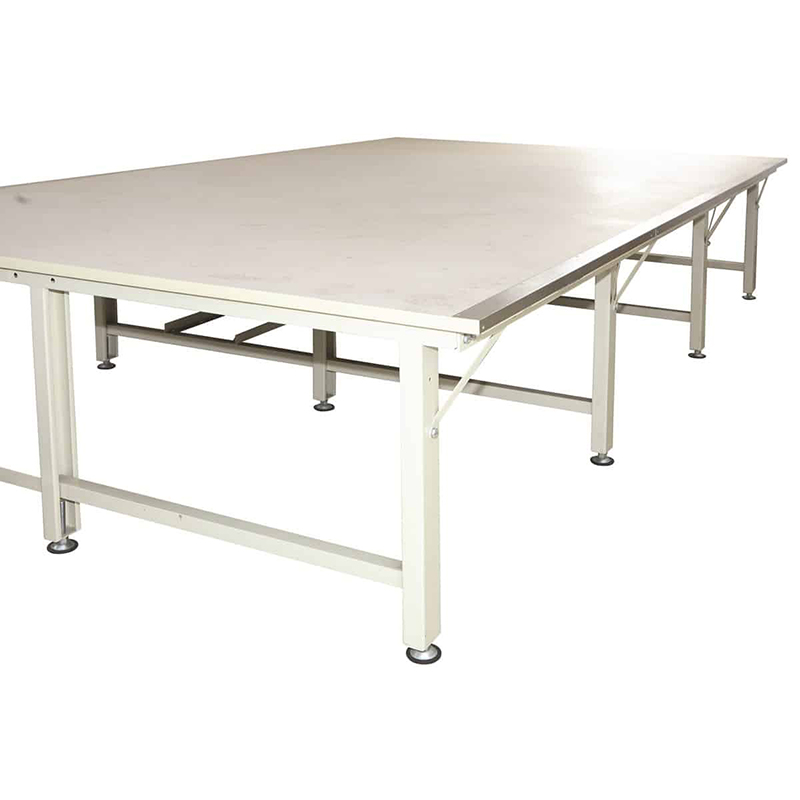
Buying the machine is only the first step. The foundation it rides on matters equally. A new automated machine requires a perfectly leveled table. It usually requires an air-flotation system to move heavy lays to the cutter. Never assume your existing manual tables can support a new automated system. Manual tables often lack the structural integrity to hold heavy track systems. They bow under the weight of the machine and the heavy fabric rolls. An uneven table causes the machine to derail or misalign edges.
High employee turnover is a reality in apparel manufacturing. Your chosen equipment must feature an intuitive software interface. Complex PLC controls feature steep learning curves. They delay your time-to-value significantly. Look for touchscreen monitors with visual icons rather than text-heavy menus. Operators should learn the basic functions within two days of training. If the machine requires a specialized engineer to run it, it presents a massive operational risk.
Automated machines require strict preventative maintenance. Sensors get covered in fabric dust. Belts lose tension over time. You must highlight these realities to your maintenance team immediately. Assess the vendor's local service level agreements (SLAs). Do they stock spare parts in your country? Shipping a proprietary motor from overseas takes weeks. Extended downtime ruins delivery schedules. Reliable local support is often more valuable than advanced machine features.
Never buy industrial equipment based on a glossy brochure. Brochures only show ideal conditions. You must require vendors to test your specific fabric rolls during the demo. Send them your most difficult, slippery, or high-stretch materials. Watch how their machine handles your actual daily challenges. If the vendor refuses a custom material test, cross them off your shortlist immediately. Real-world testing reveals hidden mechanical flaws quickly.
You need a solid financial framework to justify the capital expenditure. Build an ROI model focused on three main pillars. First, calculate fabric yield improvement. Even a 1% to 2% material saving scales massively across a year. Second, factor in reduced labor headcount per table. You can usually move two manual operators to other tasks. Third, measure expected energy consumption. Modern servo motors use less electricity than older clutch systems. These three factors usually reveal a payback period of under 18 months.
Ask these specific questions to uncover the true capabilities of your shortlisted vendors. Their answers will help you separate sales rhetoric from engineering reality.
"What is the actual yield loss during a roll changeover?" Poorly designed machines waste a meter of fabric every time you load a new roll.
"How are software updates handled and priced?" Determine if bug fixes are free or if they require expensive annual licensing contracts.
"What is the guaranteed response time for a critical breakdown?" You need a written SLA ensuring a technician arrives within 24 to 48 hours.
"Do you provide comprehensive operator and maintenance manuals in our native language?" Operators ignore manuals they cannot easily read and understand.
Choosing the right fabric spreading machine requires a strategic balancing act. You must weigh fabric versatility against tension control precision and facility readiness. Knits demand sensitive dancer bars, while wovens require raw motor torque. Understanding your primary material flow is the foundation of a smart purchase.
Your existing infrastructure matters just as much as the machine itself. Ensure your spreading tables can handle the precise track systems and heavy weight. Focus heavily on operator training and intuitive software interfaces. An easy-to-use machine guarantees faster adoption on the factory floor.
Finally, prioritize long-term fabric savings and reliable local support over the lowest initial purchase price. A cheap machine with poor edge alignment wastes thousands of dollars in fabric monthly. By following this evaluation framework, you will transform your cutting room into a highly efficient, predictable operation.
A: Cradle feeds are ideal for tension-free knit spreading. They support the entire roll evenly from underneath using synchronized belts. This prevents unwanted stretching. Bar feeds use a solid metal rod inserted through the fabric roll core. They work best for stable wovens and heavy-duty materials where stretch is not a concern. Choose a cradle system for delicate fabrics to ensure precise dimensional stability.
A: Yes, certain machines support both styles using interchangeable attachments. However, this hybrid approach often sacrifices top-tier speed. Specialized machines or dedicated spreading heads provide optimal efficiency for high-volume lines. If your factory processes mostly tubular goods, a dedicated tubular model yields much better daily throughput. You must weigh versatility against absolute production speed.
A: You must calculate your total required footprint carefully. A reliable baseline heuristic is the length of your longest marker plus several operational zones. Add adequate space for loading zones, parking zones, and clear operator walkways. Typically, this adds about three to four meters beyond the actual marker length. Always measure your cutting room twice before finalizing any equipment layout.


