

Views: 0 Author: Site Editor Publish Time: 2026-06-29 Origin: Site


Modern garment manufacturing demands incredible speed. However, the cutting room is only as fast as its spreading process. Manual spreading often results in highly inconsistent fabric tension. This is particularly problematic for highly elastic knits. Misaligned edges and wasted material quickly erode profit margins before a single cut even occurs. Relying on human hands for this crucial stage creates a massive production bottleneck. The automatic knit woven spreader machine offers a robust solution to this core issue. It acts as a critical transitional technology between the fabric roll and the cutter. It standardizes ply height perfectly. It eliminates dimensional fabric distortion entirely. Finally, it integrates directly with automated cutting workflows for seamless factory production. In this guide, you will learn how these machines handle dual material types. You will discover the mechanics behind tension-free spreading. You will also understand how upgrading to automated systems aggressively scales your daily capacity.
Dual-Material Versatility: These machines handle both the stretch-prone nature of knits and the heavy, rigid properties of wovens without requiring separate production lines.
Tension-Free Spreading: Advanced servo motors and cradle feed systems prevent fabric elongation, eliminating post-cut shrinkage issues.
Material Yield Optimization: Precise edge alignment and automated end-cutting minimize fabric waste, directly improving the bottom line.
ROI & Scalability: Upgrading from manual to automatic spreading typically reduces labor dependency while increasing daily cutting capacity by up to 300%.
Manual fabric spreading drains resources quietly but consistently. When you rely on manual labor, you introduce micro-delays into the production line. Operators must stop frequently to adjust edges, smooth wrinkles, and check alignment. You typically need two to four operators stationed around a single long table. They physically pull the fabric off heavy rolls. This manual pulling creates uneven tension across the material. Consequently, defect rates climb rapidly. Inconsistent tension leads to garments that shrink or warp after production. These manual inefficiencies cost factories thousands of hours in lost productivity annually.
An automatic knit woven spreader machine eliminates these manual pitfalls. It operates as a programmable, motorized carriage. It travels back and forth along a specialized spreading table autonomously. You simply program the machine via a digital interface. It lays the fabric in exact, pre-determined lengths. It tracks ply counts with perfect accuracy. The machine feeds the material smoothly onto the table without manual pulling. It utilizes specialized mechanisms to match the feed rate to its travel speed. This synchronization ensures the fabric rests completely flat. It completely removes the physical strain from the spreading process.
Modern cutting rooms rely on continuous workflows. Automated spreaders sync seamlessly with Computer-Aided Manufacturing (CAM) systems. They communicate directly with CNC cutting machines. This digital handshake prevents bottlenecks. As the spreader finishes a block of plies, the block moves swiftly to the cutter. Air-flotation tables allow operators to glide the heavy stacked fabric effortlessly. You achieve a continuous, uninterrupted production flow. This integration transforms isolated machines into a cohesive, high-speed garment manufacturing system.
Knits present unique engineering challenges. They contain elastane and feature interlocking loops. They stretch very easily under slight pressure. If you pull a knit fabric tightly during spreading, it elongates. Once you cut the elongated fabric, it relaxes and shrinks back to its original size. This dimensional distortion causes severe garment sizing errors. A medium shirt might suddenly fit like a small. Knits absolutely require "tension-free" handling.
Automated spreaders solve this through sophisticated feed systems. They do not pull the fabric from a center bar. Instead, they utilize cradle feeds. The fabric roll rests inside a motorized cradle. A conveyor belt underneath unrolls the fabric from the bottom. Dancer rollers monitor the fabric slack continuously. They communicate with the machine's computer. They feed the fabric at the exact speed of the machine's movement along the table. This guarantees zero tension.
Woven materials demand different handling. They do not stretch easily, but they are heavy. Manufacturers often supply tightly wound woven rolls. These rolls require immense structural support. Handling these materials efficiently requires robust equipment. The Automatic Woven Spreader Machine utilizes heavy-duty expanding roll bars. These bars lock the heavy roll securely in place. They prevent the roll from shifting during high-speed travel.
Edge alignment is critical for wovens. Rigid fabrics must stack perfectly straight. If the edges misalign, you waste valuable material during the cut. Woven spreaders use advanced infrared edge-alignment sensors. These sensors detect the fabric edge in real time. They adjust the carriage position laterally. They keep the rigid fabrics perfectly stacked, ply after ply.
Investing in a hybrid machine offers a distinct financial advantage. A dual-purpose machine combines cradle feeds and heavy-duty roll bars. It handles delicate knits and heavy wovens seamlessly. You avoid buying siloed equipment for different product lines. This saves significant capital. It also optimizes factory floor space. You maximize your production flexibility without managing separate machine maintenance schedules.
Fabric Spreading Requirements: Knit vs. Woven
Feature Requirement | Knit Fabric | Woven Fabric |
|---|---|---|
Stretch Sensitivity | High (requires tension-free handling) | Low (structurally rigid) |
Ideal Feed Mechanism | Cradle feed with conveyor belt | Expanding heavy-duty roll bar |
Primary Defect Risk | Post-cut shrinkage (dimensional distortion) | Edge misalignment (wasted yield) |
Sensor Dependency | Dancer rollers for slack monitoring | Infrared sensors for edge tracking |
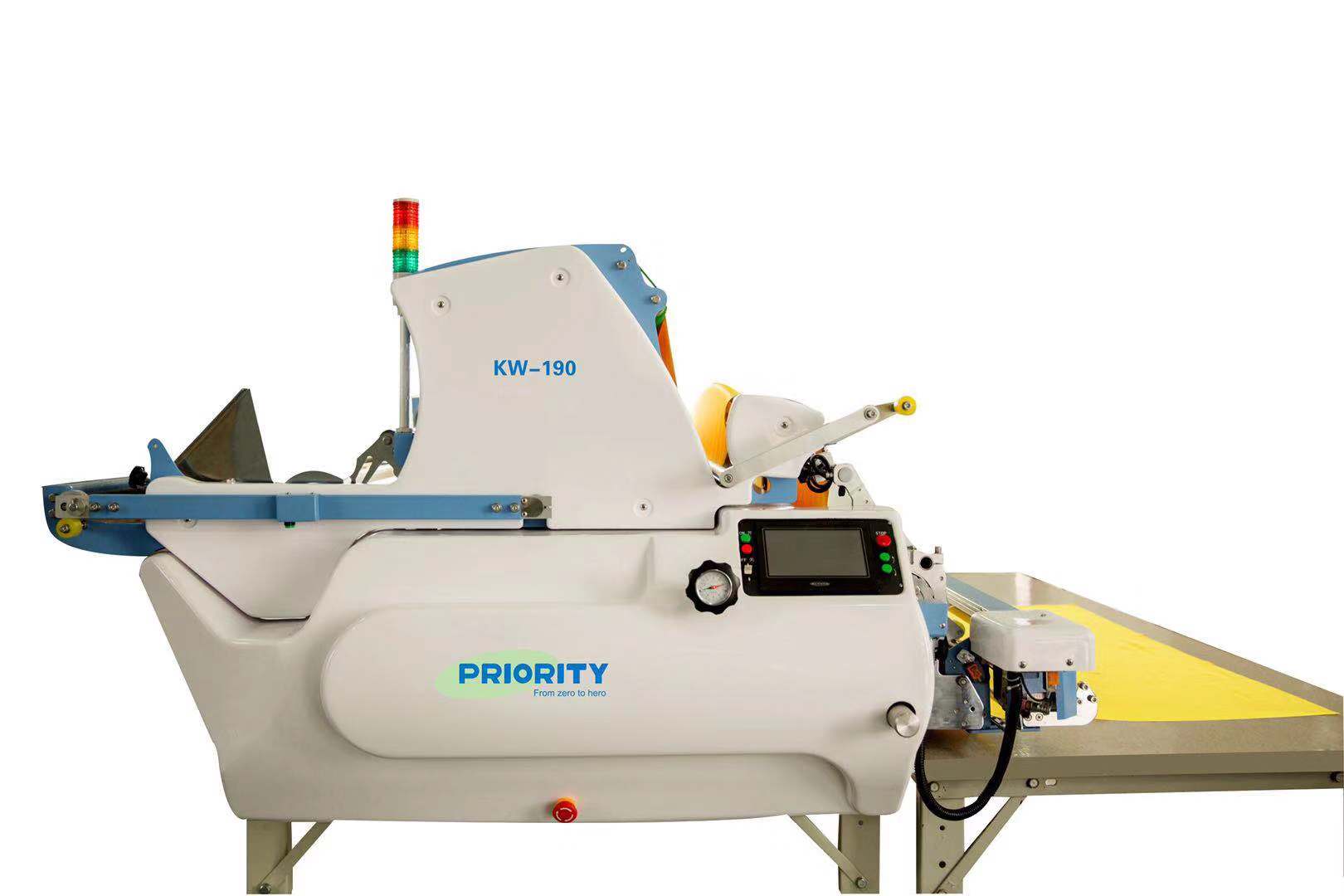
When selecting a machine, evaluate the precision of its control systems. The Programmable Logic Controller (PLC) acts as the machine's brain. It commands the servo motors. True tension-free systems rely on constant data feedback. They actively monitor feed rates in real time. If the dancer bar detects too much tension, the PLC instantly speeds up the feed rollers. This active adjustment happens in milliseconds. Look for machines with high-resolution encoders for ultra-smooth motor control.
You must match machine specifications to your specific production demands. Consider max roll weight and diameter first. Standard machines easily handle 100kg rolls. However, denim or heavy canvas requires heavy-duty machines rated for 200kg or more. Next, verify the maximum spreading width. Ensure it is compatible with your widest printed markers. Finally, review the spreading speed (measured in meters per minute) and maximum ply height clearance. High clearance allows you to stack more layers before cutting.
Technical Specification Chart for Equipment Evaluation
Specification Category | Standard Operations | Heavy-Duty Operations |
|---|---|---|
Max Roll Weight | Up to 100 kg | 200 kg to 300+ kg |
Spreading Speed | 60 - 80 meters/min | 80 - 100 meters/min |
Max Ply Height | 15 - 20 cm | 25+ cm |
Typical Fabric Type | T-shirts, activewear, light cotton | Denim, upholstery, heavy twill |
Modern equipment leverages software to prevent errors. Assess machines offering intuitive digital touchscreens. These interfaces let you program complex ply steps easily. AI-assisted fault detection is a vital feature. Sensors scan the fabric as it unrolls. If they detect major flaws or reach the roll-end, the machine stops automatically. This prevents operators from spreading defective yardage. It saves time and protects your material investment.
Look for machines offering modular add-ons. These attachments expand your operational capabilities. Tubular knit attachments are essential for seamless body garments. Zigzag spreading catchers allow you to lay fabric face-to-face rapidly. Automated threading systems speed up the roll changeover process. Buying a modular machine lets you upgrade capabilities as your business grows.
Fabric costs dominate garment manufacturing. The raw material typically accounts for 60 to 70 percent of total garment costs. Therefore, material yield optimization drives profitability. Millimeter-precise edge alignment saves substantial fabric. When edges perfectly align, you reduce the buffer zone needed on the cutting marker. Automated end-cutting knives slice the fabric precisely at the required length. This eliminates the sloppy manual end-allowance errors. You save inches of fabric per ply. Multiplied across thousands of plies daily, this leads to massive annual financial savings.
Automation shifts human resources significantly. Manual spreading forces multiple workers to endure intense physical fatigue. They pull heavy fabrics across long tables for hours. A Automatic Knit Woven Spreader Machine changes this dynamic entirely. It transitions the operation to single-operator oversight. The machine does the heavy lifting. The operator simply monitors the interface and loads the rolls. This reduces physical fatigue and virtually eliminates human error. You can reallocate your surplus labor to higher-value tasks, like quality assurance or complex sewing operations.
Retailers demand fast turnarounds. Consistent spreading speeds create highly predictable production timelines. Manual teams slow down near the end of a shift due to fatigue. Automated spreaders maintain peak velocity around the clock. This consistency allows factory managers to schedule cutting and sewing phases accurately. You accelerate your overall production cycle. Getting products to market faster gives you a distinct competitive advantage over factories relying on legacy manual methods.
Automated spreaders require specific physical infrastructure. You cannot simply place them on standard wooden tables. These heavy machines require specialized, perfectly leveled air-flotation tables. They travel along structural rail tracks bolted to the table edges. If the table is uneven, the carriage will bind or skip. You must assess your factory floor space carefully. The total length of the track system must accommodate your longest markers plus a staging area for roll loading.
Improper initial calibration poses a major risk. If you set up the machine incorrectly, you negate its tension-free benefits immediately. High-stretch elastomers and delicate knits require precise sensor tuning. If the dancer rollers are too stiff, they will stretch the knit before the PLC can react. You must work closely with vendor technicians during installation. They will help you establish baseline profiles for your most difficult fabrics.
Automation changes job descriptions. While the machine handles the physical labor, it requires operators to transition into "technician" roles. They must learn to program digital settings. They must monitor PLC dashboards for error codes. Some older operators struggle with this digital transition. You must provide comprehensive, hands-on training. Encourage them to understand the "why" behind the settings, not just memorize button sequences.
Preventative maintenance prevents unexpected, costly downtime. You must treat these machines like precision instruments. Implement strict daily and weekly maintenance routines.
Daily Track Cleaning: Wipe down the structural guide rails to remove fabric dust and lint buildup.
Sensor Dusting: Use compressed air to gently clean the infrared edge-alignment sensors and camera lenses.
Blade Inspection: Check the automated end-cutting knife for dullness or chips at the end of each shift.
Belt Tensioning: Inspect the cradle conveyor belts weekly for proper tension and wear.
Motor Servicing: Schedule regular professional servicing for the servo motors and gearboxes according to the manufacturer's timetable.
An automatic knit woven spreader machine fundamentally upgrades factory operations. It is not just a labor-saving tool. It functions as a critical quality-assurance mechanism. It protects your expensive fabric investments from distortion and waste. By standardizing ply height and eliminating tension, it sets the stage for perfect automated cutting. The technology transforms a chaotic manual bottleneck into a predictable, high-yield workflow.
Decision-makers should prioritize rigorous equipment testing during the shortlisting phase. We advise sending your factory's most difficult fabrics directly to equipment vendors. Use highly elastic knits or slick wovens for a live demonstration. Watch how their specific systems handle tension control and edge alignment in real time.
As a next step, encourage your production team to audit current operations. Calculate your exact fabric end-loss percentages right now. Establish a solid baseline of material waste and labor hours. Having these precise metrics prepares you to calculate realistic financial returns before you contact suppliers for a final quote.
A: Woven machines traditionally use a bar-feed system built for heavy, non-stretch rolls. They rely on pulling the fabric. Knit machines use a cradle or belt system to support the fabric from below. This prevents the sensitive loops from stretching. A combination machine features both mechanisms to handle diverse production lines.
A: By eliminating manual end-allowance errors and keeping edges perfectly aligned, factories typically see a 2% to 5% increase in overall material utilization per roll. Over a year of high-volume production, this material optimization saves significant capital.
A: Yes. Automatic spreaders require heavy-duty tables equipped with precision guide rails. Most modern facilities pair them with specialized air-flotation tables. These tables blow air upward, allowing operators to easily slide the finished, heavy fabric blocks directly to the automated cutter.
A: Yes, but it requires a specific tubular spreading attachment. It may also need a specialized frame to open and lay the tube flat without creasing the folded edges. Buyers must specify this requirement clearly during the procurement process to ensure compatibility.


