

Views: 0 Author: Site Editor Publish Time: 2026-07-01 Origin: Site


Transitioning from manual to automated spreading represents a major capital expenditure for apparel manufacturers. The primary barrier to adoption remains the uncertainty surrounding material compatibility. Can automated equipment handle highly variable, stretch-prone, or specialized materials without causing distortion? This question plagues many operations managers.
Incorrect machine selection inevitably leads to post-cut shrinkage, misaligned plies, and increased fabric waste. These end-loss inefficiencies quickly negate the expected return on investment of any automated system. Procurement teams cannot afford to guess which equipment fits their production floor.
This article provides procurement and operational directors a clear, technical breakdown of material compatibility. You will learn exactly which fabrics a fabric spreading machine can handle effectively. We detail the required configurations for complex materials and show you how to evaluate equipment based on your specific production mix.
Modern fabric spreading machines are highly versatile but require specific feed mechanisms (e.g., cradle feed vs. roll bar) depending on the material's dimensional stability.
Rigid wovens and heavyweights prioritize speed and weight capacity, while knits and elastane blends require zero-tension feeding to prevent post-cut shrinkage.
Integrating an automatic fabric relaxing machine before the spreading process is non-negotiable for high-stretch synthetic and activewear fabrics.
The ultimate success of automated spreading depends on matching the machine's edge-control sensors and cutting mechanisms to your most challenging fabric type.
Treating all fabrics equally during the spreading phase leads to unpredictable assembly outcomes. Materials behave differently under stress. If you apply tension to elastane during spreading, the cut pieces will eventually shrink back to their natural state. This hidden tension ruins garment sizing and causes massive quality control failures.
A successful automated spreading implementation must achieve three specific outcomes. First, it requires zero-tension laying. Second, you need millimeter-precise edge alignment. Third, operators must optimize ply heights without causing fusion or distortion. Hitting these marks guarantees a clean feed into the cutting room.
The bottom line comes down to equipment flexibility. Machine scalability relies entirely on its ability to switch between vastly different material profiles. You might need to run rigid denim in the morning and slippery silk in the afternoon. Doing so requires minimal downtime for mechanical adjustments. A rigid, one-size-fits-all machine will only bottleneck your production line. You must assess your entire material portfolio before committing to a specific model.
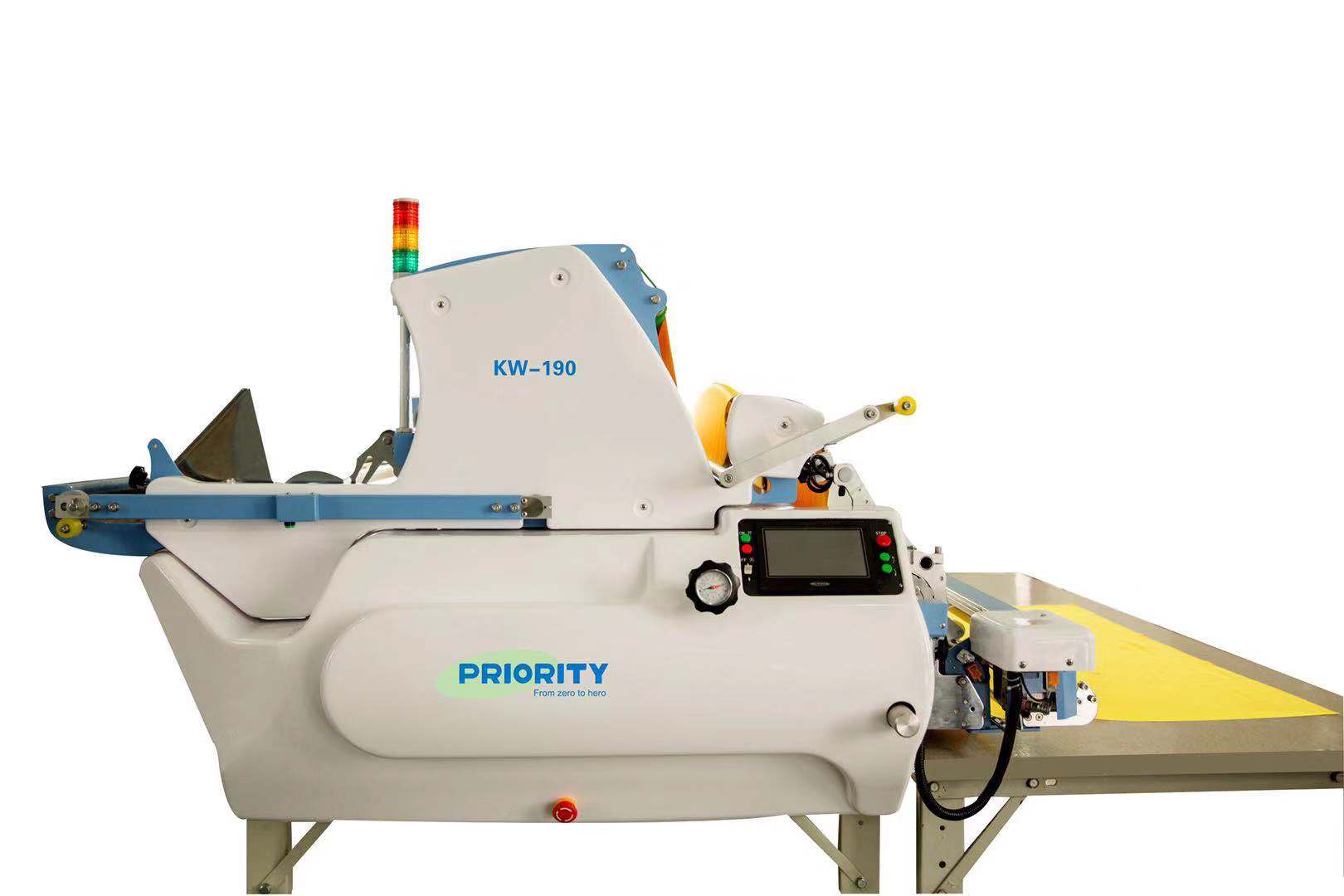
Understanding material behavior is the first step in equipment evaluation. We can categorize textiles into four distinct profiles. Each profile demands unique handling mechanisms.
These materials exhibit low stretch and remain highly stable during processing. They represent the easiest materials for any automated system to handle. They do not easily distort, curl, or shrink under normal pulling forces.
You can process rigid wovens using a standard roll bar or a basic cradle feed. Operators can run these materials at high speeds while achieving maximum ply heights. Your focus here is purely on speed and throughput. You want a machine capable of rapid acceleration and deceleration without losing edge alignment. Standard zig-zag catchers work perfectly for continuous face-to-face spreading of these stable materials.
Activewear and jersey materials present a much higher risk of dimensional distortion. They also suffer frequently from edge curling. When stretched, they trap kinetic energy. They release this energy only after the cutting blade does its job.
Processing these textiles requires a tension-free cradle feed system. You must look for synchronized conveyor belts that actively feed the material downward. Gravity alone is not enough. You also often need specialized attachments to handle tubular knits versus open-width rolls. Without these mechanisms, the fabric will elongate during spreading. This elongation leads directly to rejected garment panels.
Industrial textiles introduce intense weight limitations. They also feature thick, uneven edges that pose mechanical challenges. Standard machines will stall or break down under these extreme physical loads.
You require heavy-duty machines designed specifically for this category. They must safely handle rolls exceeding 100kg to 200kg. Furthermore, you need robust, motorized cutting knives to slice through thick layers. Reinforced spreading tables become mandatory to support the immense physical load of a multi-ply canvas or denim lay. Do not underestimate the inertia of a 200kg roll spinning on a cradle.
Lightweight synthetics and silks are notoriously difficult to control. They are highly prone to lateral shifting. They also generate severe static buildup. Slippage during acceleration or deceleration will instantly misalign your plies.
Success requires precise photoelectric edge-alignment sensors. You also need integrated anti-static bars and non-abrasive feeding rollers. Operators must program slower acceleration profiles into the system. High-speed jerks will cause air to trap between the slippery plies, creating a ballooning effect. Multi-sensor arrays help prevent translucent fabrics from confusing the edge control system.
Fabric Category and Machine Requirement Matrix
Fabric Category | Stretch Risk | Ideal Feeding System | Key Technical Requirement |
|---|---|---|---|
Rigid Wovens | Low | Roll Bar or Cradle | High-speed capability, zig-zag catchers |
Knits & Synthetics | High | Synchronized Cradle Feed | Zero-tension control, tubular attachments |
Heavyweights | Low to Medium | Heavy-Duty Cradle | Motorized cutting knives, reinforced tables |
Delicates | Medium | Cradle Feed with Anti-Static | Photoelectric edge sensors, slow acceleration |
For highly elastic fabrics like swimwear, yoga wear, and intimates, standard spreading is not enough. The roll itself must be pre-conditioned before it ever touches the spreading table. The weaving, dyeing, and shipping processes wind the fabric incredibly tight. This traps mechanical tension deep inside the roll.
An Automatic Fabric Relaxing Machine solves this critical issue. It acts as a mandatory precursor to the spreading process.
Here is how the mechanism of action works in a production environment:
Unrolling: The machine unspools the tightly wound fabric at a controlled, relaxed pace.
Vibration: Gentle mechanical vibration shakes the fibers, forcing them to release trapped kinetic energy.
Aeration: Blowers push air through the textile layers, separating fibers and allowing them to return to their natural resting state.
Rewinding or Plaiting: The fabric is gathered loosely, now entirely free of transit-induced tension.
Operational integration is non-negotiable for activewear brands. Bypassing the relaxing phase for elastane blends guarantees failure. It will result in pattern pieces shrinking by 2% to 5% immediately after cutting. You cannot fix this shrinkage in the sewing department. Integrating a relaxing machine protects your material investment and ensures perfect garment sizing.
Selecting the right equipment requires a strict technical evaluation. You must align the machine's features with your factory's specific material mix.
Feeding Systems (Cradle vs. Bar): You must scrutinize the feed type. Cradle feed systems sit the roll on a synchronized belt. They are critical for tension-free laying. Bar feeds insert a heavy metal bar through the roll core. You should only accept bar feeds if you exclusively process stable wovens.
Edge Control Technology: Compare infrared against mechanical edge sensors. High-contrast or translucent fabrics like chiffon easily confuse cheap optical sensors. You should mandate multi-sensor arrays if you handle sheer lingerie or lightweight linings. Proper edge control drastically reduces material waste.
Catchers and Cutting Mechanisms: Evaluate your laying methods. Zig-zag catchers work wonderfully for continuous face-to-face spreading of wovens. However, they fail for directional fabrics. You need one-way automatic cutters for one-way design knits, corduroy, and velvets. Ensure the cutting box can slice cleanly without fraying synthetic edges.
Always review these three pillars during vendor discussions. They dictate your operational ceiling.
Installing a highly capable Fabric Spreading Machine requires preparation. The factory floor must adapt to the new technology.
Table compatibility is a major blind spot for many buyers. High-end machines processing delicate or heavy fabrics require specialized infrastructure. You often need air-flotation tables. These tables blow air upward through tiny holes. This allows operators to move heavy, multi-ply lays directly to the cutter without distorting the bottom plies. Dragging a 100-ply lay across a standard wooden table will ruin the bottom layers.
Operator training demands a complete mental shift. Workers move from physically pulling fabric to programming digital tension parameters. Operators must learn to create, adjust, and save specific "fabric profiles" into the machine’s Human-Machine Interface (HMI). They need to understand how speed, acceleration, and tension settings interact. A poorly trained operator will turn an advanced machine into a bottleneck.
Environmental factors also play a massive role. Humidity and static electricity dictate how textiles behave. A dry cutting room causes lightweight synthetic fabrics to cling to the machine plates. This static bypasses all digital tension controls. You must factor anti-static equipment, humidifiers, and proper grounding into your rollout strategy.
Procurement teams must adopt a defensive shortlisting strategy. Do not rely on glossy brochures. You need hard evidence of capability.
Always enforce the "Worst-Case" Test. Never run a vendor demo using a standard, stable cotton roll. Every machine on the market handles cotton perfectly. Instead, mandate a test run using your factory's most difficult material. Bring your highest-stretch activewear or your most slippery chiffon. If the machine cannot handle your worst-case scenario, it does not belong on your floor.
Evaluate fabric savings over sheer speed. Many buyers obsess over meters-per-minute metrics. However, you should prioritize end-loss reduction. End-loss is the overlapping waste at the ends of the lay. A machine that accurately saves 2cm per ply on a 100-ply lay yields massive long-term material cost savings. Material costs always dwarf operational time savings in the long run.
Finally, assess maintenance realities and parts availability. Look closely at the durability of cutting blades and conveyor belts. This becomes doubly important if you process abrasive heavyweights or technical textiles like Kevlar. Downtime waiting for a specialized sensor replacement will destroy your production schedule.
A fabric spreading machine can process almost any textile on the market today. However, it only succeeds if you configure it with the correct feeding mechanism, precise edge sensors, and responsive tension controls. Equipment selection is never a one-size-fits-all endeavor.
Align your capital investment directly with your dominant fabric types. If you handle rigid wovens, prioritize speed and weight capacity. If you process activewear, prioritize tensionless feeding.
Next steps for procurement and operations teams:
Audit your current fabric portfolio to identify your most challenging materials.
Mandate worst-case scenario testing during all vendor demonstrations.
Calculate ROI based on end-loss reduction rather than sheer spreading speed.
Never underestimate the necessity of pre-relaxing high-stretch materials to guarantee cutting accuracy.
A: Yes, but it requires a specific tubular spreading attachment. This is often a specialized internal frame that guides the fabric. It prevents center-crease distortion and ensures the tubular knit lays perfectly flat during the feeding process.
A: It requires a "face-up, one-way" spreading mode. The machine must be equipped with an automatic cutting box. It cuts the fabric at the end of the table, returns to the start empty, and lays the next ply in the exact same direction.
A: Standard machines typically handle rolls weighing between 50kg to 100kg. If you process denim or industrial textiles, you need heavy-duty models. These specialized machines feature reinforced frames and motors to manage rolls up to 250kg or more.
A: If your production consists of over 20% knits, spandex, or elastane blends, yes. Bypassing it will cause post-cut shrinkage. However, if you exclusively process 100% rigid wovens like cotton or canvas, a relaxing machine is generally unnecessary.


