


Views: 0 Author: Site Editor Publish Time: 2025-10-13 Origin: Site


In garment manufacturing, fabric spreading plays a crucial role in ensuring precision and efficiency. A Fabric Spreading Machine or fabric spreading system lays fabric in smooth, even layers, directly impacting the quality of subsequent processes like cutting and sewing.
Precise fabric spreading prevents misaligned cuts, minimizes waste, and improves production speed. This efficiency not only enhances garment quality but also reduces costs.
In this article, we’ll explore the different types of fabric spreading systems, from manual to automated solutions, and help you determine which system best fits your production needs.
A Fabric Spreading System is a key piece of equipment in garment manufacturing, used to lay fabric evenly and precisely in preparation for cutting and sewing. It ensures that each layer of fabric is smooth, wrinkle-free, and ready for accurate cutting, which is essential for high-quality garment production.
Even Fabric Layering: Spreads fabric in smooth, uniform layers, ensuring readiness for cutting.
Tension Control: Maintains consistent fabric tension to avoid distortion and ensure accuracy.
Fabric Roll Handling: Unwinds and spreads fabric without damaging delicate or heavy materials.
Speed and Precision: Automated systems increase speed while maintaining precision.
Fabric Roll Loading: Fabric is loaded onto the machine.
Unwinding and Spreading: The machine unwinds and spreads fabric evenly using rollers, conveyors, or air jets.
Layer Completion: After several layers are spread, the fabric is cut and ready for cutting.
Manual Fabric Spreading Systems:
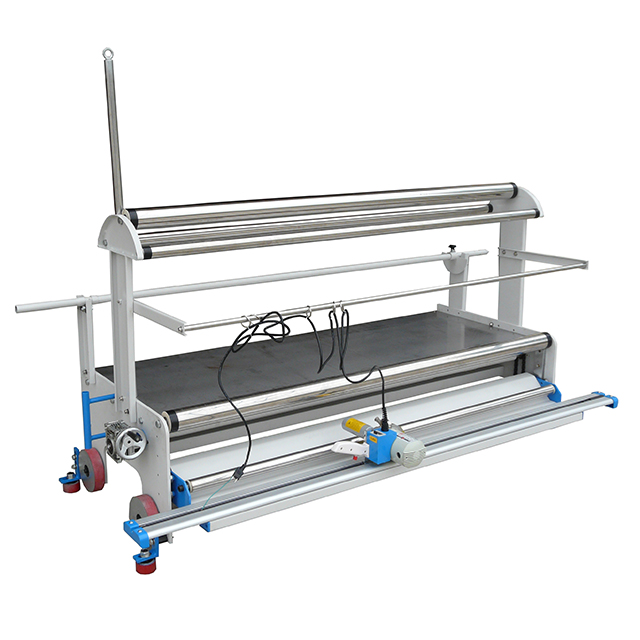
How It Works: Operators manually lay out fabric on a table.
Pros: Low initial cost, suited for small-scale operations.
Cons: Less precision, slower, labor-intensive, higher risk of fabric damage.
Automated Fabric Spreading Systems:
How It Works: Automated machines spread fabric with high precision and speed.
Pros: High precision, faster production, reduced labor costs, consistent results.
Cons: Higher initial cost, requires skilled operators.
Choosing the right Fabric Spreading System depends on production scale, fabric types, and budget. Here are the main types:
Suitable for: Small-scale production.
How it Works:
Operators manually unroll and spread fabric.
Pros:
Low Cost
Simple Operation
Flexible
Cons:
Slower Production
Risk of Errors
Labor-Intensive
Suitable for: Mid-sized production.
How it Works:
Machines assist with unrolling, but operators guide the fabric.
Pros:
Faster
Reduced Labor Costs
Versatile
Cons:
Needs Human Input
Moderate Investment
Less Precision
Suitable for: Large-scale, high-precision production.
How it Works:
Fully automated systems handle fabric unrolling and spreading.
Pros:
High Efficiency
Precise & Consistent
Less Labor & Waste
Cons:
High Cost
Maintenance
Complex Setup
Suitable for: Specialized fabrics (e.g., prints or stretch).
How it Works:
Advanced software controls fabric spreading with precision.
Pros:
Unmatched Precision
Customizable
Efficient Fabric Use
Cons:
High Initial & Maintenance Costs
Complex Setup & Training
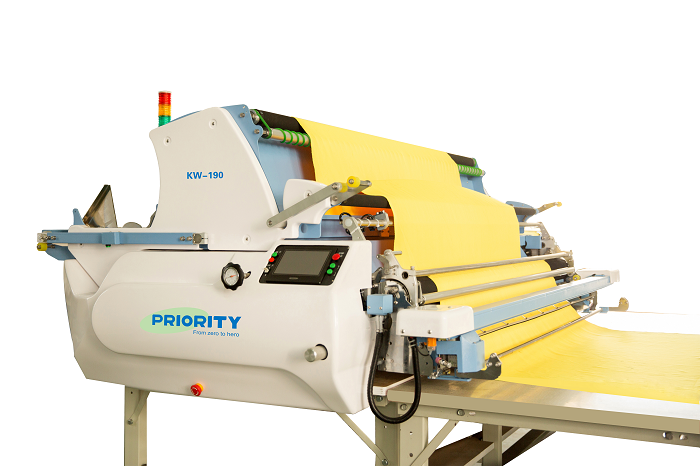
Automated Fabric Spreading Machines offer significant benefits that improve efficiency, precision, and overall production quality. Let’s explore the key advantages:
How it Works:
Automation accelerates the fabric spreading process, reducing manual labor and human error.
Benefits:
Faster Production: Automated systems spread fabric more quickly, boosting production output.
Reduced Labor Costs: With less manual work, labor costs decrease.
Minimal Downtime: Continuous operation with less interruption.
How it Works:
Advanced sensors and tension control ensure even, wrinkle-free layers.
Benefits:
Uniform Layers: Fabric is spread evenly for accurate cutting.
Improved Cutting: Consistent layers lead to precise cuts, reducing waste.
Less Human Error: Automation minimizes misalignments and fabric damage.
How it Works:
The system optimizes fabric use by adjusting tension and speed based on fabric type.
Benefits:
Reduced Waste: Fabric is used efficiently, minimizing scraps.
Cost Savings: Better utilization of expensive fabrics.
Sustainability: Less waste contributes to environmentally friendly production.
How it Works:
Automated systems can handle a wide range of fabrics, from delicate silks to heavy denim.
Benefits:
Adaptable: Easily handles various fabric types without special setup.
Consistency: Maintains uniform quality across different materials.
How it Works:
Automation reduces human interaction, minimizing the risk of accidents and fabric damage.
Benefits:
Safer Work Environment: Fewer manual tasks reduce the risk of injury.
Less Fabric Damage: Consistent handling prevents tearing or stretching.
Streamlined Workflow: Less human intervention means smoother operations.
Choosing the right Fabric Spreading System depends on production scale, fabric types, and budget. Here’s a streamlined guide:
Small-scale Production:
For low-volume operations, manual or semi-automatic systems are ideal. These are cost-effective and flexible, though slower than automated options.
Mid-sized Production:
Semi-automatic systems work well for medium-scale operations, offering a balance of speed, efficiency, and flexibility at a moderate cost.
Large-scale Production:
Fully automated systems are best for high-volume, precision-demanding operations, providing fast, consistent spreading with minimal labor.
Delicate Fabrics (Silk, Satin):
For delicate materials, opt for systems with gentle handling and tension control, such as semi-automatic or automated systems.
Heavy Fabrics (Denim, Canvas):
Choose fully automated systems for robust handling, as they manage heavier fabrics efficiently while preventing distortion.
Stretch Fabrics (Lycra, Spandex):
Computerized systems provide precise tension control, making them ideal for stretch fabrics.
Specialty Fabrics (Digital Prints):
Computerized systems with advanced software ensure perfect handling of intricate patterns.
Budget:
Manual and semi-automatic systems are more affordable but require more labor, while automated systems have higher upfront costs but lower long-term labor expenses.
Technical Support:
Ensure reliable technical support for more complex systems, particularly automated and computerized ones, which may require specialized training.
Maintenance:
Manual systems are low-maintenance, while automated and computerized systems require regular servicing and software updates, which can increase long-term costs.
Long-term Investment:
Though automated systems are pricier initially, they provide long-term efficiency, reducing labor and material waste.
A1: A Fabric Spreading System is an automated piece of equipment used in garment manufacturing to lay fabric uniformly and precisely. It ensures wrinkle-free layers for accurate cutting and sewing, making it essential for high-quality garment production.
A2: Automated systems significantly increase efficiency, reduce errors, and ensure uniform fabric tension. Unlike manual spreading, automated systems can lay fabric much faster and with greater accuracy, improving overall production output and reducing labor costs.
A3: The right system depends on your production scale and the types of fabrics you work with. Small-scale production lines might benefit from manual or semi-automatic systems, while large-scale manufacturers and those working with diverse fabrics may find fully automated or computerized systems more suitable.
A4: Yes, modern automated fabric spreading systems are designed to handle a wide range of fabrics, including delicate materials like silk. These systems are equipped with adjustable settings to ensure that different fabric types are spread precisely without damage.
A5: Automated fabric spreading systems ensure that each layer of fabric is laid out optimally, reducing fabric wastage. The precision of the system ensures even tension and alignment, helping to maximize fabric use and reduce waste during the cutting process.
A6: Regular maintenance involves checking mechanical parts and ensuring that the software systems are up to date. Automated systems typically require periodic service for optimal performance, including cleaning, lubrication, and inspection of the tension control systems. Having a good support team and service plan is essential for minimizing downtime.
In today’s highly competitive garment manufacturing industry, fabric spreading systems are critical to enhancing both production efficiency and garment quality. These systems ensure precise and uniform spreading of fabric, which is essential for achieving wrinkle-free layers that serve as the foundation for accurate cutting and sewing. By optimizing fabric handling, these systems not only improve product consistency but also significantly reduce material waste, ultimately contributing to more sustainable and cost-effective operations.
Selecting the right fabric spreading system is crucial for meeting your production needs. The choice of system—whether manual, semi-automatic, fully automatic, or computerized—depends on several factors such as the scale of your production, the types of fabrics you work with, and your budget. Choosing a system that matches your specific needs ensures smoother production, higher precision, and better overall performance.
At Priority, we understand the importance of these decisions and offer a wide range of fabric spreading machines to suit different production requirements. Whether you need a high-speed, automated solution for large-scale operations or a flexible, budget-friendly system for smaller runs, we have the expertise to guide you to the best choice.
Visit our website or contact our team today to learn more about how our fabric spreading systems can optimize your manufacturing process. Let us help you elevate your production line to the next level of efficiency and quality!


