

Views: 0 Author: Site Editor Publish Time: 2026-07-06 Origin: Site


Plant managers, production engineers, and procurement teams constantly seek reliable automated solutions. Evaluating these systems requires cutting through marketing noise to find real value. Manual and semi-manual filling processes inherently struggle on the factory floor. They cause inconsistent material weights, slow cycle times, and high labor costs. These bottlenecks make scaling home textile production profitably very difficult. You need better methods to stay competitive in today's demanding market.
We will strip away the marketing claims in this comprehensive guide. You will examine the specific mechanical and software mechanisms a textile filling machine uses. It controls material dosing and accelerates throughput seamlessly. Readers will discover how to evaluate equipment and deliver measurable ROI across their facility.
Let us explore how precision engineering transforms modern manufacturing operations. You will learn exact strategies to eliminate weight variance and speed up your production line today.
Precision Control: Modern filling machines utilize advanced weighing sensors and volumetric dosing to eliminate overfilling, reducing raw material waste by verifiable margins.
Throughput Multiplication: Automated continuous feeding systems resolve manual bottlenecks, matching output rates to downstream packaging capabilities.
Predictable ROI: The business case relies on balancing the initial capital expenditure against long-term labor reduction and raw material yield optimization.
Risk Mitigation: Successful implementation requires evaluating facility integration, material compatibility, and changeover downtime before procurement.
Manufacturers face a clear baseline problem during daily operations. Manual stuffing leads to unpredictable fill weights. Operators simply guess the material volume. This causes massive inconsistencies across your product batches. You end up with non-compliant lightweight products. Conversely, you suffer costly material giveaways through overfilling. Overfilling destroys profit margins very quickly. Retailers demand strict adherence to specified weights. Therefore, guessing is no longer a viable business strategy.
Automated systems solve this using integrated load cells. These sensors measure materials to the exact gram. They handle down, synthetic fiber, and shredded memory foam easily. The system uses pneumatic valves to control material flow. A closed-loop feedback system constantly monitors the target weight. It shuts off the valve the millisecond it reaches the set parameter. This eradicates the human error factor entirely.
Material separation plays a crucial role here. Raw fibers often arrive tightly packed. Pre-opening mechanisms ensure even material distribution before weighing. They aggressively agitate the fibers inside a hopper. This prevents clumping. Clumps easily skew accuracy sensors and cause sudden weight spikes. Properly fluffed material flows smoothly through the injection nozzles. It guarantees a perfectly uniform product every single time.
Consistent accuracy directly impacts your quality control processes. It drastically reduces QA rejection rates. You will easily ensure adherence to strict retail weight specifications. Many facilities adopt ISO 9001 standards for this reason. Automated weighing aligns perfectly with Six Sigma methodologies.
Below is a Statistical Weight Distribution Chart demonstrating this contrast.
Production Method | Target Weight (g) | Average Variance (g) | QA Pass Rate (%) | Material Giveaway (%) |
|---|---|---|---|---|
Manual Hand-Stuffing | 1000g | ± 45g | 82% | 4.5% |
Semi-Automated Blower | 1000g | ± 25g | 91% | 2.5% |
Fully Automated Load Cell | 1000g | ± 2g | 99.8% | 0.2% |
Here are some best practices to maintain this precision:
Calibrate your load cells weekly to prevent sensor drift.
Ensure your compressed air supply remains completely dry.
Clean the fluffing chamber daily to remove stray fibers.
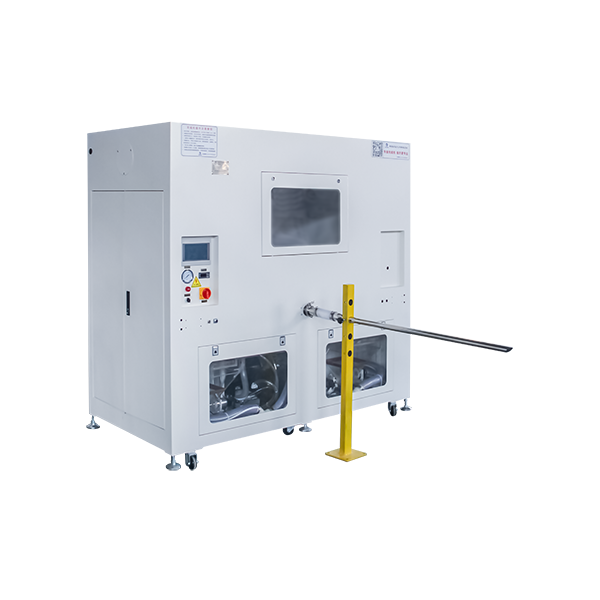
Human operators represent a severe bottleneck in textile manufacturing. They fatigue quickly during highly repetitive tasks. Manual operators typically take several minutes to weigh, stuff, and verify a single quilt. We must contrast these slow cycle times against automation. A dedicated machine operates in a continuous, relentless cycle. It never tires or slows down near the shift end.
High-volume scenarios demand specialized equipment. For large-scale operations, a Fully Automatic Home Textile Quilt Filler provides massive operational benefits. These units utilize multi-nozzle setups. They can fill multiple chambers of a quilt simultaneously. Automated clamping securely holds the fabric shell in place. This eliminates the time operators waste adjusting the fabric. The machine handles the entire sequence flawlessly.
Increased filling speed acts as a powerful catalyst. It boosts your overall production efficiency dramatically. The system feeds directly into automated sewing and sealing lines. You avoid staging delays and massive work-in-progress inventory piles. Products move seamlessly from the nozzle to the packaging station. This synchronizes your entire factory floor to a rhythmic pace.
Many buyers worry about a speed versus accuracy trade-off. However, top-tier machines address this mechanical reality effectively. They maintain tight accuracy tolerances even at maximum capacity settings. High-speed PLCs process sensor data in milliseconds. This allows the valves to react instantly regardless of flow velocity. You do not have to sacrifice quality for output.
Here is a breakdown of speed enhancement features:
Dual-Hopper Systems: One hopper weighs while the other actively fills.
Pneumatic Fabric Clamps: Secures shells instantly without manual tying.
Variable Speed Blowers: Adjusts airflow dynamically based on material density.
Conveyor Integration: Moves completed items automatically to the sewing station.
Smart buyers look past the initial capital expenditure. They focus heavily on raw material yield. You must frame material savings as a primary ROI driver. It is not just a nice perk. Imagine saving just 10 grams of premium goose down per pillow. Now calculate that compounding financial impact over an annual production run. If you produce 500,000 units yearly, you save 5,000 kilograms of expensive material. This single factor often pays for the machine within months.
Labor reallocation is the second critical metric. Move beyond the simplistic idea of cutting jobs. The real value lies in reallocating your human workforce. Repetitive stuffing tasks offer very low value. You should transition those operators to higher-value roles instead. They can manage quality assurance, oversee machine operations, or handle complex packaging tasks. This elevates your overall factory output without increasing headcount.
When calculating ROI, focus strictly on tangible daily metrics. Measure your current average material giveaway accurately. Then contrast it with the machine's guaranteed tolerance limits. Next, calculate the difference in daily unit output. A Textile Filling Machine dramatically changes these numbers. You will see a clear, undeniable financial advantage. Data-driven decisions eliminate procurement anxiety.
A common mistake is estimating material waste visually. You must physically weigh your finished goods against target specs. Only then will you realize the true cost of manual inconsistencies.
Buying the equipment is only the first step. Integration presents distinct physical realities. Floor space constraints often catch buyers completely off guard. These machines require a significant physical footprint. You must account for material staging areas and conveyor runs. Furthermore, compressed air needs are substantial. The factory must supply adequate CFM (Cubic Feet per Minute) to power the pneumatic valves. Power supply prerequisites also dictate dedicated, stable electrical drops.
Changeover downtime is another critical operational risk. You will likely switch between products frequently. Moving from pillows to large cushions takes time. Switching materials from poly-fill to natural down is even harder. You must assess this reality before buying. Look for machines featuring tool-less adjustments. Programmable recipes stored in the HMI minimize offline time. The operator simply taps a screen to recalibrate the system.
Maintenance hurdles exist in any mechanical system. You must address common mechanical failure points proactively. Clogged nozzles happen if materials are not fluffed properly. Sensor calibration drift occurs over time. You must have accessible OEM support. Spare parts availability is non-negotiable. A machine sitting idle waiting for a specialized valve costs you thousands daily. Always vet the manufacturer's domestic parts inventory.
Here is what to watch out for during installation:
Insufficient ceiling height for gravity-fed hopper attachments.
Condensation in air lines freezing pneumatic control valves.
Inadequate dust extraction leading to sensor malfunction.
You must define your success criteria first. Map your specific production goals clearly. Determine your required units per hour. List the specific materials you will process. Identify the exact target tolerances retailers demand from you. You must map these directly to machine capabilities. Avoid paying for over-engineered features irrelevant to your floor. If you only process synthetic fiber, do not buy a specialized feather-handling module.
Implement a strict vendor evaluation framework. Demonstrability is paramount. Demand a Factory Acceptance Testing (FAT) protocol. The vendor must test using your specific textiles and fill materials. Generic factory demonstrations hide critical flaws. You must see your actual product run through the system.
Evaluate the software interface carefully. Assess the complexity of the HMI (Human-Machine Interface). Can your regular floor staff operate it? Or does it require constant engineering intervention? The controls should be intuitive and visual. Finally, assess the vendor's Service Level Agreements (SLAs). You need guaranteed response times for technical support. Fast part replacements keep your line running.
Use the following Vendor Evaluation Matrix to score potential partners:
Evaluation Criterion | Key Requirement | Why It Matters |
|---|---|---|
Material Testing | Willingness to perform FAT with your exact materials. | Proves the machine handles your specific fiber density without clogging. |
HMI Usability | Icon-driven touch screen with saved recipe profiles. | Reduces changeover time and minimizes operator training requirements. |
SLA Guarantees | 24-hour response time and domestic parts stocking. | Prevents catastrophic extended downtime during peak production seasons. |
Tool-less Adjustments | Ability to swap nozzles without wrenches. | Speeds up physical changeovers between different product dimensions. |
Upgrading to an automated textile filling machine is a major strategic move. It is not merely a speed play. It standardizes product quality comprehensively. You gain absolute control over raw material costs. Automation transforms an unpredictable, labor-heavy process into a precise, data-driven operation. Your facility becomes highly scalable and vastly more profitable.
We encourage buyers to take immediate action. Audit your current manual fill-weight variances today. Weigh a random sample of fifty units. Calculate your exact material giveaway. Use this data to build your internal business case. Once you know your baseline waste, request targeted ROI models from reputable equipment manufacturers. You are now fully equipped to make a highly informed procurement decision.
A: Advanced machines feature adjustable agitation systems inside the hopper. They use specialized injection nozzles. These components adapt easily. They handle everything from dense microfiber to delicate natural down without causing any structural fiber damage.
A: Modern systems utilize PLC controls linked to an HMI touchscreen. Operators simply dial in the desired pressure and airflow rates. They select pre-programmed product recipes to adjust the speed instantly and accurately.
A: Training typically takes one to three days. This covers basic operation, recipe selection, and standard troubleshooting. We highly recommend vendor-led training to ensure your staff understands the pneumatic adjustments thoroughly.
A: Yes, they integrate well. You will often need custom hoppers and specific conveyor synchronization. Reputable OEMs routinely manage these retrofits to connect seamlessly with your older sewing and packaging stations.


