

Views: 0 Author: Site Editor Publish Time: 2026-07-05 Origin: Site


Upgrading manual or outdated stuffing processes represents a critical capital expenditure decision for modern manufacturing. You need efficient systems to maintain a competitive edge. Inefficient filling leads to expensive material waste. This proves especially true when handling high-value raw materials like goose down. It also causes inconsistent product quality, which directly impacts your profit margins and brand reputation. We know navigating complex equipment specifications often feels overwhelming. This guide strips away marketing claims to provide a concrete framework. You will learn how to evaluate, shortlist, and implement the right industrial equipment confidently. We cover everything from evaluating machine architectures to calculating return on investment. You can use these insights to choose the perfect textile filling machine for your specific production line.
Material dictates the mechanics: Equipment optimized for synthetic fiber will fail to achieve the micro-gram precision required for high-grade down jackets.
Precision equals profitability: High-accuracy weighing modules reduce material give-away, often paying for the machine within 12–18 months when handling premium fills.
Facility readiness is non-negotiable: Successful adoption requires auditing your factory’s compressed air stability, static control systems, and floor space before procurement.
TCO > Sticker Price: A realistic budget must include installation, specialized operator training, and preventative maintenance downtime.
You must match machine architecture to your actual production realities. Equipment designed for bulk stuffing will completely fail when tasked with high-precision baffle filling. Let us examine the three primary categories dominating the factory floor.
These units specialize in processing high-value garments like puffer jackets, specialized vests, and premium sleeping bags. They utilize highly specialized mechanics to process delicate clusters without causing structural damage. Core features typically include vacuum-suction feeding, enclosed weighing silos, and multi-nozzle output manifolds. When selecting an Automatic Down Filling Machine, pay intense attention to the weighing environment. You must look for isolated weighing scales. Isolation prevents turbulent airflow disruption during the active filling cycle. Micro-currents of air easily skew sensitive load cells. If the scale lacks proper physical enclosure, your weight measurements will fluctuate wildly.
Common Mistake: Purchasing a down machine with mechanical impellers instead of vacuum suction. Impellers crush down clusters, severely reducing the garment's final fill power and thermal rating.
Home textiles demand entirely different processing capabilities. Pillows, cushions, plush toys, and standard quilts require massive high-volume throughput. These industrial machines integrate bale breaking, carding, and opening mechanisms directly into the continuous feed line. High-volume blower nozzles propel the material violently into large fabric shells. You should check the mechanical opening rate carefully. Always demand greater than 98% fiber opening. High opening rates ensure maximum material loft inside the pillow. It prevents hard, uncomfortable clumps from ruining the final product feel.
Contract manufacturers often face high seasonal mix variations. You might switch between goose down, poly-down blends, and shredded memory foam daily. A multi-material Garment Filling Machine offers distinct operational versatility. However, you must assess the changeover time rigorously. Evaluate the internal clean-out process before finalizing any purchase. Cross-contamination ruins premium down products instantly. If your workers spend four hours disassembling pipelines to clean out synthetic fibers before a down run, you lose an entire half-shift of profitable production.
Table: Equipment Application Matrix
Machine Category | Best Suited For | Core Technology | Key Decision Variable |
|---|---|---|---|
Down Filling Systems | Puffer jackets, premium sleeping bags | Vacuum suction, isolated silos | Load cell isolation from airflow |
Fiber/Polyfill Blowers | Pillows, cushions, plush toys | Bale breaking, high-velocity blowers | Fiber opening percentage (>98%) |
Hybrid Fillers | Contract manufacturing, seasonal mix | Interchangeable feeding modules | Changeover and clean-out speed |
You need objective evaluation metrics to separate entry-level tools from enterprise-grade systems. Base your procurement decisions on quantifiable engineering capabilities rather than glossy brochures.
Precision requirements vary drastically by your specific product line. Garments demand absolute micro-precision. You typically need engineered tolerances between ±0.1g to ±0.5g per fabric baffle. Conversely, home textiles require general bulk consistency. A variance of ±10g to ±20g per standard pillow remains perfectly acceptable. Be extremely wary of deceptive marketing materials. A major red flag is any vendor promising "zero variance" without specifying context. They must state the test material and ambient environmental conditions. Real materials absorb atmospheric moisture continuously. This moisture changes their mass dynamically. True zero variance does not exist in real-world, unconditioned factory environments.
Do not simply read the theoretical maximum ejection speed printed on the spec sheet. Evaluate the actual cycle time per port or nozzle. You must determine the human element required for continuous operation. How many operators do you need to physically load shells onto the nozzles? Compare this human ergonomic limitation against the machine's actual ejection speed. A lightning-fast pneumatic ejection mechanism means nothing if operators struggle to clamp the fabric onto the nozzle manually. Advanced automated clamping systems drastically improve functional throughput.
Modern factory floors rely heavily on connected data ecosystems. Can the unit interface seamlessly with your existing ERP or production tracking software? Leading industrial models utilize API endpoints or OPC UA protocols. They send real-time material usage metrics directly to your inventory management dashboard. Furthermore, ensure the operating system allows for programmable product recipes. Operators should easily select pre-saved weight presets for different product SKUs via a touchscreen. This minimizes catastrophic human error during fast-paced seasonal product changeovers.
Industrial machinery presents inherent physical and respiratory risks. You must verify CE, OSHA, or equivalent local safety compliance certifications. Look closely at the emergency stop placement across the chassis. Enclosed moving parts prevent severe crush injuries during routine operation. We also highly recommend inspecting the localized dust extraction systems.
Essential Safety Checklist:
Accessible multi-point emergency stop buttons around the entire perimeter.
Interlocking physical safety guards over high-speed carding and opening modules.
Integrated HEPA-filtered localized dust extraction ports near the filling nozzles.
Visible audio-visual warning beacons alerting supervisors to machine jams.
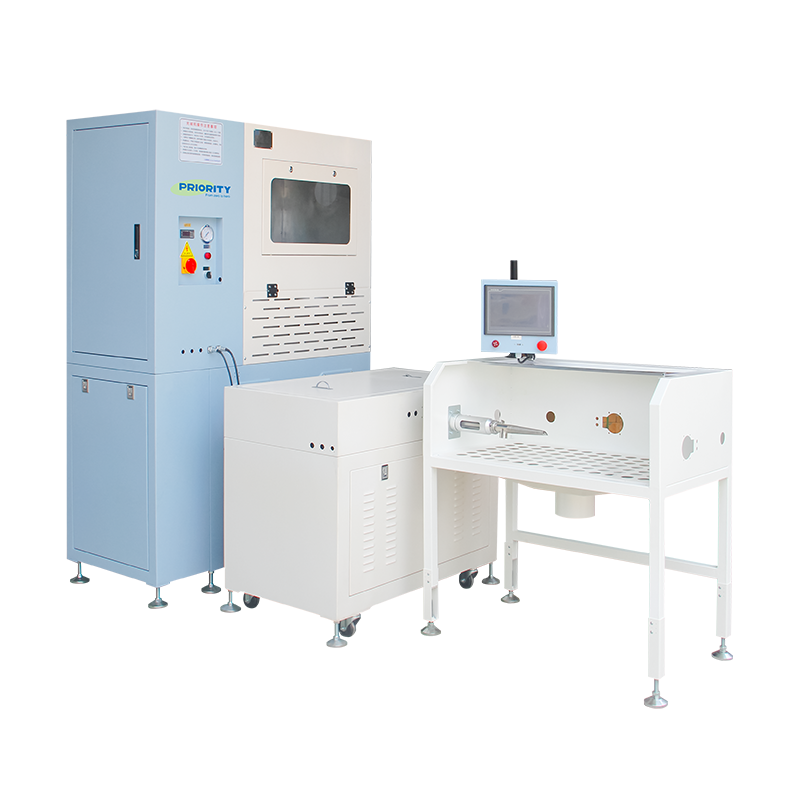
Financial justification requires transparent accounting of all production variables. You must look far beyond the initial purchase price to build a realistic implementation model.
Material waste destroys your product margins silently. Calculate your current cost of overfilling due to manual human inaccuracies. Workers manually stuffing high-end jackets typically overfill by 5% to 10%. They do this deliberately to avoid failing minimum weight quality checks. Compare this historic baseline waste against the machine's guaranteed tolerance limits. When you process premium 800-fill goose down, saving just two grams per garment yields massive financial returns annually. High-precision load cells stop this invisible profit bleed immediately.
Automation dramatically shifts your daily workforce needs. Measure the transition from utilizing multiple manual stuffers to employing one or two dedicated machine operators. You do not necessarily need to reduce your overall headcount. You can strategically reallocate skilled workers to final quality assurance, intricate finishing, or shipping departments. This elevates your overall factory output without proportionally increasing baseline payroll expenses.
A realistic financial model requires evaluating essential operational inputs. Upgrading your factory floor infrastructure represents a mandatory step for success.
Pneumatic Requirements: Industrial fillers require highly robust, perfectly dry compressed air. You must factor in the cost of upgrading your central air compressors. Adding refrigerated air dryers is mandatory to prevent moisture from clogging the pneumatic lines.
Consumables and Spares: Precision components degrade inevitably over time. Delicate weighing sensors, digital load cells, and customized clamping nozzles will eventually require replacement. Keep a dedicated budget line for these specialized parts.
Power Consumption: Continuous heavy-duty motors drive the aggressive fiber opening modules. These industrial motors carry high energy costs. Review the peak kilowatt usage closely to estimate your monthly utility increases accurately.
Best Practice: Always request an energy consumption profile from the manufacturer based on an 8-hour continuous shift to model utility costs correctly.
Deploying new heavy machinery rarely happens without operational friction. We want to demonstrate real-world implementation experience and help you mitigate costly production risks.
Static remains the hidden enemy of precise industrial weighing. Down clusters and synthetic fibers generate massive static charges during high-speed pneumatic transport. This causes material to stick aggressively to scales, internal silos, and acrylic pipelines. It ruins load cell accuracy entirely. To mitigate this threat, ensure the equipment includes active anti-static ionizers directly inside the weighing chamber. Furthermore, you must mandate proper factory grounding. A dedicated grounding rod for the machinery is often necessary to bleed off accumulated static charges effectively.
You cannot control the machine's accuracy if you do not control the room's environment. Dust management acts as a critical regulatory compliance issue. Evaluate the machine's integrated dust collection capabilities thoroughly. Uncontrolled ambient dust also fouls sensitive electronic sensors rapidly. Additionally, ambient humidity must remain rigidly controlled within the factory zone. Down clusters absorb atmospheric moisture like a sponge. If humidity swings wildly between the morning and afternoon shifts, consistent down weighing becomes physically impossible. Install industrial humidifiers or dehumidifiers to maintain a steady 45-55% relative humidity.
Technological changes often frustrate established manual workers. Transitioning from manual stuffing to Programmable Logic Controller (PLC) operation takes dedicated time. You should plan strictly for a two-to-four-week ramp-up period. During this window, your overall throughput may temporarily drop. Operators need time to understand complex alarm codes, perform physical nozzle changes, and trust the automation. Provide comprehensive, hands-on training rather than just handing them a translated manual.
Moving from initial evaluation to actual purchase requires strict validation protocols. Follow these actionable steps to protect your capital investment.
Never buy heavy equipment based purely on polished spec sheets. You must request a formal Factory Acceptance Test. Send your actual production materials directly to the vendor's facility. Ship your specific 800-fill down, your proprietary siliconized fiber, and your exact fabric shells. Demand a filmed or live-streamed trial using your materials exclusively. This proves the machine handles your specific fabric coatings and filling materials without jamming, leaking, or tearing the baffles.
Downtime costs thousands of dollars per hour during peak manufacturing seasons. Evaluate the vendor's Service Level Agreement (SLA) critically. Check their local spare parts availability within your geographic region. Can they ship a replacement load cell overnight? Assess their remote diagnostic capabilities via secure IoT integration. Modern machines allow vendor technicians to log in securely. They can troubleshoot PLC software errors from across the globe instantly. Fast technician response times prevent catastrophic production delays.
We highly recommend building a weighted matrix to evaluate competing machinery quotes objectively. Do not let base price dictate your final decision.
Chart: Vendor Evaluation Sourcing Matrix
Evaluation Criteria | Weight (%) | Key Metric to Score |
|---|---|---|
Grammage Precision | 40% | Demonstrated variance using your specific materials. |
Functional Throughput | 30% | Actual cycle time including human operator loading. |
Vendor Support Infrastructure | 20% | Local spare parts availability and SLA response time. |
Procurement Price | 10% | Initial capital required minus estimated yearly yield savings. |
Selecting the appropriate production machinery hinges heavily on aligning equipment technology with your exact daily demands. You must match the internal weighing architecture to your specific material. Down behaves differently than synthetic fiber under pressure. Garment micro-precision demands entirely different engineering than high-volume home textile stuffing. Prioritize vendor transparency above all else during negotiations. Insist on material-specific FAT testing before signing any purchase orders. Finally, ensure your facility infrastructure stands ready. Upgraded air compressors, stable power grids, and rigorous static control measures remain mandatory. Take these calculated steps to protect your capital investment and dramatically increase your long-term production efficiency.
A: Yes, provided the machine features programmable weight recipes and interchangeable nozzle sizes. However, extreme volume differences may require different scale capacities. You must ensure the internal weighing silos can handle the bulk volume required for sleeping bags without choking the suction feed.
A: Requirements vary significantly by manufacturer. Most industrial pneumatic systems require stable continuous air pressure between 0.6 to 0.8 MPa. You must pair this with refrigerated air dryers. Dryers prevent internal condensation from clumping the delicate filling material inside the transport hoses.
A: In high-volume garment production, operators should check load cells daily against certified standard weights. You must execute a formal, documented calibration every 3-6 months. Immediate recalibration is also required whenever the machine is physically relocated across the factory floor.
A: Generally, experts do not recommend using the exact same internal pipelines for both without thorough, time-consuming cleanouts. True hybrid machines exist but require distinct feeding mechanisms. This necessity stems directly from the vastly different fluid dynamics of airborne down versus heavy synthetic fiber.


