

Views: 0 Author: Site Editor Publish Time: 2026-07-09 Origin: Site


Manual cutting creates a severe operational bottleneck in modern apparel production. It severely limits your agility during crucial sampling phases. Meanwhile, large multi-ply machines require massive capital investments. They are highly inefficient for micro-runs or single-layer jobs. You need a smarter, more scalable solution. Selecting a single ply fabric cutting machine balances high-level precision and rapid changeover speeds. It suits on-demand and small-batch manufacturing perfectly.
We will objectively evaluate actual hardware capabilities. You will learn how to integrate digital workflows seamlessly into your floor plan. We will uncover true operational expenses. You will see clearly beyond typical manufacturer marketing hype. This guide delivers actionable steps. You can confidently choose the right equipment. Your sampling department will operate faster, leaner, and more accurately.
Single ply automated cutting eliminates manual bottlenecks, ensuring sample accuracy matches final production standards.
Choosing between blade-based systems and a Fabric Laser Cutting Machine depends strictly on material types (synthetics vs. natural fibers) and edge-finish requirements.
True ROI relies heavily on CAD software integration and minimizing hidden OPEX (consumables, software licenses, and maintenance).
Testing vendors with your own nested marker files and challenging fabrics is the only reliable way to validate performance.
Using a massive multi-ply cutter for small jobs creates immediate problems. Cutting one to five layers on a high-ply machine causes vacuum bleed. The vacuum suction escapes through empty table spaces. The motor works significantly harder to compensate. Energy bills spike unnecessarily. Furthermore, the intense downward pressure damages delicate sample fabrics. The plastic overlay film often crushes soft silks or thin cottons. You ruin expensive sample yardage.
You must redefine your success criteria for sampling. Sheer volume no longer matters here. Quick changeovers define a successful sampling room. You eliminate the need to spread heavy paper layers. You never manually pin patterns again. Operators simply unroll the fabric and initiate the cut. Nested efficiency replaces bulky, wasteful buffers. Zero-buffer cutting saves highly expensive premium materials. Agility easily outpaces pure machine speed in this environment.
Single-ply precision creates measurable financial benefits. The blade remains perfectly vertical during the entire cut. It never deflects under heavy fabric loads. This allows for incredibly tight pattern nesting.
Reduced Gaps: You nest pieces just millimeters apart.
Buffer Elimination: You remove safety margins entirely.
Cost-Per-Sample: Premium fabrics yield more garments per roll.
This tight nesting significantly reduces your cost-per-sample. Reducing fabric waste pays for the equipment over time.
Blade cutters remain the industry standard for traditional textiles. The oscillating knife moves rapidly up and down. It acts like a tiny automated jigsaw. It slices cleanly through dense wools and multi-layered cottons. These systems offer incredible multi-material versatility. You can cut canvas, denim, and silk on the same table. However, physical blades have distinct limitations. The blade physically drags on highly elastic materials. Spandex and activewear knits often distort during the cut. Additionally, you must purchase replacement blades regularly.
Modern synthetics require a different approach entirely. A Fabric Laser Cutting Machine excels here. It is the best choice for polyester, nylon, and intricate lace. Fast-fashion samples rely heavily on these systems. The primary advantage is contactless cutting. The tool head never touches the fabric. Therefore, stretchy materials never distort. It also provides automatic edge-sealing. The laser slightly melts the synthetic edge. This completely prevents fraying. However, lasers have limitations. They risk charring or melting natural fibers. Cotton leaves a yellow, burnt edge. You also require robust exhaust and ventilation systems to clear the smoke.
Feature / Requirement | Oscillating Blade Cutters | Laser Cutting Machines |
|---|---|---|
Best Material Match | Cotton, Wool, Linen, Denim | Polyester, Nylon, Lace, Spandex |
Edge Finish | Clean, raw cut (may fray later) | Sealed, melted edge (prevents fraying) |
Fabric Distortion Risk | Moderate (blade drag on stretch knits) | Zero (contactless processing) |
Facility Requirements | Standard electrical setup | Robust exhaust and ventilation systems |
Fabric must remain perfectly flat during cutting. Traditional tables use a single massive vacuum zone. This wastes power. Advanced systems use zone-based vacuum systems. They automatically adjust suction to the specific cutting area. They only pull air where fabric actually sits. This localized suction prevents fabric distortion. It holds lightweight silks firmly in place. It also dramatically lowers your electrical consumption.
Sample collections change constantly. Your machine must adapt quickly. We strongly recommend modular tool heads. You must easily swap between different tools. Operators should switch from drag knives to oscillating blades in seconds. Adding a punch tool or a notcher should be simple. Modular heads handle diverse sample collections effortlessly. You avoid buying separate machines for different garment details.
Consider the machine footprint carefully. It dictates your workflow logistics. You must choose between a conveyor feeding system and a static table. Static tables require operators to pull fabric manually. Conveyors advance the material automatically. Remember to calculate actual floor space accurately. You need space behind the machine for tension-free fabric unrolling. Unrolling fabric with high tension causes stretching. The cut pieces will shrink incorrectly later.
Vendors frequently claim sub-millimeter accuracy. You must validate these claims against real-world conditions. Mechanical vibration affects cutting precision significantly. High operational speeds cause the gantry to shake. A machine cutting at 1 meter per second might lose accuracy. Test precision at full operational speeds. Check corner sharpness. Measure notches accurately. Real-world precision often differs from theoretical brochure numbers.
Software compatibility dictates your daily efficiency. The machine control software must accept open-standard file formats. Standard formats include DXF, PLT, and ISO-Cut. Major apparel CAD systems export these natively. Avoid vendors demanding proprietary software formats. You should not purchase costly middleware just to translate files. A seamless digital workflow requires true software agnosticism. It saves time and prevents translation errors.
You cannot afford manual nesting in small-batch runs. Automated nesting plays a critical role here. Integrated algorithms maximize fabric utilization instantly. They analyze small, irregular marker setups perfectly. The software rotates pieces to find the tightest fit. It handles complex geometries better than human operators. Smart nesting algorithms save expensive fabric daily. They reduce your overall material budget noticeably.
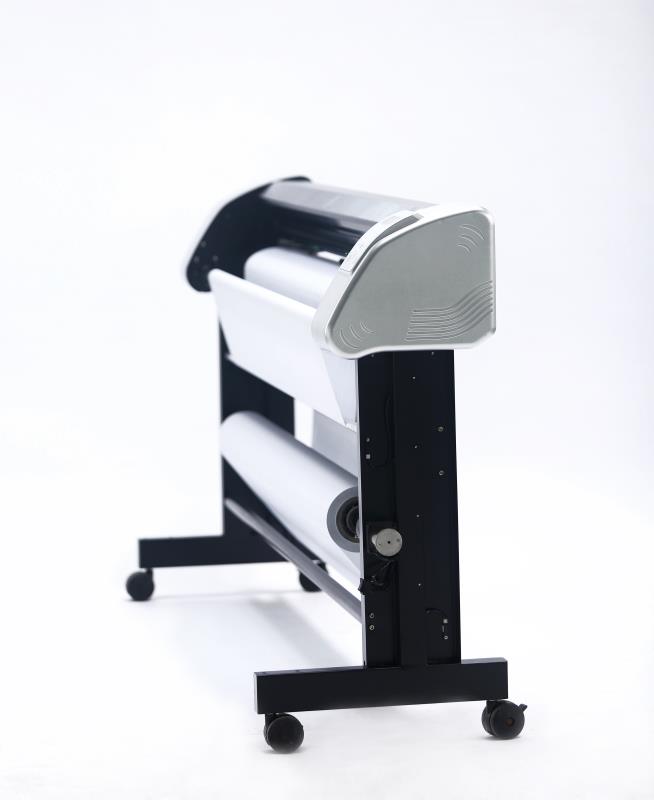
Mistakes on premium fabrics cost too much money. You must verify complex pattern geometry beforehand. Pairing the system with a Vertical Inkjet Cutting Plotter solves this problem. It allows teams to plot graded sizes on cheap paper. You validate dimensions physically. You check seam allowances accurately. You confirm the exact geometry before touching the sample fabric. This simple extra step prevents disastrous cutting errors.
Move beyond the initial sticker price. Capital Expenditure (CAPEX) is only the beginning. You must calculate long-term Operational Expenditure (OPEX). Cutting mats wear down steadily. They consist of plastic bristles or urethane belts. The knife penetrates them thousands of times daily. You will eventually replace them. Blades dull frequently based on material abrasiveness. Factor these consumable replacement costs into your budget immediately. Ignoring them creates ugly financial surprises later.
Machine downtime kills production schedules. Proprietary parts pose a massive operational risk. If a unique motor breaks, you might wait weeks for international shipping. Evaluate vendor Service Level Agreements (SLAs) rigorously. Ask about local technician availability in your region. Check their remote diagnostic capabilities. Strong support teams fix software bugs online within minutes. Fast support keeps your sampling room running smoothly.
Never underestimate human behavior. Assess the complexity of the Human-Machine Interface (HMI). A complex, confusing screen intimidates staff. Operators resist learning overly complicated systems. Highly complex systems often lead to severe operator resistance. Staff will revert to hand scissors. This results in massive machine underutilization. A simple, intuitive touch screen ensures fast adoption. It empowers your team to use the tool daily.
Vendors prefer showing off with crisp, easy fabrics. Do not let them. Mandate that shortlisted vendors perform live cuts using your most difficult materials. We call this the "ugly fabric" test. Bring highly stretchable activewear knits. Bring slippery, lightweight chiffons. Bring abrasive fiberglass blends if you use them. Watch exactly how the machine handles these problematic textiles. The results will immediately reveal the machine's true capabilities.
Do not trust theoretical speed charts. Require vendors to process a complex, pre-nested CAD file. Make them use your actual production data. Measure the true cutting time with a stopwatch. Compare this real-world time against their advertised theoretical speeds. Check the quality of the notches and corners afterward. This data validation prevents you from buying an underperforming machine.
Create a structured matrix for your final choice. Weigh the initial cost against proven reliability. Consider material versatility carefully. A cheaper machine that only cuts cotton is useless if you introduce nylon next season. Finally, demand local technical support guarantees. A slightly higher initial price is worth it for guaranteed uptime.
Choosing the best single ply fabric cutting machine transforms your sampling process. The perfect machine aligns seamlessly with your existing digital workflows. It matches your specific material profiles flawlessly. It is not necessarily the one with the highest theoretical speed. It is the one that delivers consistent, accurate parts without destroying delicate fabrics.
We recommend gathering 3 to 5 challenging fabric samples today. Export a standard CAD marker file from your current system. Reach out to vendors and begin scheduling active demonstrations. Take control of your cutting room efficiency right now.
A: Blade lifespan depends heavily on material abrasiveness and operating speeds. Cutting soft cottons might allow a blade to last several weeks. Conversely, cutting fiberglass, Kevlar, or heavy denim can dull a blade in just a few days. Frequent monitoring and optimal speed settings help extend blade life.
A: No. Modern, reputable machines operate on open architecture. They accept standard industry files like DXF and PLT. We strongly warn against vendor lock-in. Ensure your chosen machine reads files directly from your existing CAD system without requiring expensive, proprietary translation middleware.
A: Yes, but it requires specific configurations. You must equip the machine with heavy-duty oscillating knives or a high-wattage laser tube. Standard drag knives will fail on dense leather. Modular tool heads allow you to swap in the specialized tools needed for these thick materials.
A: Knife systems require mechanical maintenance. You must regularly replace cutting mats, swap dull blades, and lubricate moving joints. Lasers require optical maintenance. You must clean the focal lenses daily, monitor the laser tube lifespan, and frequently replace the exhaust filters to manage smoke and debris.


