

Views: 0 Author: Site Editor Publish Time: 2026-07-07 Origin: Site


Transitioning from manual cutting or scaling bespoke production requires precision. Traditional methods cannot sustain this accuracy without high labor costs or excessive material waste. You need a better approach to remain competitive. While mass production relies heavily on multi-ply systems, modern manufacturing increasingly demands agility. Factories today see more short runs, customized orders, and complex pattern execution. Investing in a Single Ply Fabric Cutting Machine represents a strategic decision. It benefits businesses prioritizing material yield, edge quality, and rapid prototyping workflows. However, this upgrade requires careful planning. You must evaluate specific software integrations, operational footprint, and daily maintenance realities. We will explore how these systems function and compare them to alternatives. You will learn core evaluation criteria for procurement and uncover hidden implementation factors. By the end, you can determine if this technology fits your specific production environment perfectly.
Strategic Fit: Ideal for made-to-measure apparel, technical textiles, automotive interiors, and composite materials where precision outweighs sheer volume.
Technology Core: Combines automatic cutting machine heads (oscillating, rotary, or laser) with vacuum hold-down tables and smart nesting software to eliminate material distortion and minimize waste.
Cost vs. ROI: Upfront investment is offset by a dramatic reduction in fabric waste, lower reliance on skilled manual labor, and faster turnaround times for low-volume orders.
Implementation Reality: Success depends heavily on CAD software compatibility, operator training, and factoring in recurring consumable costs (blades, cutting underlays).
Modern production environments require speed and accuracy. The core mechanism behind this technology eliminates physical patterns entirely. It operates as an Automatic Cutting Machine designed to process a single layer of fabric directly from a digital CAD file. Sometimes operators feed very low plies of stable materials through it. The system interprets vector lines from the computer and translates them into precise mechanical movements. This direct-to-cut workflow removes intermediate steps completely.
Understanding the hardware helps you grasp its capabilities. Several key components work together to deliver flawless results.
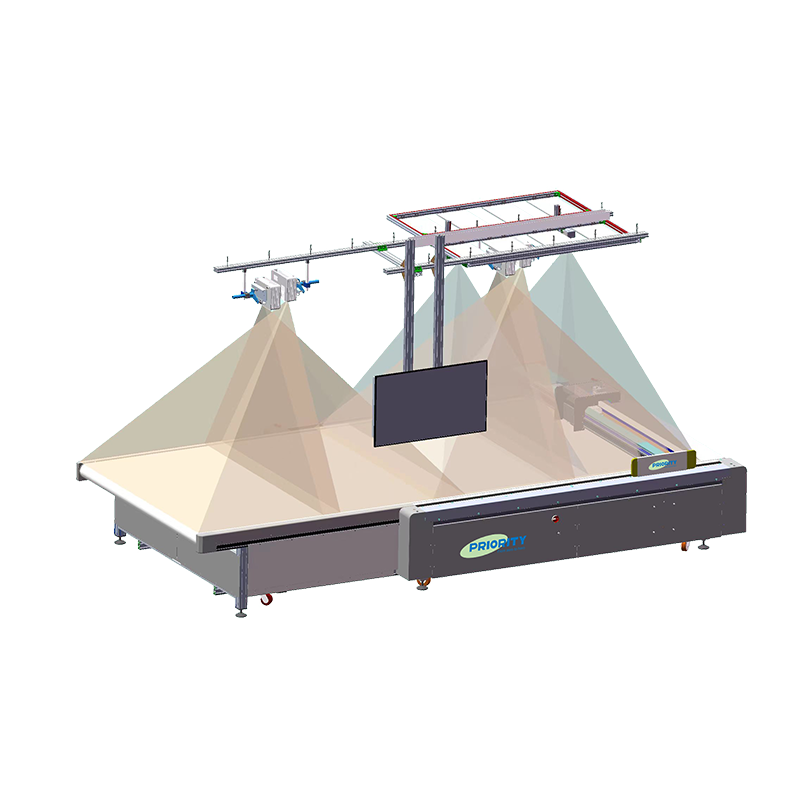
Cutting Head: This central module houses interchangeable tools. Operators quickly swap between pens, punches, and various blades based on the specific job requirements.
Conveyor or Static Table: This forms the active cutting surface. Facilities often utilize a breathable, self-healing underlay. The porous polyurethane allows air to pass through while resisting blade damage.
Vacuum System: This mechanism secures the fabric dynamically. It draws air downward through the breathable underlay. This intense suction prevents the material from shifting during rapid blade directional changes.
Adopting this technology represents a massive paradigm shift. It moves your production away from a labor-intensive, error-prone manual process. Instead, you enter a data-driven, repeatable automated workflow. Traditional factories rely on physical markers and hand-guided scissors. These older methods introduce human fatigue and margin variations. The automated approach guarantees exact replication every single time. Best practices dictate keeping the vacuum filter clear of fabric dust. Regular cleaning ensures the hold-down force remains optimal for precise operations.
Evaluating your current workflow highlights why upgrades become necessary. Manual cutting possesses severe limitations. It shows high skill dependency. Finding and retaining experienced cutters challenges many businesses today. Manual methods produce inconsistent edge quality across different shifts. Scaling your operations slowly becomes painful. Furthermore, human operators inevitably experience fatigue. This fatigue causes errors, which result in highly costly fabric waste. Relying on hand tools simply cannot support modern agile manufacturing demands.
When moving to automation, factories generally choose between two primary paths. You must understand how multi-ply compares to single ply solutions.
Multi-ply systems target sheer volume. Factories stack 50 or more layers of fabric simultaneously. This method requires a plastic overlay on top of the fabric stack to create a vacuum seal. While highly efficient for bulk orders, it sacrifices slight edge precision. As the blade penetrates deep into the stack, it encounters resistance. This causes blade deflection. The bottom layers often measure slightly differently than the top layers. Additionally, setup times take significantly longer. Workers must spread the fabric carefully over long tables before cutting begins.
Conversely, single ply systems prioritize agility and absolute precision. Operators experience zero blade deflection because the tool only cuts one layer. You achieve immediate cutting from the roll straight to the machine. Facilities enjoy zero setup time between totally different marker patterns. You can cut a custom suit, followed instantly by a tailored car seat cover. The machine adjusts its digital instructions automatically.
Production Method Comparison
Production Method | Primary Advantage | Major Limitation | Setup Time |
|---|---|---|---|
Manual Cutting | Low initial equipment cost | High labor dependency and error rate | Variable (often lengthy) |
Multi-Ply Automation | Maximum volume output | Blade deflection on bottom layers | Long (spreading and sealing required) |
Single Ply Automation | Absolute precision and high agility | Lower total volume capacity | Instant (roll-to-machine direct) |
Choosing the right equipment requires analyzing specific mechanical and software traits. You must align the machine capabilities with your daily production demands.
The cutting head dictates what materials you can successfully process. Different textiles require completely different blade dynamics.
Rotary blades feature a circular design. They spin rapidly as the head moves across the table. These blades work best for fast, continuous cuts on standard textiles. You will use them on cotton, polyester, and lightweight synthetics. They glide smoothly through unchallenging materials.
Oscillating blades operate differently. They punch up and down at high frequencies, acting like a rapid jigsaw. This configuration remains mandatory for thick, dense, or composite materials. If you process Kevlar, heavy leather, or acoustic foam, you need this tool. It slices cleanly without dragging the heavy material across the table. Attempting to use a rotary blade on heavy leather will snag and ruin the hide.
Hardware means nothing if the digital brain fails. The new system must integrate seamlessly into your existing operations.
You need to evaluate algorithmic nesting carefully. Nesting software arranges the digital pattern pieces onto the fabric virtual canvas. It packs them tightly to reduce gaps. Industry standards suggest following specific evaluation steps:
Import a standard DXF pattern file into the vendor software.
Run the automated nesting algorithm on maximum efficiency mode.
Compare the material yield against your current manual or legacy digital layouts.
Calculate the financial value of the saved fabric over twelve months.
We evaluate this technology strictly by the percentage of fabric yield improvement. Even a minor 2% to 3% increase in material utilization can justify the entire machine cost over time. High-end textiles cost significant money per yard. Maximizing every square inch directly impacts your profit margins.
Holding the fabric perfectly still ensures the blades cut accurately. You must assess the variable vacuum zoning features.
Older machines applied uniform suction across the entire table. This wasted energy and reduced the grip strength. Modern systems utilize localized zoning. The machine should concentrate suction precisely where the cutting head currently operates. As the head moves, the active vacuum zone follows it. This concentrated force reduces overall power consumption. More importantly, it maximizes the hold-down force right where the blade interacts with the fabric. Look out for machines lacking this feature, as they struggle with lightweight fabrics lifting during fast cuts.
Purchasing the equipment represents only the first step. Operating it daily introduces new realities to your factory floor. You must plan for ongoing operational footprints and expenses.
Calculate the ongoing expenditures of consumables and maintenance early. High-speed cutting degrades consumables predictably. You will need replacement blades frequently. You must buy sharpening stones to keep those blades honed. Conveyor belts and self-healing bristle blocks eventually wear out. Do not treat these items as surprise expenses. Build them into your monthly operating budget. A common mistake involves ignoring depth calibration. Cutting too deeply into the underlay destroys the belt prematurely. Train operators to set the z-axis depth perfectly.
Assess your infrastructure requirements before delivery. These machines demand dedicated, level floor space. They require stable three-phase electrical power to run the robust vacuum blowers. Furthermore, you will need industrial pneumatic air supplies. Clean, dry compressed air actuates the tool changes. It also cools the cutting head during intense operations. Facilities lacking adequate air pressure will experience frequent machine halts.
Operator adoption requires a thoughtful management approach. Shifting from manual cutting to an automated process changes the worker role entirely. The operator shifts from physical labor to software management. They become responsible for machine troubleshooting and file preparation. Expect initial productivity dips during the training period. This remains standard across the industry. Workers need time to build digital literacy. Provide comprehensive training covering error codes, blade swaps, and basic maintenance.
Not every factory needs this specific technology. You must weigh your production style against the machine strengths.
Decision Assessment Chart
Production Environment | Recommendation | Key Rationale |
|---|---|---|
Custom Automotive Upholstery | Highly Recommended | Requires complex shapes, thick materials, and zero defects. |
Mass Market T-Shirts | Not Recommended | Volume demands multi-ply efficiency over individual agility. |
High-End Carbon Fiber Parts | Highly Recommended | Material waste is financially punitive; extreme precision needed. |
Fast Fashion Fast Turnarounds | Not Recommended | Low margins require stacking 100+ plies at once. |
You will spot several green flags indicating when to use this technology. High-mix, low-volume production environments thrive here. If your business focuses on fast prototyping or custom upholstery, this machine transforms your output. You should heavily consider it when working with expensive, highly sensitive materials. Carbon fiber, silk, and technical textiles distort easily. Waste in these categories proves financially punitive. Finally, consider your pattern matching requirements. Some fabrics feature stripes, plaids, or printed logos. Modern single ply machines integrate vision systems and cameras. They align these complex patterns automatically, saving hours of manual adjustment.
Conversely, acknowledge the red flags signaling when to reconsider. High-volume, low-margin fast fashion does not fit this model. Multi-ply automation remains strictly better for those scenarios. You need to push thousands of identical garments daily there. Also, reconsider if your facility lacks baseline digital infrastructure. If you have no CAD patterns and rely entirely on physical cardboard workflows, you cannot use this machine. You must digitize your pattern library before investing in automated hardware.
A single ply cutter does not act as a direct replacement for high-volume multi-ply systems. Rather, it serves as a specialized solution built for precision, rapid customization, and complex material handling. It bridges the gap between artisanal bespoke quality and modern industrial efficiency.
When shortlisting vendors, buyers should narrow their list based on strict criteria. Ensure their software offers compatibility with your current CAD systems. Demand specific material testing before signing a contract. You must ask for a live demo using your exact fabric. Finally, review the vendor service level agreement regarding maintenance and emergency part replacement.
Your next action requires internal data gathering. Audit your current fabric waste percentage accurately. Calculate the total labor hours your team spends on manual cutting and physical pattern layout. Establish a clear baseline ROI timeline using this operational data before you engage suppliers. This preparation guarantees you make a highly informed, profitable equipment decision.
A: Yes, some low-ply machines can cut two to three layers of thin, stable fabrics. However, precision drops slightly. Material slippage risks increase compared to true multi-ply machines operating under vacuum film. Stick to single layers for absolute accuracy.
A: Modern systems utilize overhead or head-mounted vision systems. These cameras read the actual physical pattern on the fabric, like stripes or printed logos. The system then adjusts the digital cutting file in real-time to match any physical material distortion perfectly.
A: Lifespan varies based on usage volume, material density, and cut depth settings. It typically ranges from 12 to 24 months. Proper depth calibration remains critical. Operators must avoid cutting too deeply to successfully extend this essential component's functional lifespan.


