

Views: 0 Author: Site Editor Publish Time: 2026-07-08 Origin: Site


Transitioning from manual cutting represents a major operational shift for any manufacturing facility. Upgrading legacy CNC equipment also demands careful strategic planning. The wrong choice leads to severe production bottlenecks quickly. It causes wasted factory capacity and frustrates your workforce. You need the right technology to keep manufacturing workflows smooth. Automation solves manual inefficiencies beautifully. It eliminates human error and accelerates your time to market.
However, selecting between single-ply and multi-ply systems dictates your entire factory workflow. You must match the machine architecture precisely to your production floor dynamics. This guide breaks down the operational realities of both technologies. It explores essential evaluation criteria deeply. We help you choose the exact machine architecture. You will meet your current and future production needs confidently. We explore material handling, nesting efficiency, and floor space requirements.
A single ply fabric cutting machine maximizes agility and material yield for made-to-measure (MTM), prototyping, and technical textiles.
A Multi Layer Fabric Cutting Machine is engineered for high-volume, standardized production, drastically reducing per-unit cutting time.
The primary decision driver is not just budget, but your business model: high-mix/low-volume vs. low-mix/high-volume.
Hidden implementation factors—like vacuum power requirements, CAD/CAM nesting integration, and floor space—often dictate the true ROI of either system.
You must define the core bottleneck first. Operator fatigue slows down manual cutting rooms constantly. Manual operators use heavy shears all day. They push upright rotary cutters through thick fabric stacks. This causes severe wrist strain and muscle fatigue. Accuracy drops as the shift progresses. Inaccurate manual cuts create cascading sewing issues later. Slow time-to-market frustrates fashion brands relying on your factory. High material waste destroys production efficiency. You must identify your primary operational hurdle before selecting equipment. Automation removes this physical toll entirely.
Let us look at single ply systems initially. A single ply setup operates on one layer of fabric. The fabric feeds continuously via a motorized conveyor belt. It optimizes speed per pattern significantly. You can feed fabric rolls without stopping the machine. Operators make immediate pattern adjustments easily. The machine cuts shapes directly from the digital file. It suits flexible, fast-changing production demands perfectly. Brands want zero inventory today. They produce only what customers order immediately. Single ply makes this agility possible.
Multi ply setups work entirely differently. They require a specialized, motorized spreading machine. You stack materials carefully from 5 to over 100 layers. A heavy-duty oscillating knife then cuts the entire fabric block. It optimizes identical mass production brilliantly. It creates dozens of garments simultaneously. The knife plunges vertically through compressed layers. A vacuum system holds the stack rigid like wood. It requires a completely different factory mindset and workflow pacing.
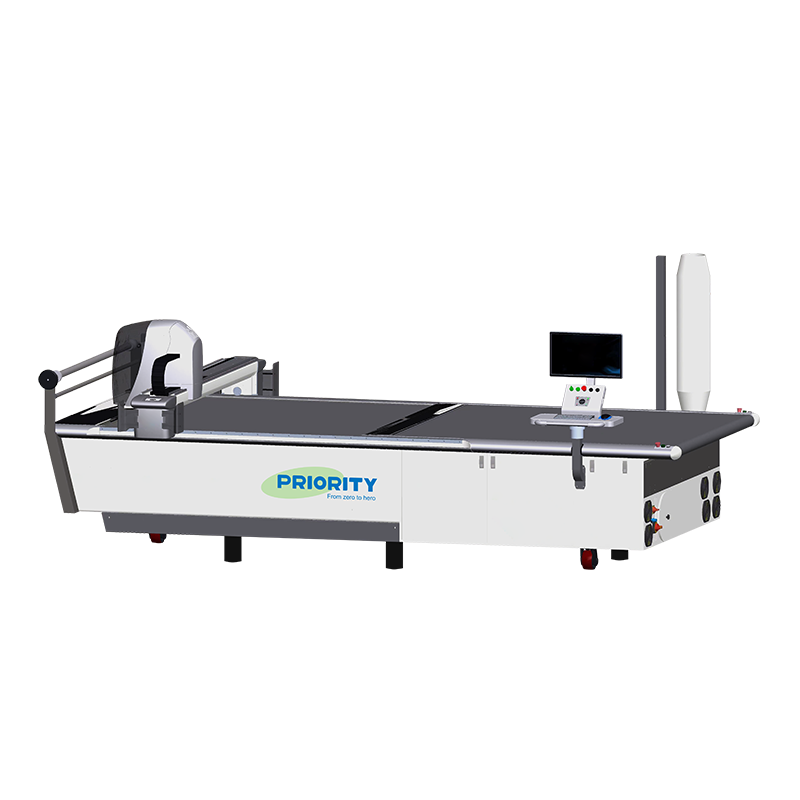
Agility defines modern manufacturing success. A Single Ply Fabric Cutting Machine delivers this agility constantly. It adapts to shifting consumer trends instantly.
Core Strengths:
Zero spreading time required. You feed material directly from the roll.
Superior capability for handling complex patterns. It manages custom shapes on demand effortlessly.
It eliminates fabric fusing issues completely. Multi-layer synthetic cutting often melts edges together. High friction causes this melting. Single ply avoids this physical reaction.
Rapid changeovers between different fabric types. Operators switch materials in minutes.
Ideal Use Cases:
Apparel samples require exceedingly fast turnarounds. Bespoke tailoring demands unique, one-off precision cutting. Fast-fashion short runs need immediate processing. This machine handles them all expertly. It also excels in heavy industrial applications. Think custom upholstery and automotive interiors. You can cut composites like carbon fiber and Kevlar flawlessly. These dense materials resist traditional stacking. Single layer processing ensures perfect edges every time. It provides the exact downforce required for heavy-duty industrial textiles.
Limitations to Acknowledge:
You must acknowledge lower absolute throughput. Bulk orders take much longer to process. Standardized runs cannot match stacked cutting speeds. High-volume factories might find single layer processing too slow. You trade sheer volume for extreme flexibility. You cannot push thousands of identical t-shirts through it rapidly.
Mass manufacturing relies heavily on economies of scale. A Multi Layer Fabric Cutting Machine dominates in high-volume environments. It conquers massive production runs without hesitation.
Core Strengths:
Exponentially higher output per hour. You get identical shapes rapidly.
Reduces labor time per garment. Mass manufacturing requires this extreme efficiency.
Heavy-duty vacuum systems ensure high compression. This compression creates dimensionally stable cuts.
Knives feature advanced internal cooling technologies. They prevent heat buildup during deep plunges.
Ideal Use Cases:
It suits standardized apparel production perfectly. Think military uniforms, basic tees, and denim jeans. Large-scale home textiles also benefit greatly from this architecture. You can churn out bedding easily. Standard curtains require long, straight, identical cuts. This system processes massive orders efficiently. Factories serving global retail chains rely on this architecture daily. They need thousands of identical units shipped weekly.
Limitations to Acknowledge:
It requires massive operational floor space. You must install exceptionally long spreading tables. High setup time precedes every single cut. Operators spend hours preparing the fabric block perfectly. Errors multiply across all layers simultaneously. Flawed setups ruin entire fabric blocks instantly. A single wrinkle in the middle ruins fifty garments. You must maintain strict quality control during spreading.
Material utilization dictates factory sustainability directly. Single-ply achieves higher yield often. Advanced, dynamic nesting algorithms pack shapes tightly. You need zero buffer requirements between plies. The software analyzes the single sheet dynamically. It places components mere millimeters apart. The blade maneuvers without disturbing adjacent pieces.
Multi-ply systems demand strict edge alignment during spreading. This sometimes leads to slightly higher edge waste. You must trim edges to align the stack perfectly. Safety buffers between pattern pieces increase slightly. The oscillating knife needs room to navigate thick stacks. These small gaps add up over thousands of yards. Material utilization drops marginally compared to single-layer methods.
Space defines your factory layout options. Single-ply machines feature a much smaller footprint. They consume less power overall. You integrate them into tight factory spaces easily. They act as compact, self-contained production islands. You can move them around the floor if needed.
Multi-ply units demand expansive factory layouts. You must account for the spreading table length. Tables often stretch over ten meters long. Loaders require additional staging zones. They consume massive amounts of floor area. You also need wider aisles for material handling equipment. Forklifts must navigate around the long tables safely.
Upkeep dictates machine uptime predictability. Single-ply systems use rotary blades, drag knives, or lasers. These carry straightforward replacement needs. Maintenance routines remain relatively easy. Operators can swap dull blades in seconds. The mechanical stress stays relatively low during operation.
Multi-ply setups use specialized oscillating blades. They feature dense bristle blocks on the cutting surface. Heavy-duty vacuum pumps run constantly to compress fabric. These elements increase maintenance complexity significantly. You must follow strict upkeep schedules. Bristle blocks require regular cleaning and rotation. Vacuum filters demand frequent changes. Downward knife forces wear out moving components faster.
Feature Category | Single Ply Systems | Multi Ply Systems |
|---|---|---|
Throughput Scale | Low to Medium (Custom runs) | Exceptionally High (Mass production) |
Agility & Flexibility | High (Instant changeovers) | Low (Long setup required) |
Material Yield | Maximum (Zero buffers needed) | Moderate (Buffer zones required) |
Floor Space Needed | Compact | Expansive (Spreading tables) |
Setup Time | Minimal | Intensive |
Hardware remains useless without seamless CAD/CAM software integration. You must connect the digital design to the physical blade. Verify native file format acceptance early. Your new machine must read DXF or PLT files seamlessly. It should integrate with your current pattern software effortlessly. Seamless integration prevents catastrophic data loss. It stops operators from manually re-entering dimensions. Good software optimizes cutting paths automatically. It prevents the blade from traversing empty space unnecessarily. You maximize machine movement efficiency this way.
Both machines rely on vacuum hold-down technology. This secures the fabric firmly during cutting. Assess the acoustic noise carefully. High-powered vacuums generate significant decibels on the floor. Check your three-phase electricity power requirements. Heavy pumps draw massive electrical current. Consider HVAC implications for your facility. Vacuum exhausts generate considerable heat. A large pump acts like a massive space heater. Your factory cooling system must handle this extra load. Ducting the exhaust outside solves this problem effectively. Proper ventilation keeps operators comfortable and focused.
Technology requires skilled human oversight always. Multi-layer systems require rigorous, physical training. Operators must master tension-free fabric spreading. They learn to monitor stack alignment closely. Single-ply requires different training entirely. Operators focus on continuous workflow pacing. They manage digital nesting software interfaces primarily. Training shifts from physical material handling to digital file management. Both paths require dedicated learning curves. You must prepare your workforce for these new operational routines. Resistance to new software often slows down initial implementation phases.
Follow a structured decision path closely. This prevents emotional or rushed equipment purchases. A single ply fabric cutting machine serves completely different goals than a multi-layer setup. Evaluate your floor objectively.
Step 1: Calculate your daily output requirement. Look at your actual historical production numbers. Are you making fewer than 500 custom units daily? Or are you pushing out over 5,000 standard units daily? Match the machine's throughput realistically to your targets. Do not buy capacity you will never use.
Step 2: Audit your material types. Assess fabric thickness and density carefully. Note any stretch characteristics in knits. Evaluate heat-sensitivity in synthetic blends. Some materials simply cannot stack well. Others require heavy vacuum compression to remain stable during cutting.
Step 3: Measure your available floor space. Take out the physical tape measure. Include loading zones in your calculations. Account for safe operator walkways. Ensure material carts can maneuver easily around the equipment footprint.
Step 4: Request vendor proof. Never buy equipment blindly. Always require vendors to test-cut your specific fabrics. Use your actual digital pattern files. Inspect the cut edges yourself. Do this before signing any purchase order.
Do not over-specify your equipment needs. A Multi Layer Fabric Cutting Machine provides unmatched scale for bulk production. It conquers massive standardized orders effortlessly. Conversely, a single ply fabric cutting machine offers vital operational agility. You need this extreme flexibility to survive in high-customization environments. Low-waste manufacturing demands precise, single-layer digital control. Match the tool precisely to your business strategy. One maximizes volume, while the other maximizes adaptability.
Audit your current material waste percentage today. Check your average order size over the last year. Contact our technical team for specialized guidance. We will schedule a detailed time-study for your facility. We can analyze production yields based on your actual pattern files. Start optimizing your cutting room immediately. You will eliminate bottlenecks and streamline your entire manufacturing process.
A: Yes. Equipped with the right oscillating or drag knife, single-ply machines excel at cutting thick, dense materials. Leather, Kevlar, and carbon fiber resist traditional stacking methods. Single-layer processing ensures precise edge quality without material distortion. It provides the exact mechanical downforce required for heavy-duty industrial textiles.
A: No. Single-ply machines typically use a motorized cradle or roll feeder. These systems pull fabric directly onto the conveyor cutting bed. This eliminates the need for long spreading tables. It saves massive amounts of floor space. Continuous feeding keeps production moving seamlessly without manual stacking delays.
A: Lasers seal the edges of synthetic fabrics, preventing fraying completely. However, they can cause burning or discoloration on natural fibers like cotton. CNC blades are generally safer for a wider variety of textiles. They do not require complex fume extraction systems. Blades provide clean mechanical cuts without thermal damage.
A: Most facilities notice immediate improvements in cutting speed on day one. Material yield typically improves by 5-15% over manual cutting right away. Full workflow integration and operator proficiency usually take a few weeks. Consistency and daily output scale up rapidly once your team adapts to the digital workflow.


