

Views: 0 Author: Site Editor Publish Time: 2026-11-16 Origin: Site


Are manual sewing errors quietly draining your factory profit margins? When a production line runs thousands of garments daily, inconsistent finishes are not just a minor annoyance. They represent a massive financial leak. Global apparel brands demand complex pocket constructions. They also expect tighter turnaround times. Traditional manual sewing methods simply fail to keep up with these rigorous standards.
Relying on human hands for intricate pocket welting inevitably leads to fluctuating quality. Defect rates spike. A staggering amount of expensive fabric ends up in the scrap bin. To combat these critical bottlenecks, forward-thinking facilities are completely overhauling their assembly lines.
Integrating advanced thermal cutting with computer-controlled stitching transforms the entire process. This specialized Laser Pocket Welting Machine ensures flawless and uniform pocket welts. It drastically reduces the need for highly skilled manual labor. However, procuring the right industrial machinery involves navigating complex technical specifications. This guide provides factory owners and production engineers with the exact engineering benchmarks needed to select the perfect equipment for their manufacturing floors.
Precision Matters: Non-contact thermal cutting components vastly outperform traditional mechanical blades. This is especially true when processing stretch-prone or delicate fabrics.
Production Volume vs ROI: Calculate your financial break-even point objectively. Analyze daily throughput, localized labor offsets, and the drastic reduction in material waste.
Technical Compatibility: Software integration is non-negotiable. Programmable memory banks and automated fabric tensioning systems dictate your daily operational flexibility.
Service and Support: The operational lifespan of industrial machinery depends on preventive maintenance protocols and immediate spare parts availability.
Future-Proofing: Modular systems offer seamless transitions between varying pocket styles. Your line must adapt swiftly to shifting fashion trends.
Before diving into machine specifications, we must contextualize this investment within current market dynamics. A prevailing trend across the global textile sector is the rapid acceleration toward Industry 4.0. Recent market analyses reveal a harsh reality. Garment manufacturers face unprecedented shortages of skilled sewing machine operators. The older generation of master tailors is retiring. Meanwhile, younger workforces are pivoting away from manual factory labor.
Recent supply chain shifts also play a massive role. Brands are increasingly favoring nearshoring to avoid global shipping delays. This forces local factories to become hyper-efficient to offset higher domestic labor costs. In response, the industry heavily prioritizes equipment that bridges this critical skill gap.
Modern facilities are abandoning single-function mechanical tools. They are adopting smart and interconnected machines capable of executing complex sequences with zero human intervention. Furthermore, the rising demand for sustainable manufacturing dictates that factories minimize raw material waste. Automated thermal cutting aligns perfectly with this sustainability push. Its sub-millimeter accuracy virtually eliminates the fabric scraps generated by human cutting errors.
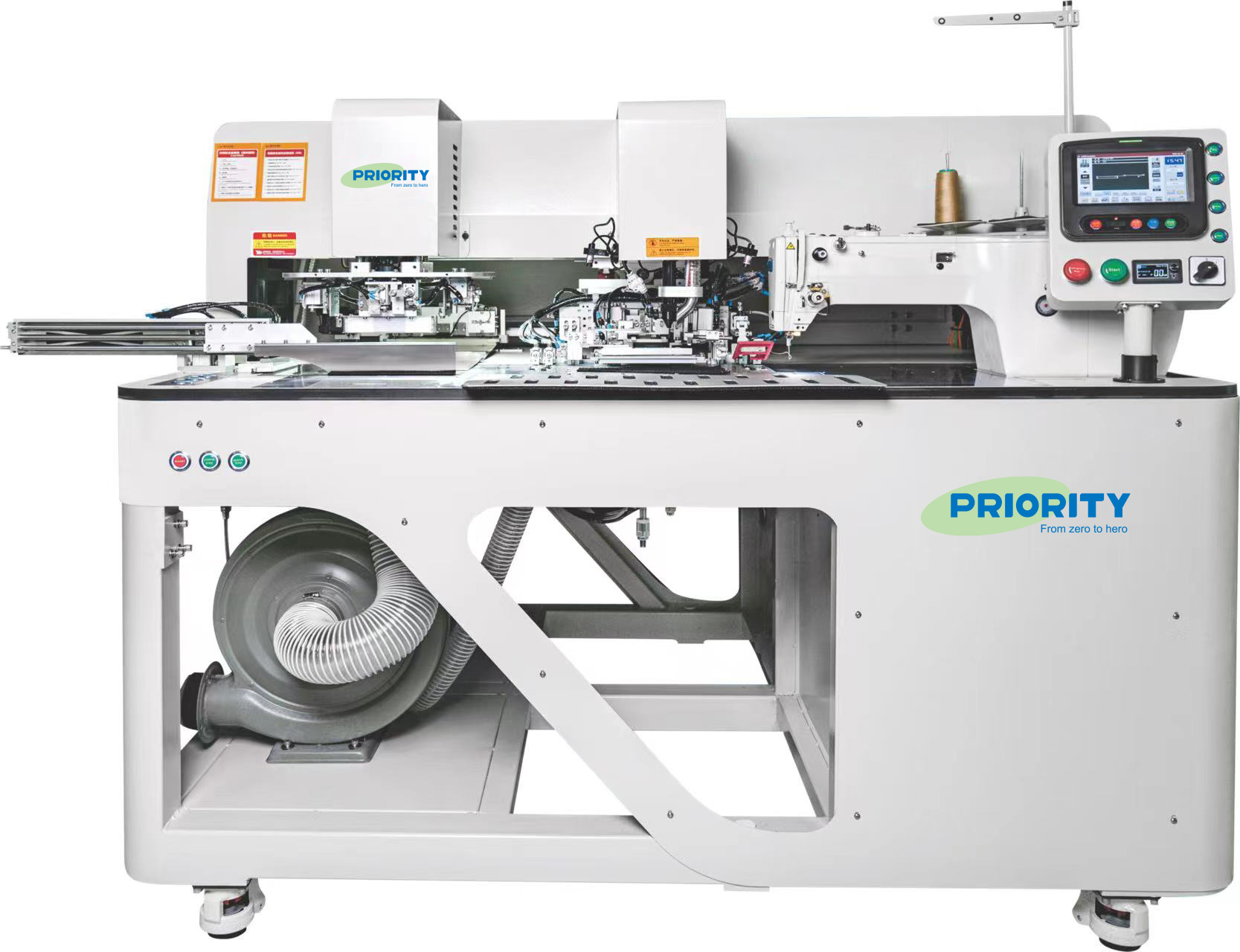
To make an informed procurement decision, engineers must first decode the underlying mechanics of automated welting systems. At its core, a high-performance automatic laser pocket welting machine for garments synchronizes a hyper-focused laser cutting beam with an automated sewing mechanism. This dual-action process fundamentally changes garment construction.
Traditional automatic welters rely on physical rotary or straight knives. These blades are effective initially. However, they inevitably dull over time. Consequently, they demand frequent replacement and inflict mechanical stress on delicate fabrics. This physical drag leads to distorted corner cuts.
In stark contrast, a laser-integrated system utilizes a focused beam of light to vaporize the textile along the cut line. This is a non-contact cutting method. It exerts zero physical drag on the garment panel. The thermal nature of the laser serves an invaluable dual purpose. Picture a high-end synthetic sportswear jacket on your production line. A physical blade leaves micro-frays. The heat from the laser instantaneously melts and seals the edges of the cut. This cauterization permanently prevents fraying.
Here is a direct engineering comparison between the two technologies:
Feature | Traditional Mechanical Blade | Advanced Laser System |
|---|---|---|
Cutting Method | Physical contact and shearing | Non-contact thermal vaporization |
Fabric Distortion | High risk on stretch or thin fabrics | Zero mechanical drag |
Edge Finish | Prone to fraying over time | Instantly sealed and cauterized |
Consumables | Frequent blade replacements required | Laser tube replacement every few years |
Cutting Precision | ± 2.0 mm | ± 0.1 mm |
Garment factories rarely enjoy the luxury of working with a single type of textile. From one shift to the next, a production line might transition from lightweight chiffons to heavy-duty denim. Therefore, material handling versatility is a critical procurement factor.
The effectiveness of any thermal cutting system depends heavily on fabric stability. If the material shifts even a fraction of a millimeter during the cutting phase, the focal length of the laser changes. This results in an uneven welt. Procurement teams must look for machines equipped with advanced tensioning features. When an operator loads a garment panel, a powerful vacuum suction table must engage immediately. This works in tandem with automated pneumatic clamps to stretch the fabric perfectly flat.
Different textiles require unique engineering parameters. Lightweight natural fibers like silk and linen require highly sensitive tension controls. They also need lower laser power to prevent edge charring. Active air-assist is mandatory to blow away excess heat. Synthetics like polyester and spandex exhibit excellent compatibility. The laser perfectly seals the edges. Finally, heavyweight materials like denim and canvas demand heavy-duty mechanical clamping and higher laser wattage to ensure complete penetration.
Selecting reliable laser pocket welting equipment requires a rigorous review of technical spec sheets. Decision-makers should focus on metrics that directly influence both throughput and consistency.
Sewing Speed and Motor Dynamics: Industrial efficiency is universally measured in stitches per minute. A top-tier automated welting machine operates between 2,000 and 3,000 stitches per minute. However, raw speed is useless if it compromises stitch quality. Ensure the machine utilizes direct-drive servo motors. These motors provide rapid acceleration and instantaneous deceleration. This dynamic control prevents thread breakage during complex cornering.
Laser Power and Beam Precision: For garment applications, an 80W to 100W CO2 glass tube is the industry standard. What matters more than raw wattage is beam stability. Fluctuating power levels cause the laser to under-cut thick fabrics or burn thin ones. High-quality optics and a reliable industrial water chiller are non-negotiable components. They maintain consistent operating temperatures during grueling multi-shift operations.
Processing Dimensions: A versatile machine must handle various pocket sizes. Look for equipment that supports pocket lengths ranging from 20mm up to 220mm. This dimensional flexibility allows your factory to process everything from tiny coin pockets on trousers to large flap pockets on winter coats without changing machines.
Beyond mechanical prowess, the digital brain of the equipment dictates its true flexibility. In an era of fast fashion, factories must pivot between diverse styles rapidly. The software integration of your chosen machine determines how painlessly these changeovers occur.
Pattern digitization and memory capacity are paramount. The machine operating system must allow operators to store hundreds of specific pocket profiles. Transitioning from a simple single-piped pocket to an intricate flap pocket should require nothing more than a quick jig swap and a few taps on the touch-screen.
Furthermore, seamless connectivity is essential. The equipment should natively support common industry file formats like DXF and DST. Machines equipped with direct network connectivity allow design departments to push new pocket specifications directly to the machine memory bank. This entirely bypasses manual data entry errors on the factory floor.
Procuring an industrial laser pocket welting machine is a significant capital expenditure. Justifying this budget requires a clear and objective calculation of your return on investment. This ROI is primarily derived from labor reduction, throughput acceleration, and waste minimization.
In a manual setting, a highly skilled operator might take 3 to 5 minutes to measure, fold, cut, and sew a complex welt pocket. An automated system condenses this entire cycle time to a mere 10 to 15 seconds. Consequently, a single automated machine managed by one semi-skilled operator can output up to 2,000 pockets per standard 8-hour shift. This effectively replaces the labor of four to five specialized manual sewers.
Multiply the daily units produced by your localized labor cost savings per unit. This reveals a highly realistic break-even point. Long-term financial benefits also include a measurable reduction in fabric wastage. Because the thermal cut operates with sub-millimeter accuracy, the margin of error is virtually eliminated. Expensive raw materials stay out of the scrap bin.
The true cost of industrial machinery encompasses its maintenance and the terrifying prospect of unexpected downtime. Imagine a peak production season where a machine goes down. Having access to immediate spare parts is the difference between hitting a shipping deadline and losing a major client. The manufacturer technical support infrastructure carries more weight than the initial sticker price.
When evaluating suppliers, inquire deeply into the local availability of specialized components. Sewing needles and rotary hooks are easy to source locally. Proprietary electronics and laser lenses are not. Verify that the manufacturer offers a comprehensive warranty and rapid field service dispatch.
Maintenance protocols for these hybrid machines differ from standard sewing equipment. Maintenance teams must meticulously clean the laser optics with specific solvents. This prevents residue buildup which diffuses the cutting beam. Ensure the supplier provides thorough on-site staff training so your operators master the daily maintenance checklists.
Introducing high-powered thermal cutting technology to a textile manufacturing floor necessitates strict adherence to industrial safety standards. Decision-makers must verify that the equipment complies with international safety regulations.
Industrial lasers capable of slicing heavy denim are highly powerful. Direct exposure is dangerous. To mitigate this, reputable machines are engineered as Class 1 safety enclosures. The cutting zone is entirely shielded by protective housing. This housing features specialized viewing windows that filter out harmful optical wavelengths.
Crucial safety features to verify before signing a purchase order include magnetic safety interlocks. These sensors instantly kill the laser beam if a protective cover is opened mid-cycle. Active exhaust systems are also mandatory. Vaporizing synthetic textiles creates smoke and volatile organic compounds. The machine must feature an integrated high-capacity exhaust fan to safely vent hazardous fumes away from the operator breathing zone.
Investing in automated welting technology is far more than a routine equipment upgrade. It is a strategic maneuver to future-proof your production capabilities. By prioritizing non-contact cutting precision, robust software flexibility, and reliable material handling, factory owners systematically eliminate the bottlenecks associated with manual sewing.
Always weigh your facility specific daily throughput, fabric variations, and labor availability against the technical specifications of the potential machine. Ready to upgrade your production floor? Explore the industry-leading Laser Pocket Welting Machine at Priority to find the exact configuration your factory needs. Ensuring that your chosen equipment meets rigorous safety standards and is backed by an ironclad support network guarantees a tangible and long-term surge in factory profitability.
These highly versatile machines can be programmed to produce a wide variety of pocket styles. Common applications include straight pockets, slanted pockets, double-welt pockets, single-welt pockets, and complex flap pockets. By simply changing the mechanical jig and selecting a different program on the touch-screen, operators can switch styles in minutes.
While the exact payback period depends on your local labor costs and daily production volume, most medium-to-large garment factories see a full return on investment within 8 to 14 months. The massive reduction in skilled labor requirements, combined with a near-zero defect rate and fabric waste elimination, accelerates the financial break-even point significantly.
The integration of thermal cutting ensures perfectly straight and frictionless cuts every single time. Unlike mechanical blades that drag and dull, the laser prevents fabric fraying by cauterizing synthetic edges. This guarantees that the pocket lips remain perfectly uniform and structurally sound over the lifespan of the garment.
Beyond standard industrial sewing maintenance like oiling mechanical linkages and cleaning lint, operators must prioritize the laser unit. This includes monitoring the industrial water chiller to keep the laser tube at an optimal temperature. Operators must also regularly clean the focal lenses and mirrors with optical-grade solvents to maintain beam stability.
Yes. Modern automated systems are highly adaptable. Through the digital interface, operators can fine-tune the laser wattage and adjust the pneumatic fabric tension to suit sensitive materials like fine silk or lightweight cotton. This precise calibration prevents edge burning or puckering.
Typically, only one semi-skilled operator is required to manage a single machine. Because the digital controller automates the complex sequence of folding, welting, cutting, and sewing, the human operator primary responsibility is simply loading the raw fabric panels accurately into the clamping mechanism and unloading the finished product.


