

Views: 0 Author: Site Editor Publish Time: 2026-08-28 Origin: Site


Every single inch of fabric dictates profitability in modern apparel manufacturing, making the cutting room a high-stakes operational hub. Financial losses multiply quickly when production lines face misaligned plies or incorrect layer counts. These specific errors directly cause catastrophic fabric waste, pattern mismatches, and severe downstream bottlenecks. As fabric stacks grow taller on the table, maintaining consistent edge alignment and zero-tension laying becomes an increasingly complex mechanical challenge. Pushing heavy layers without distortion requires more than just basic machinery. We will explore exactly how modern equipment masters these physical height adjustments and digital layer counting mechanisms. You will learn the technical mechanics behind sensor feedback loops and discover the advantages of advanced motor controls. Furthermore, we provide a structured framework for evaluating critical equipment upgrades to keep your cutting room efficient.
Ply height control relies on a combination of optical sensors and motorized elevators to automatically lift the spreading head, preventing friction on previously laid fabric.
Layer count tracking has shifted from mechanical trip-switches to programmable logic controllers (PLCs) and digital encoders, significantly reducing human error.
Upgrading to a Servo Fabric Spreading Machine offers superior synchronization between the feeding roller and machine travel speed, vital for high-ply, tension-sensitive fabrics.
While automated controls improve baseline accuracy, true yield optimization still requires routine sensor calibration and strict adherence to fabric-specific spreading profiles.
Modern cutting rooms demand supreme accuracy as material stacks grow taller. A machine must physically adapt its components to accommodate varying pile heights. It achieves this adaptation through continuous electronic monitoring and rapid mechanical response.
Sensors act as the eyes of the machine. Manufacturers mount optical and photoelectric sensors directly onto the spreading head. These components project light beams across the table to detect the exact top layer of the fabric stack. However, they are not flawless. You must understand their physical limitations in real-world scenarios. Highly reflective materials bounce light unpredictably. Dark, matte fabrics absorb the sensor beams. Either situation can confuse basic sensors and trigger false height readings. Advanced units utilize modulated light frequencies to overcome these optical challenges.
Once a sensor detects the new top layer, it triggers a critical feedback loop. The system sends rapid signals to the motorized elevator mechanism. This motor incrementally raises the spreading carriage to match the new stack height. Precision matters immensely here. If the head sits too low, it drags across the previously laid fabric. This friction introduces unwanted tension and misaligns the edges. If the head sits too high, the fabric drops too far. A high drop causes the material to fold, trap air, or drift off-center.
Spreading operations also rely heavily on end-catchers. These clamps secure the fabric at both ends of the cutting table. As the elevator mechanism raises the spreading head, the catchers must synchronize their grip height. Proper coordination secures the material firmly. Poor synchronization pulls the fabric upward, causing localized tension near the table ends. Operators must ensure these components move in perfect mechanical harmony.
To summarize the mechanical adjustment process, operators should monitor three primary steps:
The optical sensor reads the top layer and validates the distance.
The PLC calculates the required elevation change and signals the motor.
The carriage and end-catchers ascend simultaneously to maintain tension-free alignment.
Counting fabric layers accurately prevents devastating financial losses. Cutting too few layers shorts your production order. Cutting too many layers wastes expensive material. The industry has shifted rapidly from physical counting methods to digital tracking systems.
Older equipment relies entirely on mechanical trip-switches. Every time the machine reaches the end of the table, a physical lever strikes a barrier. This impact rotates a numbered dial to record one pass. This traditional method poses significant risks. Moving parts wear down over time. A worn lever might bounce, triggering a false positive count. Alternatively, it might fail to register a pass entirely. Human error also plays a massive role, as operators frequently forget to reset the mechanical dial between jobs.
Modern equipment replaces physical levers with digital encoders. These digital systems integrate directly into a Programmable Logic Controller (PLC). They calculate production runs based on pre-programmed marker lengths. Encoders track the exact rotational distance of the drive wheels. They monitor passes electronically with near-perfect accuracy. This modernization eliminates the friction, wear, and mechanical bounce associated with legacy counters.
One massive benefit of digital tracking is the pre-set stoppage function. Operators can program a highly specific layer count into the interface before starting the job. For example, you can set the machine to lay exactly 100 plies. Once the PLC registers the 100th pass, it automatically halts the operation. The machine alerts the operator via visual or auditory signals. This automated hard-stop prevents costly over-spreading and eliminates constant manual monitoring.
Layer Tracking Technology Comparison
Feature | Mechanical Counters (Legacy) | Digital Encoders & PLCs (Modern) |
|---|---|---|
Counting Mechanism | Physical trip-levers and rotating dials | Electronic distance tracking and logic control |
Accuracy Level | Moderate (Prone to wear and bounce) | Extremely High (Digital validation) |
Automated Stoppage | Requires manual operator intervention | Standard capability via pre-set limits |
Data Integration | None (Standalone analog part) | Interfaces directly with factory ERP systems |
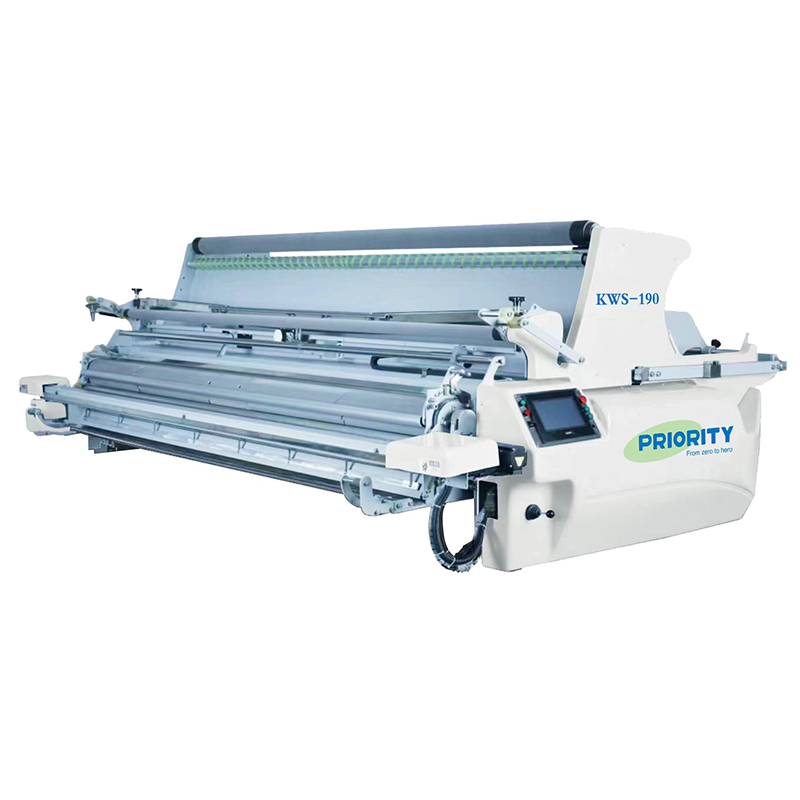
Buyers frequently debate whether to invest in advanced motor controls. Standard induction motors struggle to maintain perfect synchronization under heavy loads. Upgrading to specialized servo technology solves specific tension and alignment issues in the cutting room.
A true Servo Fabric Spreading Machine utilizes closed-loop feedback systems. This means the motor constantly communicates with the main computer. It precisely matches the fabric feed rate with the actual travel speed of the machine over the table. Standard motors guess the speed based on voltage. Servo motors know the exact speed down to the millimeter. This dynamic synchronization guarantees the fabric unwinds from the roll exactly as fast as the machine moves forward.
Tension control becomes critical when spreading high-ply stacks. Heavy fabric layers create significant friction against the cutting table. Standard machines often suffer from the "plowing" effect. During acceleration, a standard machine pushes the fabric stack forward slightly. This ruins edge alignment. Servo control prevents plowing entirely. The system micro-adjusts speed continuously. It smooths out acceleration and deceleration curves at the ends of the table. The fabric drops perfectly straight without any forward push.
Servo systems command a higher initial purchase price. You must evaluate when this premium cost is truly justified. Processing stable, heavy denims might not require servo precision. However, handling stretch knits, spandex, or lightweight silks demands superior tension control. These delicate materials warp easily under mechanical stress. A servo system prevents this warping, preserving the dimensional stability of the fabric. If your facility processes technical textiles or activewear, the servo upgrade becomes a mandatory capability rather than an optional luxury.
Technical features only matter if they drive operational outcomes. Precision control directly influences the bottom line. Exact height management and layer counting transform raw materials into maximized profit margins.
Dead stock drains profitability. Producing exactly what the client ordered prevents excess inventory. Exact layer counting guarantees you cut the precise number of required garments. A reliable Fabric Spreading Machine eliminates the need for "safety layers." Historically, operators added extra plies to compensate for mechanical counting errors. Digital accuracy removes this waste. Saving just two plies per spread adds up to thousands of yards saved annually.
Automated cutting machines (CNC) require perfectly stacked material. They rely on consistent ply heights to operate efficiently. Accurate ply height control actively prevents fabric skewing and surface distortion. When the stack is flawless, the CNC cutter runs at optimal speeds.
Blades encounter uniform resistance across the entire table.
Vacuum systems compress the stack evenly without air leaks.
The cutting head never jams on uneven fabric ripples.
The blade avoids drifting off-pattern due to unexpected tension.
Manual monitoring traps your workforce. Automated stoppage and digital counting free operators from staring at moving carriages. An operator no longer needs to stand by the table to count passes manually. This automation allows one skilled worker to manage multiple spreading tables simultaneously. You can reallocate your labor force to higher-value tasks, such as quality control or production planning. This efficiency directly boosts your daily output without increasing headcount.
Industrial machinery is highly capable, but it is not flawless. Perfect technical specifications mean nothing without proper daily maintenance. You must acknowledge implementation realities to achieve consistent results.
Sensors fail when they get dirty. Cutting rooms generate massive amounts of airborne lint and dust. Static electricity pulls these particles directly onto optical sensor lenses. A fouled sensor cannot read the stack height accurately. It will signal the elevator motor to move incorrectly. Routine cleaning protocols are absolutely mandatory. Operators must wipe down all photoelectric eyes with anti-static cloths at the start of every single shift.
Certain fabrics possess challenging physical properties. Bulky knits often trap massive amounts of air between layers. This trapped air artificially inflates the ply height reading. The machine thinks the stack is taller than the actual fabric mass. You must implement specific countermeasures. Flattening bars help push trapped air out during the spreading process. Wait-times allow the stack to settle naturally before the cutter engages. Do not rely entirely on the machine to overcome severe material behaviors.
Human interaction remains the biggest variable in automated systems. Operators must correctly program the specific fabric profile into the Human-Machine Interface (HMI). They must input the expected thickness per ply. They must calibrate the sensor sensitivity based on fabric color and reflectivity. If an operator inputs the wrong baseline data, the automated systems will execute the wrong commands flawlessly.
Ignoring daily sensor cleaning schedules.
Failing to update HMI profiles when switching fabric rolls.
Bypassing automated stops to force faster production runs.
Operating the machine with unbalanced end-catchers.
Exact control over ply height and layer count forms the true foundation of cutting room profitability. Mastering these technical mechanics ensures you maximize material yield while preventing downstream cutting failures. Advanced sensor arrays, digital PLCs, and servo motor integrations remove the guesswork from fabric preparation.
Your next step requires active evaluation. Review your current scrap rates and analyze your most challenging fabric types. We strongly advise bringing your actual fabric rolls to vendor demonstrations. Test their sensor accuracy against your darkest, most reflective materials. Evaluate servo responsiveness under real-world conditions before issuing any formal purchase requests. Protect your production line by verifying equipment capabilities firsthand.
A: Typically ranges from 10 cm to 25 cm depending on the machine model and cutter clearance, but usable height is dictated by fabric density and cutter blade capacity.
A: Modern sensors detect the actual physical top of the stack in real-time, allowing the machine to adjust dynamically even if the fabric thickness fluctuates slightly.
A: Usually no. Servo systems require entirely different PLC architectures and mechanical drivetrains; it generally requires purchasing a purpose-built Servo Fabric Spreading Machine.
A: If an operator manually stops the machine to cut out a defect, advanced PLCs can pause and resume the count, but standard models may require manual count correction.


