

Views: 0 Author: Site Editor Publish Time: 2026-08-28 Origin: Site


Fabric tension acts as the silent killer of cutting room profitability. Inconsistent tension leads directly to dimensional distortion and major cutting inaccuracies. Ultimately, these hidden fluctuations produce rejected garments and cause massive material waste. Today, modern production facilities simply cannot rely on manual spreading or outdated equipment. Traditional methods fail spectacularly when you process high-stretch fabrics, elastane blends, or delicate materials. To stay competitive, you need intelligent automation.
The goal of this article is to break down the exact mechanical and electronic systems a sophisticated Fabric Spreading Machine uses to manage tension actively. We will explore how modern closed-loop feedback loops prevent fabric distortion. You will also learn exactly how to evaluate these critical features when shortlisting an Automatic Fabric Spreader for your manufacturing facility.
Tension control directly impacts fabric yield; precise control eliminates the need for extended fabric relaxation times before cutting.
Modern machines utilize a closed-loop system combining physical dancer bars, encoder feedback, and positive feed rollers to adjust tension in real-time.
Not all tension systems are equal—evaluating a machine requires matching its specific sensor array and motor synchronization to your primary fabric types (e.g., high-stretch knits vs. rigid wovens).
Implementation success depends as much on operator training and routine sensor calibration as it does on the machine's out-of-the-box capabilities.
To understand the value of modern equipment, we first must define "stretch and recovery" in the context of material spreading. Fabrics inherently possess elasticity. If you stretch a fabric during the spreading process, it temporarily elongates along the cutting table. Once the blade cuts the panels, the tension releases. The fabric then shrinks back to its natural resting state. This physical recovery results in undersized, distorted garment panels that ruin the final assembly.
The financial impact of poor tension management extends far beyond a few ruined shirts. It creates a cascading series of operational costs:
Increased material waste: Operators often add large safety buffers to markers. They lower the overall marker efficiency to compensate for unpredictable fabric shrinkage.
Production bottlenecks: Many factories mandate 24-to-48-hour resting periods on the cutting table. This allows stretched fabrics to relax, but it severely limits table turnover rates.
Quality control failures: Undersized panels lead to puckered seams. This causes downstream sewing complications and increases the final product rejection rate.
How do we measure success? A high-performing Fabric Spreading Machine must achieve a "tension-free" lay. The equipment must maintain consistent edge alignment and uniform ply height. Most importantly, it must accomplish this without altering the fabric's natural dimensional state.
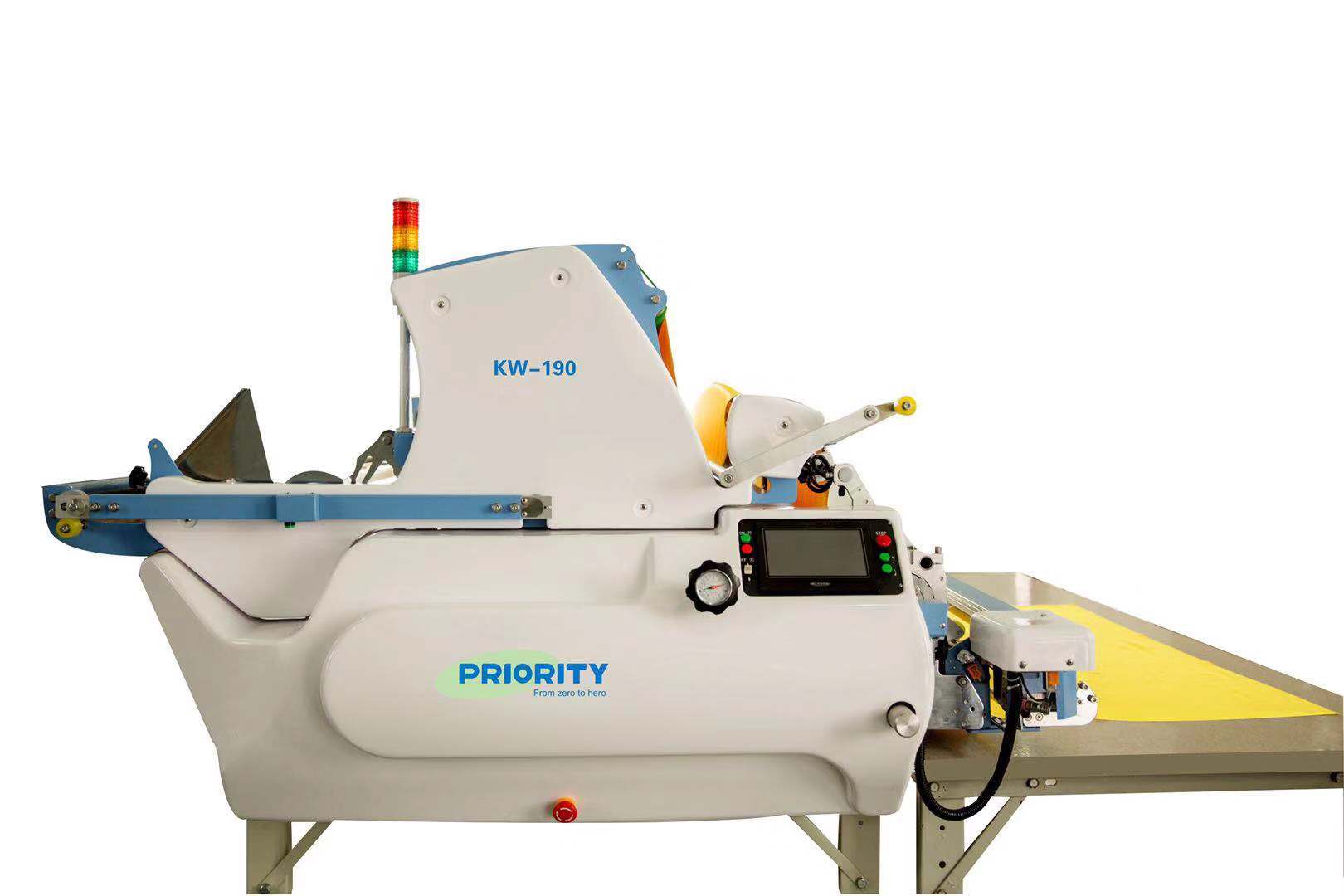
Modern equipment relies on a synchronized blend of mechanical hardware and digital software. These machines do not simply drag material off a roll. Instead, they actively deliver the fabric to the table.
The foundation of tension control is the positive feed system. Motorized cradles or driven cloth rollers hold the fabric roll. These motors actively unroll the fabric. They operate at the exact speed the machine travels down the cutting table. By matching the unrolling speed to the travel speed, the machine prevents the fabric from stretching under its own pull.
Physical mechanisms bridge the gap between the material and the motors. As the fabric leaves the roll, it passes over a dancer bar, also known as a tension bar. This bar is typically weighted or spring-loaded. If fabric tension increases, it pulls the dancer bar upward. This physical movement immediately signals the machine to feed more fabric, relieving the stress.
The true brain of an advanced Automatic Fabric Spreader is its electronic closed-loop feedback system. It operates through a continuous cycle of data exchange:
Encoders measure movement: Digital encoders track the exact travel speed of the machine across the table.
Sensors monitor delivery: Proximity sensors or load cells monitor the feed rate of the fabric leaving the roll.
PLC synchronization: The Programmable Logic Controller (PLC) continuously compares these two data streams. It makes micro-adjustments in milliseconds. This lightning-fast reaction prevents any pulling, dragging, or sagging.
Tension is not just longitudinal. Edge alignment directly affects overall fabric stress. Machines use infrared or photoelectric sensors to track the material's edge. If the roll shifts sideways, the machine auto-corrects the alignment. Preventing lateral pulling is crucial. Lateral stress often induces diagonal tension faults, which warp the grainline of the fabric.
A single tension setting cannot handle every material. The physical properties of your raw materials dictate how the machine must operate. You must adapt your tension strategies to match specific material profiles.
Knit fabrics and sportswear materials present the highest risk of distortion. They easily stretch under their own weight. For these materials, you require highly sensitive dancer bars. Furthermore, you must use specialized cradle feed systems. A cradle utilizes a synchronized conveyor belt to support the full width and weight of the roll from underneath. This prevents gravity-induced stretch, which often happens when you suspend a heavy knit roll on a central bar.
When spreading denim or heavy canvas, your focus shifts. You worry less about over-stretching the material. Instead, you must manage severe inertia. A massive roll of denim carries significant momentum. The machine requires robust motor torque. It also needs strictly controlled acceleration and deceleration algorithms. Without these controls, a heavy roll will over-spool when the machine stops abruptly, creating massive fabric folds on the table.
Lingerie fabrics, silks, and lightweight nylons pose a different challenge. They are incredibly slippery and prone to bruising. Handling these materials highlights the need for precise variable speed controls. Additionally, you need specialized roller coatings. Rubberized or textured finishes help the machine grip the slippery fabric securely. This prevents localized pinching or surface damage while maintaining a tension-free feed.
When you evaluate equipment, you must look beyond basic specification sheets. You must align the machine's features directly with your production goals. The framework below helps clarify these critical purchasing decisions.
Features-to-Outcomes Matrix for Tension Control
Hardware / Software Feature | Primary Application | Business Outcome |
|---|---|---|
Cradle Feed System | High-stretch knits and elastane blends. | Eliminates gravity stretch; prevents edge tension common with bar feeds. |
Bar Feed System | Stable wovens, non-wovens, and rigid materials. | Cost-effective baseline control; sufficient for stable fabrics. |
Digital Tension Profiles | Facilities running diverse fabric types daily. | Reduces setup time; allows operators to load saved "recipes" instantly. |
Mechanical Dial Settings | Facilities running single fabric types constantly. | Requires manual adjustment; relies heavily on operator intuition. |
Many manufacturers now market their equipment using terms like "Artificial Intelligence." You should approach these claims carefully. Assess machines offering predictive tension algorithms. Verify whether their "AI" actually means adaptive closed-loop feedback or if it just refers to basic programmable presets. True intelligent systems learn the stretch characteristics of a fabric roll and adjust torque dynamically as the roll's diameter decreases.
Your tension management system should not exist in isolation. Can the spreader's software integrate with your existing ERP system? Does it connect to your CAD/CAM cutting software? Advanced machines track actual material yield against projected markers. This integration provides real-time data on how well your tension control is minimizing raw material waste.
Buying the best equipment does not guarantee immediate perfection. Factory owners often underestimate the human and environmental factors involved in successful deployment.
The idea of a plug-and-play industrial machine is largely a myth. Even the most advanced Automatic Fabric Spreader requires precise initial calibration. Technicians must adjust the machine based on your specific factory environment. Variables like ambient humidity and temperature drastically affect how fabrics behave and how sensors read data.
Tension control relies heavily on sensitive hardware. Optical edge sensors and digital encoders are highly vulnerable to fabric dust and lint. If a sensor gets blocked by lint, the machine cannot read the fabric edge, and tension faults occur. You must outline a realistic, strict preventative maintenance schedule. Daily compressed-air cleaning of optical sensors ensures the tension systems remain perfectly accurate.
Automation does not replace your operator's judgment. Rather, it augments their capabilities. Operators must receive comprehensive training. They need to recognize when a sensor starts to drift. They must understand how to correctly input and adjust digital fabric profiles. An untrained operator might override an automated system manually, completely defeating the purpose of your investment.
Moving from research to procurement requires a tactical approach. You must demand proof of performance before signing any purchase orders.
Never buy an industrial machine based solely on a glossy spec sheet. Demand a live or video demonstration. Provide the manufacturer with your specific, hardest-to-handle fabric rolls. If you struggle with lightweight activewear knits, make the vendor prove their machine can lay that exact material tension-free.
Frame your final decision around measurable business metrics. Calculate the projected reduction in cutting room resting time. Estimate the decrease in end-loss waste. Model the expected reduction in rejected cut parts. These concrete metrics will build a compelling financial justification for the upgrade.
Before contacting vendors, compile a comprehensive material profile list. Document the weights, widths, and stretch percentages of your most commonly used fabrics. Present this data package to shortlisted equipment manufacturers. This forces them to provide targeted technical proposals rather than generic sales pitches.
Mastering fabric tension is not about finding a single magic feature. It involves deploying a synchronized system of sensitive sensors, responsive motors, and intelligent mechanical design. When you invest in a sophisticated Fabric Spreading Machine, you are ultimately executing a vital risk-mitigation strategy. You protect your raw material yield and guarantee downstream cutting precision.
Your next step is clear. Audit your current cutting room waste metrics today. Document your fabric relaxation times and track your daily end-loss waste. Use this baseline data to build a solid, undeniable business case for upgrading to modern automated spreading equipment. By taking control of your tension, you take direct control of your profitability.
A: It drastically reduces or eliminates relaxation time for many standard fabrics. However, highly volatile elastane blends and extreme stretch knits may still require minimal resting. You should view the machine as a tool to minimize resting bottlenecks, but avoid claims of 100% elimination across all material types.
A: Cradle feeds use synchronized belts to support the entire weight of the roll from underneath. This makes them ideal for stretch fabrics. Roll bars suspend the fabric by holding the core. This suspension method can stretch delicate or heavy fabrics as the roll diameter changes.
A: We recommend daily cleaning of all optical sensors to remove fabric dust. You should perform baseline mechanical calibration quarterly. However, this schedule heavily depends on your daily operational volume and the specific lint levels produced by your fabrics.
A: Generally, retrofitting modern closed-loop digital sensors to legacy mechanical machines is cost-prohibitive. The old hardware usually lacks the necessary PLC response times. It is almost always less effective and more expensive than investing in newer, purpose-built infrastructure.


