

Views: 0 Author: Site Editor Publish Time: 2026-08-28 Origin: Site


In commercial garment production, misaligned fabric edges directly translate to increased material waste. They compromise pattern matching and create downstream bottlenecks in the cutting room. When factories lay down dozens of plies, millimeter deviations compound quickly. This forces cutters to leave wider safety margins. You lose valuable raw material on every single marker. Modern spreading equipment solves this problem not through mechanical force, but through intelligent data. They utilize synchronized feedback loops between optical sensors, control units, and specialized motors. Understanding the exact mechanisms of edge alignment helps operations managers and buyers immensely. It allows you to separate baseline equipment from high-yield investments. By mastering how these components interact, you can eliminate manual adjustments. You will transform a highly variable manual process into a predictable, data-driven operation. This article breaks down the technology stack behind perfect edge alignment.
Precision edge alignment relies on continuous data from photoelectric or infrared sensors detecting the selvedge in real-time.
Upgrading to a Servo Fabric Spreading Machine shifts alignment from reactive, jerky corrections to smooth, continuous micro-adjustments.
Lateral edge alignment is impossible without perfect longitudinal tension control; the two systems must operate in tandem.
When shortlisting machines, buyers must test alignment capabilities using their most difficult materials (e.g., high-stretch knits or slippery synthetics) rather than standard woven cottons.
Every millimeter of fabric matters in high-volume manufacturing. Variance in edge alignment dictates your true material yield. A deviation of just three millimeters per ply quickly compounds over a 100-ply spread. Operators must widen their safety margins to ensure the cutter catches every layer. These widened margins waste premium raw material. If you multiply this daily waste across an entire operational year, the financial drain becomes enormous.
Poor edge alignment also sabotages downstream efficiency. Modern CNC cutters operate at blistering speeds. However, they rely entirely on the accuracy of the spread beneath them. If the edges drift, operators must stop the line. They intervene manually to pull and straighten the fabric. This intervention destroys automated workflows. Furthermore, manual pulling stretches the material. When you cut stretched material, it shrinks back afterward. You risk severe pattern mismatching. This mismatch proves disastrous for plaids, stripes, and engineered prints.
We must recognize the automation gap in modern cutting rooms. Facilities often rely on manual spreading techniques. Manual methods remain inconsistent and labor-heavy. Human operators suffer from fatigue. They cannot maintain millimeter precision over an eight-hour shift. In contrast, automated edge control represents a fundamental baseline requirement. It allows scaling facilities to guarantee consistent markers. Fabric Spreading Machine technology eliminates human error. It ensures the cutting room operates as a precise, predictable environment rather than a constant bottleneck.
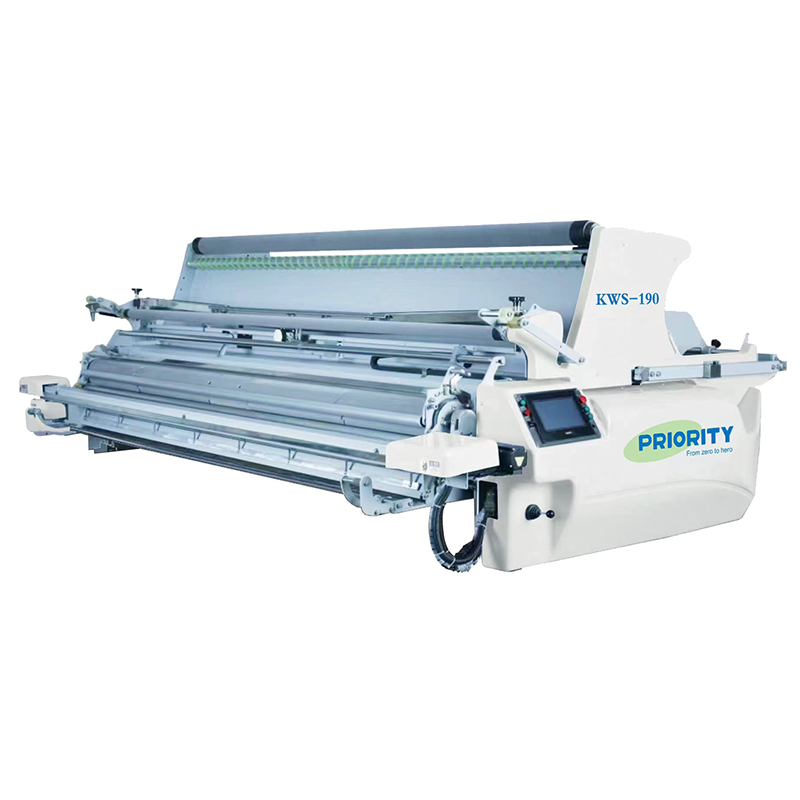
Optical and photoelectric sensors serve as the eyes of the system. These sensors mount near the material drop zone. They track the fabric selvedge continuously. A light beam reflects off the material or passes through it. When the edge wanders, the sensor detects a break or change in the light path. However, these sensors have specific operational limitations. Dust accumulation blinds them quickly. Highly porous mesh or transparent fabrics often confuse standard optical models. You must evaluate the sensor type against your common materials.
Programmable Logic Controllers act as the absolute brain of the machine. The PLC receives continuous data streams from the edge sensors. It processes this information in milliseconds. The PLC instantly calculates the required lateral shift. It determines exactly how far the material carriage must move to correct the deviation. This rapid data processing prevents the fabric from drifting off the zero-edge line. Without a robust PLC, sensor data remains useless.
Carriage shifting mechanisms execute the physical correction. When the PLC sends a command, the physical carriage shifts left or right. It glides smoothly along precision rails. This movement keeps the dropping fabric perfectly stacked. The carriage follows the selvedge rather than forcing the fabric into place. This mechanical response must happen seamlessly. Jerky carriage movements will introduce tension spikes into the material.
You cannot ignore real-world implementation risks. Sensor accuracy degrades rapidly without strict maintenance protocols. Factories often install high-end equipment but neglect basic care. You must clean optical lenses daily. Airborne lint from fleece or cotton coats the sensors. Once blinded, the machine reverts to inaccurate spreading. Proper daily maintenance guarantees the technology stack functions as designed.
Standard AC/DC motors power many older or budget spreading machines. These motors provide basic start and stop functions. They operate on a simple binary principle. When the sensor detects a misalignment, the motor kicks in forcefully. This often results in aggressive overcorrection. You will notice a "stepping" effect on the fabric edge. The material shifts too far left, then too far right. It creates a jagged stack rather than a perfectly smooth wall.
Upgrading to a Servo Fabric Spreading Machine changes this dynamic entirely. Servo motors utilize closed-loop feedback systems. They constantly report their exact position back to the PLC via encoders. This allows for precise, incremental adjustments. Instead of jerking the carriage, the servo makes micro-corrections. The alignment becomes smooth and continuous. The system anticipates edge drift rather than merely reacting to it.
Synchronization represents another massive advantage. Servo drives synchronize the unrolling speed of the fabric. They match it perfectly with the travel speed of the machine across the table. If these speeds mismatch, the fabric drags or billows. Drag causes severe edge skewing. By keeping the feed and travel speeds locked together, servo systems eliminate tension-induced misalignment. The fabric drops in a completely relaxed state.
You must also consider energy and wear factors. Servo systems definitely require a higher initial CapEx. However, they reduce mechanical wear significantly. Because they do not jerk or slam the carriage, internal components last much longer. They only draw power when actively adjusting. This provides long-term energy efficiency for the facility. The operational smoothness translates directly to lower maintenance downtime.
Feature | Standard AC/DC Motors | Servo Motor Systems |
|---|---|---|
Feedback Loop | Open-loop (reactive only) | Closed-loop (continuous data) |
Correction Style | Jerky, prone to "stepping" | Smooth, micro-adjustments |
Speed Synchronization | Limited, often manual adjustment | Fully automated and locked |
Mechanical Wear | High due to abrupt starts/stops | Low due to fluid motion |
Many buyers operate under a false dichotomy. They believe lateral alignment strictly concerns left and right movements. In reality, lateral alignment fails completely if longitudinal tension remains incorrect. Forward and backward pull dictate how the fabric behaves. If you stretch the fabric during spreading, it stores kinetic energy. The machine might align the edge perfectly on the table. However, the stretched fabric will "snap back" after cutting. This shrinks the ply. It misaligns the entire marker regardless of initial edge precision.
Dancer rollers and feed systems solve this longitudinal problem. Advanced machines feature motorized unrolling cradles. They push the fabric toward the table rather than pulling it. Dancer bars sit between the roll and the drop zone. They act as mechanical shock absorbers. They rise and fall to maintain a consistent slack. This creates a "tension-free" zone before the fabric ever reaches the alignment sensors. The sensors can only align relaxed fabric accurately.
Material-specific behaviors dictate how you configure these systems. Edge alignment settings must be highly adjustable. Heavy woven denim requires high tension resistance. It needs aggressive edge-shift responsiveness. Lightweight activewear knits demand the opposite. Elastane blends stretch under their own weight. You must handle them with delicate tension settings. A rigid, one-size-fits-all alignment approach ruins complex textiles. The machine must adapt to the fabric's unique elasticity.
Procurement requires strict validation. You cannot base investments on spec sheets alone. Follow a structured evaluation path to secure the best equipment.
Material Compatibility Testing: Advise your procurement team to request proof-of-concept tests. Bring your own specific fabrics to the vendor. Do not rely on the OEM’s optimized test rolls. Standard woven cotton spreads easily. You need to see how the sensors handle high-stretch knits or slippery synthetics.
Software & UI Calibration: Assess the operator interface thoroughly. Determine how easily a worker can adjust the edge-alignment sensitivity. Complex, buried interfaces lead directly to operator error. If the UI confuses them, operators will bypass safety settings. They will revert to manual overrides.
Maintenance and Compliance: Review the physical accessibility of alignment sensors. Check how easily technicians can reach the carriage motors. Flag machines requiring proprietary technician visits for basic sensor calibration. These represent high-maintenance risks. You need systems your in-house team can clean and calibrate quickly.
ROI Calculation Next Steps: Conduct a comprehensive time-and-waste study. Measure the exact material wasted by your current manual spreads. Track the downtime caused by pattern mismatches. Use these hard metrics to justify the capital expenditure of a servo-driven system. Data always wins equipment arguments.
Edge alignment proves to be a holistic system. It requires much more than a simple optical tracker. True precision demands responsive sensors, closed-loop servo motors, and absolute tension control. These components must operate in seamless harmony. When they do, the fabric falls onto the table completely relaxed and perfectly straight.
Investing in advanced alignment technology transforms your facility. It shifts the cutting room from a chaotic bottleneck into a predictable environment. You gain data-driven control over your raw material yield. You eliminate the cascading errors that ruin downstream automated cutting. Quality improves alongside speed.
We encourage you to audit your current fabric waste metrics today. Walk your cutting floor and measure the safety margins operators currently use. Identify the time lost to manual straightening. Once you compile this data, consult with equipment specialists. Discuss a customized machine configuration tailored to your specific textile challenges.
A: Standard optical sensors may struggle with these materials. The light beam often passes straight through mesh holes, confusing the PLC. To resolve this, evaluate machines offering ultrasonic sensors. You can also request advanced contrast-detection sensors designed specifically for highly porous or sheer fabrics.
A: Most modern machines auto-calibrate their electronic baselines upon startup. However, physical cleaning remains a required daily maintenance step. Operators must wipe the lenses with microfiber cloths. This prevents airborne lint and dust from blinding the sensors, which ruins alignment accuracy.
A: Speed is generally comparable, but the accuracy at high speeds is where servo motors excel. Standard motors often cause edge "wandering" when pushed to maximum capacity. Servo drives make rapid micro-adjustments, ensuring perfect alignment even at peak operational velocity.


