

Views: 0 Author: Site Editor Publish Time: 2026-08-28 Origin: Site


Modern apparel production demands speed and accuracy. Investing in a high-speed automatic cutter yields limited ROI if manual or disconnected spreading processes bottleneck operations. An automated cutter often sits idle waiting for material. The critical "handshake" between spreading and cutting occurs both physically and digitally in modern textile manufacturing. Without proper connectivity, you face severe production delays and material waste.
Successful integration relies on synchronized table hardware to move lays seamlessly. It requires precise material tension control to prevent fabric distortion. Furthermore, seamless data flow between the spreading unit and cutting room software remains crucial. You will learn how to synchronize hardware elements effectively across your factory floor. We will explore material control mechanisms alongside software handshakes. Finally, you will discover actionable evaluation criteria to assess integration readiness for your upcoming equipment upgrades.
Hardware synergy is foundational: Integration requires synchronized conveyor tables or air-flotation transfer tables to move plies without disturbing edge alignment.
Tension dictates cut accuracy: A fabric spreading machine must lay material perfectly flat and tension-free; otherwise, fabric relaxation post-cut will ruin garment dimensions.
Data connectivity prevents waste: Integrating CAD/CAM data ensures the spreader lays the exact marker length required by the cutter, minimizing end-loss.
Speed matching matters: The throughput of the spreader must mathematically align with the cutter's capacity to avoid idle machine time.
Manufacturers often upgrade cutting rooms sequentially. They buy a highly advanced cutter first. However, a standalone spreading operation creates a severe "hurry up and wait" scenario. The automated cutter finishes a job rapidly. Then it waits idle while operators manually lay the next batch. This disconnected bottleneck cripples factory throughput. The cutter only generates profit while actively slicing material.
To fix this bottleneck, production managers must target specific operational benchmarks. Achieving these metrics signifies successful machine harmony.
Throughput: Achieve a 1:1 or 2:1 spreader-to-cutter ratio based on cut-file complexity.
Yield: Reduce end-loss tolerances to strict millimeter margins.
Labor Efficiency: Reduce physical handling of heavy fabric rolls and multi-ply lays between stations.
Ignoring integration brings hidden costs. Poor machine synchronization causes fabric distortion during manual transfers. When operators drag a completed lay across static tables, bottom plies shift. This misalignment ruins cut accuracy. Additionally, excessive idle time destroys profitability. An expensive cutter waiting for fabric drains operational budgets daily. Proper integration eliminates these invisible profit leaks completely.
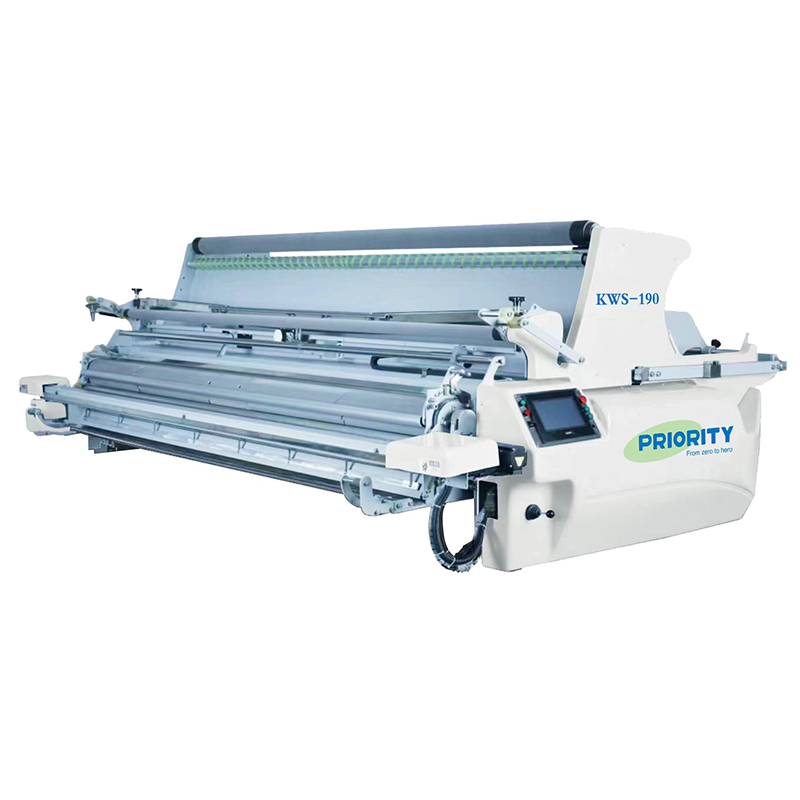
Connecting two massive industrial machines requires meticulous physical engineering. The transfer zone dictates the quality of the final cut. Fabric must glide from spreading to cutting effortlessly.
Motorized conveyor tables physically connect the spreading zone to the cutting zone. They index the fabric forward seamlessly. A synchronized drive system pulls the entire lay simultaneously. This motion prevents bottom plies from dragging or stretching. Advanced conveyors communicate directly across machine boundaries. When the cutter finishes a section, it signals the conveyor to advance precisely.
Some facilities rely on manual transfer for heavy lays. Air-blow tables become essential here. High-pressure blowers force air through tiny table perforations. This creates a micro-cushion beneath the fabric. Operators can slide heavy multi-ply lays effortlessly. However, you must match table widths and heights precisely. Even a two-millimeter height difference causes edge snagging during transfer.
Engineering requirements demand perfectly leveled tracks. These tracks span the entire spreading and cutting length. Concrete factory floors rarely sit perfectly flat. Installers must use laser levels to align guide rails. Improper alignment causes machine derailment over time. It also causes skewed lays. Skewed lays force the cutter to trim outside marker boundaries, wasting expensive textiles.
High-volume factories often utilize mobile transfer tables. These mobile units allow one high-capacity Fabric Spreading Machine to feed multiple automated cutters. The spreader builds a lay on a lateral transfer table. Once complete, operators slide the table sideways to an available cutter. This configuration maximizes equipment utilization and minimizes idle floor time.
You cannot cut accurately if you spread poorly. Material control remains the most critical factor for quality assurance. Automated cutters slice exactly what they receive.
Modern fabrics demand modern handling. A Servo Fabric Spreading Machine uses servo-motor-driven mechanisms to provide micro-adjustments. These motors control speed and feeding instantaneously. This technology remains critical for highly elastic or slippery synthetics. Servo systems react to roll weight changes dynamically. They ensure consistent feeding from the first yard to the final inch.
Dancer bars and specialized feed rollers eliminate stretch during the lay. They absorb sudden jolts from heavy rolls. If fabric stretches during spreading, it inevitably shrinks after being cut. This relaxation phenomenon ruins garment dimensions. Pieces will not align during the sewing process. Tensionless spreading ensures the cutter slices completely relaxed fabric every time.
Infrared or photoelectric edge control mechanisms ensure a perfect vertical wall of fabric. Sensors read the fabric edge continuously. The machine shifts the roll laterally to correct wandering edges instantly. A straight material edge directly impacts the cutter's ability to maximize marker efficiency. Crooked edges force CAD operators to leave wider safety margins, wasting material.
Operators must match maximum spreading height strictly to cutter capacity. You must consider the maximum compressed cut-height of the automatic cutter. Common cutter limits include 3cm, 5cm, or 7cm. Pushing beyond these limits causes blade deflection. Deflection results in uneven cuts on bottom plies. Vacuum compression reduces the initial lay height, but physical blade limits remain absolute.
Physical alignment only solves half the integration puzzle. Digital communication ensures machines operate intelligently. Hardware moves the fabric, but software dictates the strategy.
The spreader receives marker data directly from cutting room software. Operators no longer type lengths manually. The CAD file transmits length, ply count, and step-lay instructions. This eliminates human data entry errors. The machine knows exactly where to start and stop. It minimizes end-loss dynamically based on real-time file requirements.
Integrated software automatically adjusts spreader acceleration and deceleration. The system bases these adjustments on specific cut files and fabric types. Denim requires aggressive acceleration. Delicate silk demands gentle, ramped speed profiles. Connected machines download these profiles instantly via network connections. This protects fragile textiles from tearing during rapid directional changes.
Modern factory floors require ultimate transparency. Connected machines track real-time fabric consumption and roll yields. They report machine uptime and error codes instantly. This data flows into higher-level MES or ERP systems. It gives management a unified view of the cutting room floor. You can identify exact material utilization rates and operator efficiency instantly.
Upgrading your cutting room requires rigorous vendor vetting. You must ask the right technical questions before issuing purchase orders. A systematic approach prevents costly compatibility issues.
Verify Table Compatibility: Will the new spreader physically fit existing cutter guide-rails? Measure track gauges exactly.
Assess Communication Protocols: Does the spreader use open-architecture PLCs? Proprietary software often blocks third-party connections.
Evaluate Material Versatility: Can the equipment handle specific roll weights? Verify maximum roll diameters your cutter processes daily.
Facilities must choose between a single OEM ecosystem or integrating best-of-breed machines from different manufacturers. Both approaches carry distinct advantages.
Factor | Single-Vendor OEM | Mixed Brands (Best-of-Breed) |
|---|---|---|
Software Integration | Native plug-and-play connections. | Requires custom API or PLC mapping. |
Hardware Alignment | Standardized heights and rails. | May require physical table modifications. |
Technical Support | One point of contact for troubleshooting. | Risk of vendors blaming each other. |
Feature Specialization | Standardized capability across lines. | Access to highly specialized technologies. |
Never buy equipment without a rigorous live demonstration. You must dictate the demo parameters. Demand testing using your most difficult fabric blends. Watch the equipment handle highly elastic spandex or sheer chiffon. Check edge alignment meticulously after a simulated transfer. Measure the cut pieces against the original CAD file to verify zero shrinkage.
Installing integrated machinery disrupts daily operations. Preparation minimizes this disruption. You must address facility constraints realistically before crates arrive at your loading dock.
Inline spreading and cutting requires a massive operational footprint. You must account for loading zones and offloading spaces. Complete layouts often span 15 to 30 meters in length. Facilities lacking straight-line space struggle with L-shaped workarounds. Proper layout planning remains non-negotiable. Measure pillars, aisles, and emergency exits before finalizing floor plans.
Your facility must handle immense combined utility draws. You are running two industrial motors simultaneously. Check electrical panel capacities thoroughly. Compressed air requirements increase drastically. The cutter vacuum and the air-flotation tables consume massive CFM (Cubic Feet per Minute). Undersized air compressors will stall both machines instantly.
Technology upgrades intimidate experienced workers. Transitioning operators from manual or semi-auto spreading requires patience. They must learn to manage a synchronized, data-driven cell. Best practice involves hands-on training for at least two weeks. Common mistakes include operators bypassing safety sensors or manually overriding automated speed profiles. Trust your training programs to build confidence.
Integrated lines share vulnerabilities. If the spreader goes down, the cutter starves entirely. This maintenance cascade halts production instantly. You must implement rigorous preventative maintenance schedules. Clean edge sensors daily. Lubricate guide rails weekly. Keep spare belts and blades in localized inventory. Proactive maintenance guarantees maximum machine uptime.
Integrating spreading equipment with an automatic cutter involves much more than placing them next to each other. It requires exact mechanical alignment and precise material handling. Data synchronization ensures machines act as a unified production cell. Overlooking any single element compromises garment quality and diminishes your equipment ROI.
Take immediate action to optimize your cutting room. First, audit your current floor footprint to identify layout opportunities. Next, calculate your exact cutter idle time to justify the integration investment. Finally, request specific integration case studies from shortlisted equipment vendors. Demand proof of successful multi-machine connectivity.
A: Yes, but it usually requires physical table modifications (rails/width) and may lack seamless software integration, relying instead on manual parameter entry.
A: It depends on ply depth and cut complexity. Typically, one high-speed cutter requires 1.5 to 2 spreaders to keep it continuously fed, often utilizing lateral transfer tables.
A: Servo motors provide instantaneous feedback to fabric feed rollers, eliminating tension. This ensures the cutter slices relaxed fabric, preventing post-cut shrinkage and rejected parts.
A: No. While single-vendor setups offer easier software "plug-and-play," mixed-brand integrations are common, provided table widths, rail gauges, and basic PLC outputs match.


