

Views: 0 Author: Site Editor Publish Time: 2026-08-28 Origin: Site


High maximum speed on a spec sheet is a common selling point. But for apparel manufacturers, running a machine at its absolute limit often destroys fabric yield and part accuracy. Finding the true sweet spot requires looking beyond theoretical output. You must analyze how a machine handles tension, ply alignment, and fabric weight at sustained operational speeds. If you push production rates without proper control, you risk severe material distortion. This guide breaks down how to evaluate spreading speeds effectively. We will show you how to match them to your specific material profiles. You will also learn to identify the hardware capabilities you need. These features actually allow you to scale output without sacrificing quality.
Operational Speed vs. Max Speed: Most facilities find their optimal balance between 40 and 80 meters per minute; speeds exceeding 90 m/min are typically reserved for highly stable, heavy-duty wovens.
Material Sensitivity: An Automatic Fabric Spreader must dynamically adjust speed based on fabric elasticity—running knits or Lycra at high speeds without advanced tension control leads to post-cut shrinkage.
Hardware Dependencies: High-speed output is only profitable if the machine is equipped with real-time edge alignment and synchronized feeding cradles to prevent material distortion.
The Yield Equation: Sacrificing 1% of fabric yield due to high-speed tension issues will almost always cost a facility more than the labor saved by faster throughput.
Equipment manufacturers frequently advertise impressive sprint speeds. You often see claims of 100 or even 120 meters per minute. This high number acts as a powerful vanity metric during the sales process. However, evaluating a Fabric Spreading Machine solely on this peak number is a serious commercial risk. Factories rarely, if ever, operate at these maximum velocities. Running a machine at its absolute limit creates instability. It causes excessive vibrations and increases the likelihood of catastrophic material snags.
You also must consider ramp-up and deceleration phases. A machine does not travel at its top speed from end to end. It must accelerate from a dead stop at the beginning of a lay. It then must decelerate smoothly as it approaches the catcher at the opposite end. These acceleration and deceleration phases drastically reduce your actual average speed. Short cutting tables suffer the most from this effect. On a 10-meter table, the machine might only hit peak speed for a few seconds before it begins braking.
Furthermore, extremely high speeds create significant operator bottlenecks. Human workers must manage ply cutting, monitor catchers, and execute roll changes. Fast machines force operators to work faster. This rushed environment leads to human error. Operators may misalign a roll or fail to notice a fabric flaw. Machine downtime spikes when humans cannot safely keep pace with the equipment. Therefore, we advise buyers to focus on a different metric. You should request data on sustainable cycle times rather than maximum sprint speeds during equipment trials.
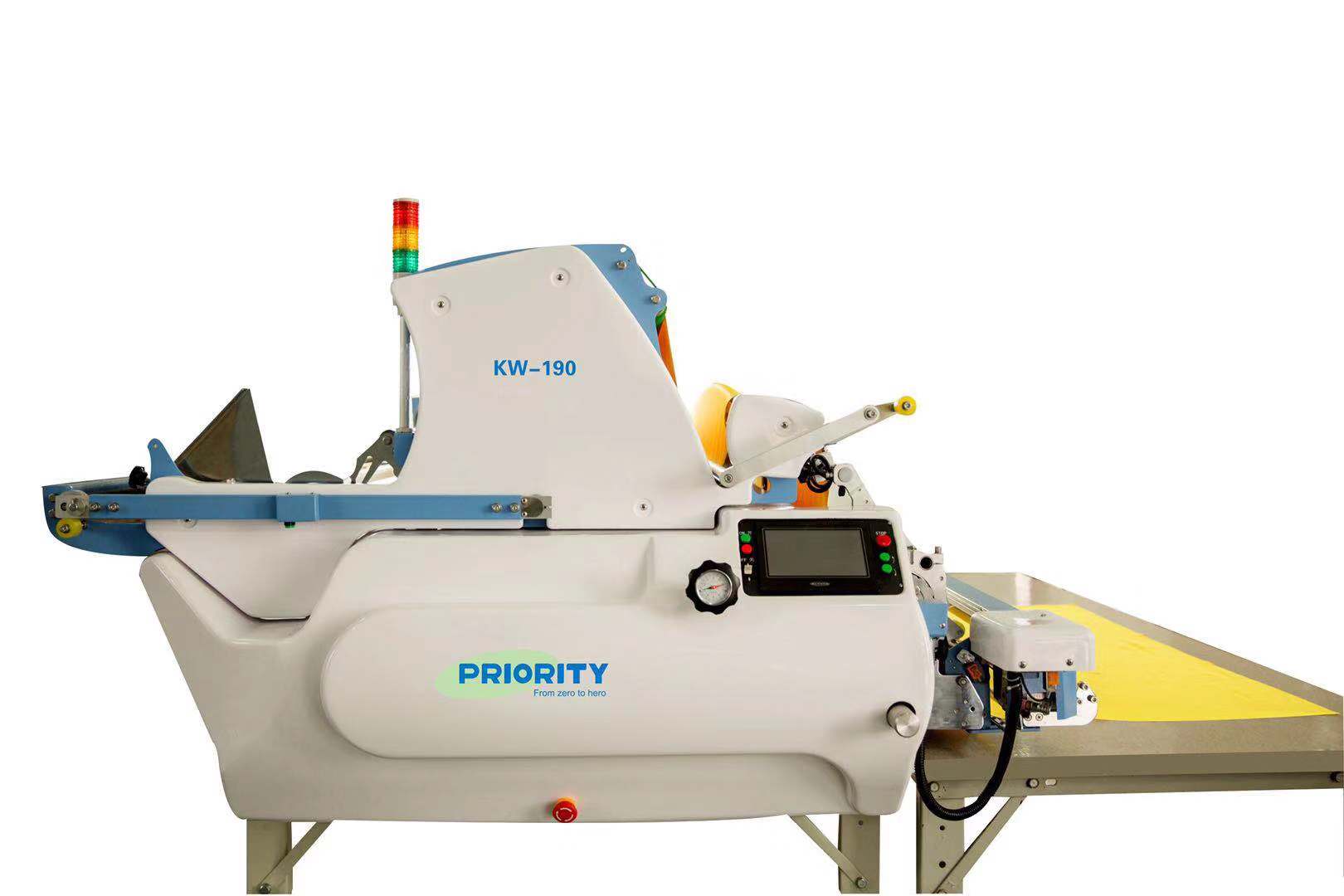
Your material dictates your speed limit. Different textiles possess unique physical properties. These properties determine how much physical stress they can endure during the unwinding process. You must calibrate your operation based on the specific elasticity and surface friction of each roll.
Stable woven fabrics boast a very high tolerance for rapid processing. Their rigid interlocking threads resist stretching. You can typically sustain speeds of 70 to 90 meters per minute or higher. You face minimal tension distortion risks here. The primary risk involves edge misalignment. If you run the machine too fast, photoelectric sensors may fail to track the fabric edge accurately. We recommend calibrating sensor polling rates if you plan to push speeds past 80 meters per minute.
Knits and elastomeric fabrics require immense care. They possess low to medium tolerance for high-speed unwinding. Your optimal speed balance usually falls between 30 and 50 meters per minute. These materials carry a high risk of stretching. If you spread them too quickly, mechanical drag elongates the fibers. The fabric will eventually relax and shrink after cutting. This shrinkage ruins pattern dimensions and destroys final garment assembly. Slow, controlled speeds are non-negotiable for these categories.
Slippery synthetics fall into a medium tolerance category. They require moderate, consistent speeds around 40 to 60 meters per minute. These materials do not stretch easily, but they shift constantly. The smooth surface lacks friction. This causes layers to slide over one another during deceleration. You need specialized catchers and clamps to prevent shifting. Gradual acceleration profiles help maintain lay stability for delicate synthetics.
Optimal Speed and Risk Matrix
Fabric Category | Tolerance Level | Optimal Speed Range | Primary Defect Risk |
|---|---|---|---|
Stable Wovens | High | 70 - 90+ m/min | Edge Misalignment |
Knits & Stretch | Low to Medium | 30 - 50 m/min | Tension Stretching |
Slippery Synthetics | Medium | 40 - 60 m/min | Ply Shifting |
Speed is only beneficial when backed by robust hardware. An advanced Fabric Spreading Machine,Automatic Fabric Spreader relies on several synchronized systems. These systems prevent material distortion at elevated velocities. Let us examine the critical hardware components you need for high-speed success.
Tension-Free Feeding Mechanisms: Traditional bar-feed systems drag the fabric. This drag creates tension. Modern machines use synchronized motorized cradles instead. The cradle unrolls the fabric at the exact speed of the machine's forward travel. This active unwinding eliminates drag entirely. The material floats down onto the table without resistance.
Real-Time Edge Alignment Sensors: High speeds demand exceptionally responsive sensors. We look for high-frequency infrared or laser alignment tools. The machine must read the fabric edge and adjust the cradle position instantly. If sensor lag exists, the machine creates staggered edges. Staggered edges force cutters to increase buffer zones, which directly increases fabric waste.
Variable Speed Control (VFD): A programmable drive system is an absolute necessity. A high-quality Variable Frequency Drive allows operators to build customized speed profiles. The VFD tells the motor to speed up smoothly in the middle of the table. It also commands gradual braking at the ends. This prevents sudden jerks from disrupting the laid plies.
Vibration Dampening and Chassis Weight: Physical build quality dictates stability. Lightweight aluminum chassis designs vibrate heavily at high speeds. These vibrations transfer directly into the fabric, causing it to ripple or shift. A heavier, rigid steel chassis absorbs mechanical energy. It remains planted securely on the rails, ensuring high-speed accuracy.
You cannot evaluate spreading speeds without looking at the underlying mathematics. Speed increases throughput, but poor speed management destroys yield. You must balance these two competing forces to maximize profit.
First, consider the direct cost of bad tension. Fabric yield loss drains profitability rapidly. Imagine running a delicate knit at 80 meters per minute to save labor time. This excessive speed might cause a 2% shrinkage rate in your cut parts. Compare this to running the same job at 50 meters per minute with 0% shrinkage. The material cost of that 2% loss far outweighs the hourly wages saved by finishing the spread faster. Fabric represents the largest expense in apparel manufacturing. Protecting it is your highest priority.
Second, you must calculate end-loss waste. High speeds build significant momentum. This momentum often leads to overshooting at the ends of the lay before the catcher engages. Think about the cumulative impact of this overshooting. An extra 2 centimeters of waste per ply adds up quickly. Over a standard 100-ply spread, that tiny error equals 2 full meters of lost fabric per lay. Over a month, this waste consumes thousands of dollars of raw material.
We advise procurement teams to redefine their success criteria. Use the following metrics to judge equipment value:
Measure the first-pass quality yield rather than raw speed.
Calculate total daily output factoring in roll change times.
Track the percentage of parts rejected due to dimensional instability.
Evaluate the exact amount of end-loss generated per lay.
Never purchase equipment based solely on a brochure. You must conduct rigorous physical trials using your own production materials. We recommend using a standardized checklist to evaluate machine performance. This ensures you buy a solution capable of handling your specific factory conditions.
Start with the "Relaxation Test." Demand that the vendor spread your most difficult stretch fabric at their advertised optimal speed. Do not cut it immediately. Let the finished lay rest on the table for 12 hours. Measure the dimensions before and after this resting period. If you detect any shrinkage, the machine failed to control tension. Do not accept the machine unless it can pass this test.
Next, perform an Edge Tolerance Validation. Run the equipment at 80% of its stated maximum speed. Carefully measure the edge alignment variance across a 50-ply spread. The edges should stack perfectly. Reject any solutions that stray beyond a 2 to 3 millimeter tolerance at these operational speeds. Poor edge alignment forces you to waste marker space.
Finally, measure the load and unload times. Clock the exact time it takes to remove an empty core and load a fresh roll. Sprint speed matters little if roll changes take ten minutes. A machine that spreads slightly slower but features a rapid, automated roll-loading system often yields higher total daily output. Efficiency between spreads is just as critical as efficiency during spreads.
The best spreading speed is never the fastest one printed on a brochure. It is the maximum velocity at which a machine can maintain zero tension and perfect edge alignment. This sweet spot changes based on your specific fabric types and lay heights. Pushing past this limit destroys expensive raw materials and ruins final product quality.
We recommend prioritizing equipment with advanced synchronization technologies. Look for motorized cradles, VFDs, and rapid-response alignment sensors over raw speed capabilities. Always demand application-specific testing using your own worst-case textiles before signing a purchase order. Taking these calculated steps ensures your investment truly scales your daily output without sacrificing yield.
A: Yes, higher speeds generate significantly more friction as the fabric unrolls and travels. This friction creates static buildup, especially with synthetic materials. If you evaluate high-speed spreading, ensure the machine is equipped with active anti-static bars or ionizers to dissipate the charge before laying the plies.
A: It is a machine equipped with a motorized cradle and synchronization sensors. These systems actively unroll the fabric to precisely match the machine's forward travel speed. This active feeding ensures the material is laid down smoothly without being pulled, dragged, or stretched at any point.
A: As the lay gets higher, the machine's cutting mechanism and edge sensors must constantly adjust their elevation. Higher lays often require slightly reduced operational speeds. This reduction maintains aerodynamic stability and prevents the bottom layers from shifting under the immense weight of the moving machine above them.
A: Yes, provided it features a high-quality variable frequency drive (VFD). The machine must also have customizable digital profiles. These profiles allow operators to instantly switch between aggressive, high-speed settings for wovens and gentle, low-speed, tension-sensitive settings for delicate knits.


