

Views: 0 Author: Site Editor Publish Time: 2026-08-28 Origin: Site


The cutting room often becomes the absolute primary bottleneck for material utilization and production speed in modern garment manufacturing facilities. Choosing the incorrect spreading mode can quickly lead to exceptionally high scrap rates, mismatched patterns, and severely compromised final garment quality. You must recognize that selecting between one-way and zigzag spreading is never just a simple technical preference. It acts as a critical business decision dictating exactly which type of Fabric Spreading Machine you need, influencing your labor allocation, and determining your overall fabric yield returns. In this article, we provide production managers and cutting room supervisors with an evidence-based framework to evaluate different spreading modes effectively. You will learn how to assess machine capabilities, compare the operational trade-offs, and make a highly informed equipment investment tailored to your specific textiles.
One-Way Spreading is mandatory for directional fabrics (e.g., velvet, corduroy, asymmetrical prints) to ensure pattern alignment, though it requires longer cycle times.
Zigzag (Face-to-Face) Spreading maximizes output speed and minimizes end-loss waste, making it the most cost-effective choice for solid colors and non-directional materials.
Investing in an automatic fabric spreader equipped with programmable modes allows facilities to switch seamlessly between one-way and zigzag operations, optimizing both flexibility and tension control.
Machine evaluation must weigh the upfront capital expense against specific production constraints: fabric types, ply height requirements, and automated catcher configurations.
Spreading fabric serves as the foundational operation of any commercial cutting room globally. Operators lay multiple layers of textiles onto a long cutting table continuously. They create a dense stack, commonly referred to as a "lay," ready for bulk automated cutting. The two dominant operational methods utilized across the industry are one-way spreading and zigzag spreading. Every production manager must thoroughly understand how these specific methods dictate overall factory throughput.
You face a constant, rigorous balance between achieving maximum throughput and maintaining strict quality compliance. Zigzag spreading delivers incredible speed and operational efficiency. It allows continuous laying without interruption. Conversely, one-way spreading guarantees absolute design integrity for complex, highly sensitive textiles. You cannot sacrifice pattern alignment for speed when handling intricate prints. Choosing the incorrect method ruins entire production runs and inflates material costs.
Furthermore, the chosen spreading mode directly influences the physical attachments required on your production hardware. One-way processes demand heavy-duty automatic cutting knives. These precise knives shear the fabric cleanly at the end of every single ply before returning. Zigzag operations require robust folding catchers instead. These mechanical catchers clamp the fabric securely while the machine folds the material back over itself. Facilities often require highly modular machines to accommodate both hardware setups efficiently and maintain production versatility.
In a standard one-way spreading operation, the equipment lays the fabric out in a single, continuous direction. Operators configure the textile to face either strictly face-up or strictly face-down. When the machine reaches the end of the required ply length, it completely cuts the textile. After making this precise cut, the equipment returns empty to the starting point to begin the next layer. This single-direction approach maintains absolute consistency across every single layer of the stack.
Manufacturers maintain a strict requirement for one-way operations when processing highly specific textiles. Fabrics possessing a directional nap, such as corduroy, fleece, and velvet, absolutely demand this method. Directional and asymmetrical prints also require it. Reversing these particular materials would immediately result in upside-down patterns on the final assembled garment. Consumers quickly reject garments showing inverted logos, conflicting fabric naps, or mismatched shading.
Despite its necessity for certain specialized materials, this method introduces specific implementation realities and drawbacks. You must actively account for these factors during daily production planning:
Significant Time Cost: The empty return trip back to the origin point drastically increases overall spreading time. It essentially doubles the machine travel time compared to continuous laying operations.
Material Waste Exposure: This process requires highly precise edge-cutting mechanisms. Without them, facilities suffer excessive end-loss. This generates massive amounts of scrap over thousands of plies.
Labor Intensity: Operators must monitor the cutting blade continually. They must ensure it remains sharp to prevent tearing fragile fabrics at the end of the ply.
To execute this flawlessly, you need very specific machine prerequisites. Your setup requires a heavy-duty automatic end-cutter capable of handling varying material thicknesses. It also demands precise tension-free laying mechanisms. These advanced systems prevent fabric distortion during the heavy one-way pull. High-stretch materials will otherwise shrink back aggressively after cutting, which ruins marker tolerances and distorts the final garment shape.
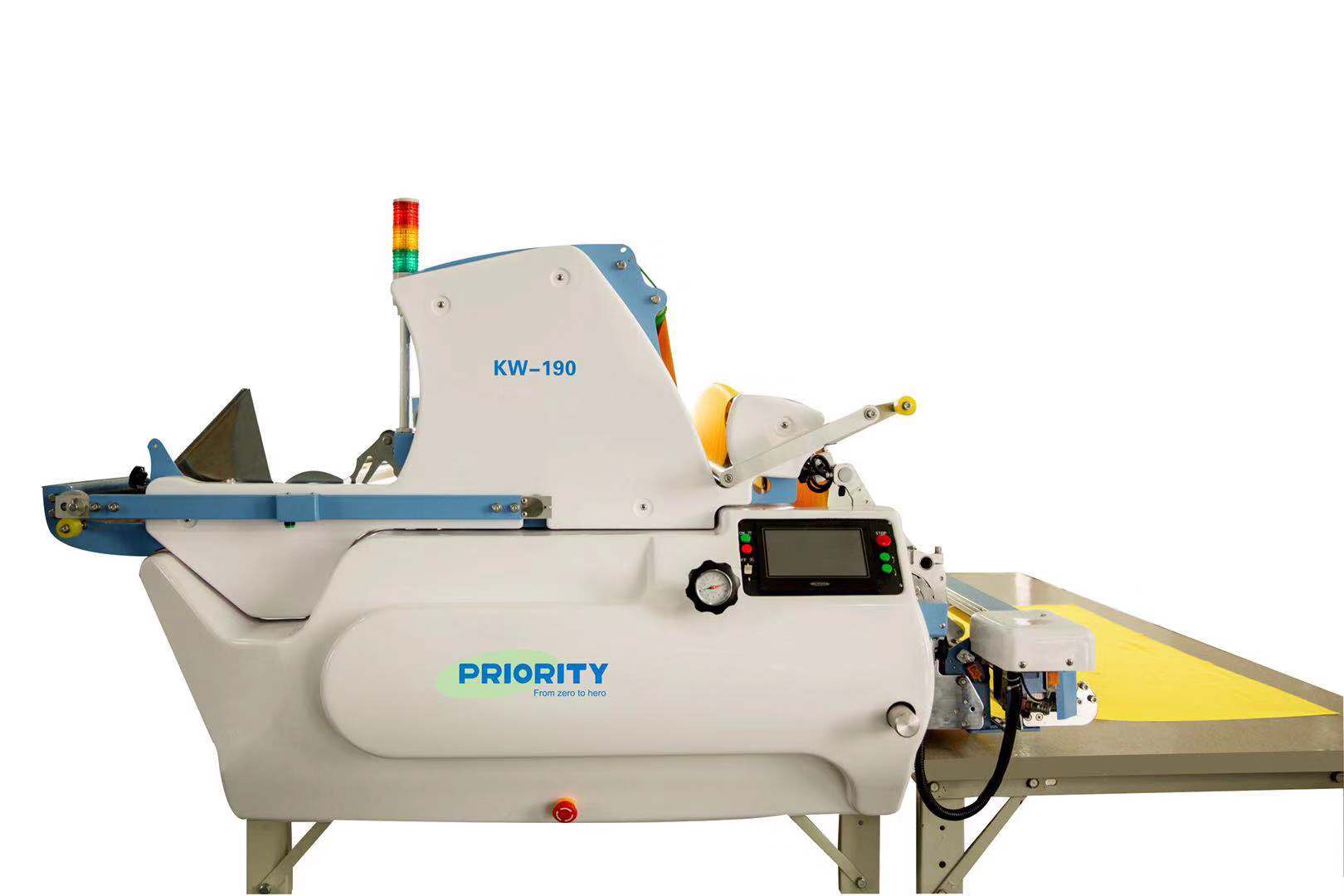
In zigzag spreading operations, the machine operates continuously without interruption. It spreads the fabric back and forth along the table without executing cuts at the ply ends. This fluid motion creates a face-to-face and back-to-back stack of materials. The equipment folds the textile back over itself smoothly, clamping it at each end before reversing direction.
High-volume production environments rely heavily on this highly efficient method. It serves as the primary choice for solid colors and completely non-directional prints. Symmetrical fabrics, including standard cottons, raw denim, and basic synthetics, perform exceptionally well here. You can rapidly process these materials without worrying about nap direction, shading variations, or upside-down prints. This makes it ideal for fast-fashion manufacturing and basic apparel lines.
Implementing face-to-face operations drives substantial business outcomes and production scalability. Key advantages include:
Maximized Output Volume: Eliminating the empty return trip immediately removes dead time. This nearly doubles the effective laying speed compared to single-direction methods.
Drastic Waste Reduction: End-folding catchers trap the fabric precisely at the turn-around points. This mechanism tightly minimizes scrap at the ply ends, saving thousands of yards of textile annually.
Reduced Mechanical Wear: Because the machine does not engage a cutting knife after every single ply, you reduce the mechanical wear and tear on the cutting assembly.
However, you must evaluate specific operational criteria before adopting this process globally across your facility. It is not universally suitable for all automated cutters or design styles. You must utilize symmetrical CAD marker planning. Because facing plies face inward toward each other, the machine cuts left and right garment pieces simultaneously. Marker makers must deliberately plan for this mirroring effect within the software to ensure correct final garment assembly.
Transitioning from manual spreading to a fully programmable Automatic Fabric Spreader revolutionizes factory floors. Modern facilities require intelligent equipment capable of handling diverse and complex textile portfolios. Multi-mode flexibility allows production supervisors to seamlessly alternate between one-way and zigzag tasks using the exact same base hardware. This prevents the need to purchase entirely separate machines for different fabric types.
When assessing equipment upgrades, buyers must scrutinize specific mechanical capabilities. Selecting an inferior machine leads to continuous tension issues and frequent production stoppages.
Table 1: Essential features required for flexible production environments
Feature Category | Technical Requirement | Production Benefit |
|---|---|---|
Tension Control Systems | Motorized dancer bars & load cells | Prevents elastane and spandex shrinkage post-cut, ensuring dimensional stability. |
Edge Alignment Sensors | High-precision photoelectric edge detection | Guarantees exact edge alignment, reducing side-waste in all configurations. |
Quick-Change Attachments | Tool-less swapping hardware modules | Minimizes machine downtime when transitioning between zigzag and one-way modes. |
Digital Interface | Programmable touch-screen logic | Allows operators to save specific fabric profiles and speed settings easily. |
Common Mistake: Many factory owners purchase high-speed equipment but completely fail to upgrade their CAD marker planning software. Without properly synchronized software, the hardware cannot execute optimal zigzag mirroring efficiently. Always ensure your software suite matches your hardware capabilities.
Beyond mechanical capabilities, compliance and worker safety remain absolutely non-negotiable. Operator safety protocols require rigorous enforcement during high-speed automated runs. Buyers must actively verify the inclusion of accessible emergency stop buttons along the entire rail system. Laser barriers surrounding the perimeter protect workers from the rapidly moving heavy carriage. A machine cannot be considered viable if it compromises operator safety to achieve faster cycle times.
Calculating the return on investment for spreading hardware requires a clear look at labor and material efficiencies. We must analyze labor arbitrage first. Automating these spreading modes fundamentally shifts operators away from physically exhausting manual pulling. Instead, you confidently reallocate this valuable workforce toward strict quality control and intelligent machine supervision. You pay your staff to ensure accurate marker execution rather than purely hauling heavy textiles across long tables.
Next, analyze material utilization metrics thoroughly. You need a transparent framework for calculating acceptable end-loss percentages across both modes. One-way processes inherently carry higher end-loss allowances due to the sheer cutting action required at every single ply end. If you waste just one inch of fabric per ply on a 100-ply lay, you lose 100 inches of usable material. Zigzag operations, utilizing tensioned folding catchers, pull this percentage down dramatically by wrapping the fabric tightly without cutting.
Chart 1: Strategic equipment focus based on facility production ratios
Production Profile | Priority Hardware Focus | Key Optimization Goal |
|---|---|---|
Processes >70% Directional Prints / Naps | Advanced automatic end-cutters & one-way speed boosters | Perfect pattern alignment and minimal one-way shear waste. |
Processes >70% Solid Colors / Symmetricals | Heavy-roll capacity & high-speed zigzag folding catchers | Maximized throughput and absolute lowest ply end-loss. |
Mixed 50/50 Production | Fully modular systems with rapid-change heads | Ultimate versatility without causing scheduling bottlenecks. |
This shortlisting logic ensures you align your capital expenditure strictly with your actual daily operational reality. If you predominantly process symmetrical materials, over-investing in specialized one-way attachments wastes valuable capital. Conversely, attempting to force delicate directional prints through a machine optimized only for zigzag folding ruins your product quality. Assess your fabric mix transparently and accurately before signing any equipment purchase orders.
The ultimate choice between one-way and zigzag spreading is dictated entirely by your specific fabric characteristics. However, the true efficiency of executing that chosen process depends heavily on the capability of your automated hardware. You simply cannot optimize a modern cutting room using mismatched equipment and materials. By aligning your spreading methodology with the correct machinery, you drastically reduce waste and accelerate production times.
To ensure you maximize your production capabilities immediately, follow these specific next-step actions:
Audit your current fabric mix to determine your exact ratio of directional versus symmetrical textiles.
Measure your existing factory scrap rates, specifically focusing on end-loss waste per individual ply.
Request a comprehensive time-study from equipment manufacturers to validate real-world cycle times.
Demand a live demonstration to see exactly how a modern spreading machine handles your specific high-stretch or heavy-weight textiles in both operational modes.
A: Yes. Most modern automated spreaders are modular. You can switch modes via the digital interface and by swapping the end-cutter for a folding catcher.
A: It can, if the equipment lacks active tension control. Look for a spreader with a motorized cradle or dancer bar system that feeds fabric at the exact speed of the machine's travel.
A: Because the machine lays fabric in both directions. One-way spreading requires the machine to return to the starting position without laying fabric, effectively doubling the travel time per ply.
A: Zigzag (face-to-face) allows for asymmetric markers since facing plies automatically yield mirrored left/right garment pieces. One-way face-up requires all garment pieces (left and right) to be explicitly laid out in the CAD marker.


