

Views: 0 Author: Site Editor Publish Time: 2026-07-19 Origin: Site


Duvet manufacturing faces a constant, demanding struggle on the factory floor. You must balance high-speed production demands against the strict material cost controls required for premium down and synthetic fills. This tension peaks when handling expensive materials where a few extra grams quickly destroy profit margins. Traditional volumetric or manual filling methods consistently fall short in these modern, demanding environments. They fail to account for daily environmental variables and sudden material density changes throughout a shift. Consequently, these outdated, inaccurate methods lead to severe margin erosion over time. This guide provides a straightforward technical and operational framework to evaluate modern equipment. You will learn exactly how automated weighing systems resolve critical fill-weight discrepancies in real time. We will show you how adopting these precision technologies fundamentally improves your overall production yield.
Precision Equals Profit: Transitioning to automatic weighing significantly reduces material giveaway (over-filling) while ensuring strict compliance with advertised fill weights.
Gravimetric Over Volumetric: Modern home textile filling machines utilize dynamic load cells to measure exact mass, bypassing the inaccuracies caused by material clumping or static.
Measurable ROI: High-accuracy systems pay for themselves primarily through material savings (especially with high fill-power down) rather than just labor reduction.
Implementation Matters: Achieving stated accuracy requires proper environmental controls (humidity, static management) and rigorous calibration protocols.
Manufacturers routinely overfill products on the assembly line. They do this to build a reliable safety net against quality assurance failures. Consumer protection laws demand strict compliance regarding advertised minimum weights. You might add three to five percent extra material per duvet just to pass inspections safely. This defensive practice directly erodes profit margins. High-cost materials punish this operational inefficiency heavily. When processing 800+ fill power goose down, every wasted gram translates directly into lost revenue.
Weight variance also ruins the end-consumer experience. It drastically changes the actual warmth rating of the finished product. It alters the expected loft and visual fluffiness. Customers notice inconsistent thermal performance immediately upon using the bedding. One section of the duvet might feel excessively warm. Another section might feel entirely flat and cold. Such inconsistencies lead to increased product returns and damaged brand reputation. Precise weight distribution ensures every baffle box performs exactly as designed.
Relying on timing or volume fails repeatedly during production. Compressible materials behave unpredictably under pressure. Feathers and microfiber change density based on ambient conditions. A specific volume of down on a humid morning weighs differently than the same volume on a dry afternoon. Volumetric filling machines cannot detect these subtle density shifts. They simply push material for a set duration. Exact mass measurement remains the only reliable metric for consistent quality control.
Production Factor | Volumetric Method | Gravimetric (Automated Weighing) |
|---|---|---|
Material Giveaway | Typically 3% to 5% overfill | Less than 1% overfill |
Density Compensation | None. Assumes constant material density. | Excellent. Measures true mass continuously. |
Quality Consistency | Variable warmth and loft per unit. | Uniform thermal performance across batches. |
Environmental Sensitivity | Highly affected by humidity and static. | Highly resilient due to exact mass targeting. |
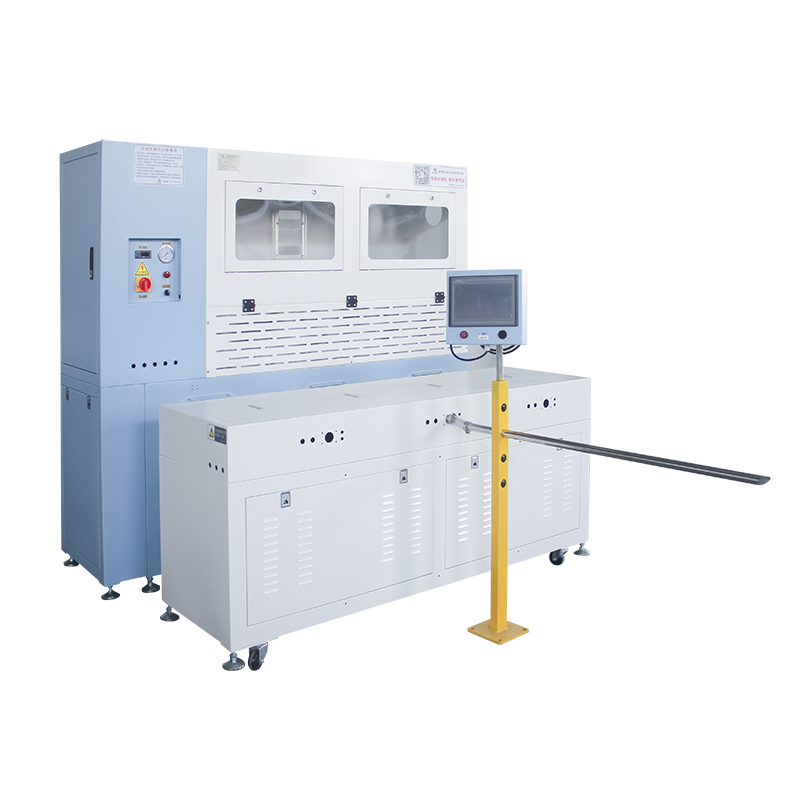
Modern home textile filling machines rely entirely on advanced gravimetric dosing technology. They use high-resolution load cells integrated directly into the holding chambers. These sensitive sensors measure material weight in real time right before injection into the duvet shell. The scales constantly communicate with the central processor. This immediate feedback loop ensures the machine stops dispensing the exact moment it reaches the target weight. Operators no longer guess how much material enters the product.
Software algorithms handle complex dynamic adjustments behind the scenes. The machine must constantly compensate for in-flight material. This phenomenon involves tracking the fill already falling from the nozzle but not yet resting on the scale. Gravity causes a slight delay between dispensing and registering the weight. Modern algorithms calculate this falling mass instantaneously. They instruct the dosing valves to close fractions of a second early. This predictive capability allows the equipment to hit target weights down to a tenth of a gram.
Different materials require distinct handling mechanisms to achieve accuracy. Cohesive materials like synthetic fibers clump together easily. They require aggressive mechanical agitators to separate the strands before weighing. Highly fluid materials like premium down separate and float easily. They require gentle airflow manipulation to prevent damaging the delicate clusters. The weighing mechanics adapt structurally to manage these differing physical properties. A well-designed system prevents material bridging in the hopper while maintaining a smooth, measurable flow.
Buyers often focus entirely on maximum speed claims during procurement. You must look past these superficial numbers to find true value. Ask manufacturers for actual standard deviation data instead. Request logs from continuous production runs using your specific materials. A machine capable of filling ten units per minute holds no value if the weights vary wildly. Standard deviation reveals the true consistency of the weighing mechanism over an eight-hour shift. It shows how often the machine misses the target.
A high-quality textile filling machine features superior load cell isolation. Factory floors naturally produce heavy ambient vibration. Nearby forklifts, stamping presses, and heavy foot traffic create mechanical shocks. These shocks disrupt sensitive weighing components easily. Top-tier equipment mechanically isolates these sensors from the main chassis. They utilize dampening mounts and separate weighing frames. This isolation ensures the load cells only measure the material inside the hopper, not the vibrations of the building.
Data logging ensures long-term operational success and accountability. Modern filling systems must communicate with your broader factory network. ERP integration provides real-time batch tracking across all production lines. Automated reporting simplifies your daily quality control audits. It makes regulatory compliance tracking effortless.
Operator Accountability: Systems log exactly who ran the machine and what parameters they used.
Live Yield Tracking: Managers monitor material consumption rates continuously from their desks.
Traceability: Every finished duvet links back to a specific material batch and precise fill weight.
Automated Alerts: Software flags deviations immediately, preventing large batches of defective products.
Operators face a constant speed versus accuracy trade-off every single day. Increasing cycle times eventually degrades weighing precision. Fast-moving mechanical valves struggle to close sharply enough. Fast-moving air currents disrupt the settling material on the scales. You must find the optimal tipping point for your specific production line. Multi-scale systems effectively mitigate this bottleneck. They prepare the next batch on one scale while the current batch injects from another. This parallel processing maintains high throughput without sacrificing gravimetric precision.
Waste reduction metrics prove the investment value quickly. High-precision weighing reduces rejected units drastically. QA teams spend less time tearing open failed duvets to reclaim materials. You minimize material spillage during the high-pressure injection phase. The machine dispenses exactly what the baffle box can hold, preventing messy blowouts. These specific savings protect your profit margins directly. Every gram saved goes straight to the bottom line.
Automated weighing standardizes the entire production process from start to finish. Facilities can predict scaling accurately. You can add extra shifts seamlessly because the machine handles the complex measurements. You increase overall output without requiring a proportional increase in skilled labor. A novice operator supervising an automated weighing system produces better consistency than a veteran operator using manual methods. This standardization removes the human element from critical quality control steps.
Identify the target fill weight for each specific duvet zone or baffle box.
Calibrate the automated scales using certified test weights.
Run a preliminary batch to establish baseline standard deviation.
Adjust the in-flight compensation parameters based on the preliminary data.
Lock the parameters in the software to ensure standardized production across all shifts.
Adopting automated weighing requires specific environmental prerequisites in your facility. Many production managers overlook essential climate control necessities. High ambient humidity makes natural materials stick to the weighing hoppers. Dry environments create severe static electricity issues. Static skews weighing accuracy drastically by causing synthetic fibers to cling to the sensors. Static also disrupts smooth material flow through the injection nozzles. You must install proper HVAC systems and static elimination bars to achieve the machine's stated accuracy.
Maintaining precision demands rigorous calibration regimens from your maintenance team. Operators must perform frequent tare checks throughout their shifts. Dust and microfibers accumulate on the weighing surfaces constantly. This buildup alters the zero-point of the load cells. Maintenance personnel must schedule deep recalibration sessions weekly or monthly. Strict cleaning protocols prevent material bridging and sensor fouling. You cannot treat a precision weighing system like a simple mechanical blower. It requires care and scheduled attention.
Change management plays a vital role during implementation. You must shift operator roles thoughtfully. Workers move away from manual filling tasks and physical labor. They transition into machine supervision roles. They learn complex exception handling procedures. They execute preventative maintenance routines. Factory leadership must invest in comprehensive training programs. Your staff needs to understand how the weighing algorithms function. They need to know how to read the error logs. Properly trained operators ensure the equipment runs at peak efficiency year after year.
Automated weighing serves as a crucial yield-protection strategy, functioning as much more than a simple speed upgrade.
Precise gravimetric dosing stops material giveaway and protects profit margins on expensive down and synthetics.
Environmental controls like humidity management and static elimination remain non-negotiable for achieving peak accuracy.
Procurement teams must request a live, documented trial using their specific fill materials.
Always verify standard deviation claims through continuous run data before finalizing any equipment purchase.
A: Industry standards generally accept a weight tolerance of ±1% to ±2%. This depends heavily on the specific material and the target weight of the duvet shell. Premium down products usually demand tighter tolerances closer to 1% to protect expensive material costs. Synthetic fills might tolerate slightly broader ranges due to lower raw material expenses. Always verify these tolerances during live equipment trials.
A: Yes, they handle both materials effectively. However, you need interchangeable hoppers or specialized mechanical agitators based on material properties. Down flows easily and requires gentle handling. Synthetic fibers tend to clump and demand robust agitation to separate properly before hitting the weighing scales.
A: Operators should perform basic tare checks daily or even between major production shifts to account for dust buildup. Deep calibration using certified test weights should occur monthly or quarterly. Strict preventative maintenance schedules ensure the sensors remain accurate and isolate any mechanical drift early.
A: No. Gravimetric systems measure exact physical mass, making them highly resilient to variations in loft or fill power. Unlike volumetric systems, which struggle when materials expand or compress unpredictably, a precise scale registers the true weight regardless of how fluffy the down appears.


