

Views: 0 Author: Site Editor Publish Time: 2026-08-06 Origin: Site


The finishing room is often the most labor-intensive bottleneck in garment manufacturing. Minor inefficiencies in inspection and packing easily compound. They turn into major delays. They squeeze your margins tight. Factory managers frequently overlook this critical zone. However, an industrial QC table acts as much more than passive factory furniture. It serves as an active workflow management tool. Engineers design it to standardize output. Upgrading from makeshift workstations to purpose-built inspection hubs changes everything. We will explore how dedicated hubs streamline your daily operations. You will learn to evaluate operational impacts and implementation requirements. You will also discover how to secure a rapid return on investment. Prepare to transform your finishing line. It can evolve from a chaotic endpoint into a highly efficient delivery gateway.
Standardized Workflows: Dedicated inspection stations reduce unnecessary physical steps between final pressing, defect checking, and poly-bagging.
Defect Reduction: Integrated, high-CRI (Color Rendering Index) lighting and contrasting surfaces significantly lower the rate of missed stitching or fabric faults.
Ergonomic Efficiency: Height-adjustable stations reduce operator fatigue, directly correlating to sustained throughput rates at the end of long shifts.
Evaluation Focus: A successful purchase decision relies on assessing modularity, surface durability, and integration with existing material handling systems.
Many standard garment finishing operations struggle daily with baseline issues. High rates of "seconds" often slip into retail shipments. This oversight damages brand reputation. It also invites expensive buyer chargebacks. Cycle times slow down significantly in unoptimized spaces. Makeshift benches force unnecessary movement. Operators waste precious seconds handling every single garment. These lost seconds multiply rapidly across thousands of units.
Improper table heights cause serious physical strain over time. Workers hunch over flat benches for hours. Poor ambient lighting forces them to squint. Operator fatigue sets in long before the shift ends. This fatigue directly increases the margin of error. Visual inspections suffer drastically. Tired workers miss loose threads. They overlook subtle fabric stains. Repetitive strain injuries spike, leading to costly absenteeism.
A workflow upgrade must deliver clear, measurable results. You want a sharp reduction in defect pass-throughs. You need fewer repetitive strain injuries among your staff. You also want a streamlined floor footprint. A proper setup achieves all three goals. It replaces chaos with predictable, standardized movements. Success means your finishing room runs like a synchronized clock.
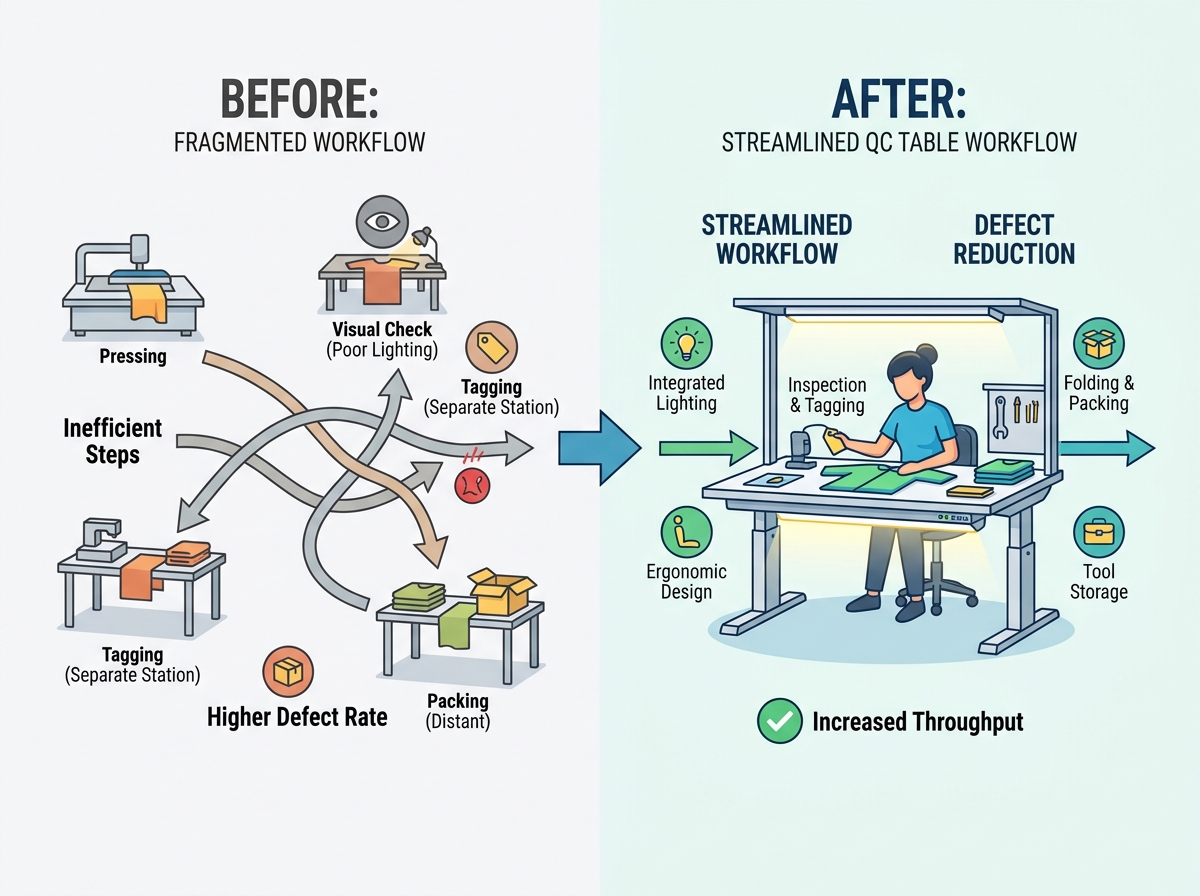
Overhead and under-surface lighting are non-negotiable features. You need adjustable, shadow-free illumination. High-CRI (Color Rendering Index > 90) lights reveal true fabric colors. They help spot needle damage instantly. Operators can quickly identify subtle fabric runs. Under-surface lighting illuminates woven flaws from below. They catch color inconsistencies before the item reaches the poly-bag.
The surface material matters immensely for material integrity. Anti-static laminates prevent dangerous static cling. Smooth stainless steel prevents snags entirely. You cannot risk tearing delicate chiffon or silk garments. Proper surfaces also repel dust and lint. High-pressure laminates resist deep scratches from tagging guns. A pristine surface protects the final product quality.
Height adjustability keeps workers comfortable and alert. They can alternate seamlessly between sitting and standing. Modular add-ons boost daily productivity. You can easily add shelving for tagging guns. You can attach overhead poly-bag dispensers. Measurement decals speed up sizing checks dramatically. Moving from basic wooden benches to specialized equipment changes the game. A dedicated quality control table centralizes these features. It turns a simple desk into a quality assurance powerhouse.
Consolidating the operational flow eliminates wasted motion. We map the standard operational procedure into distinct, controlled phases. A dedicated station supports each of these critical steps perfectly.
Receiving: Operator accepts the pressed garment from the staging cart.
Visual Inspection: Worker checks seams, buttons, and fabric integrity under optimal light.
Tagging: Operator applies retail price tags and brand labels.
Folding: Worker uses alignment guides to fold the item to specification.
Packaging: Operator slips the folded garment into a poly-bag for shipping.
Lean manufacturing principles emphasize minimizing "touches". A well-designed quality inspection table keeps all tools close. Everything sits neatly within a single operator's wingspan. Workers stop walking between distinct QA zones. They stop carrying piles of shirts across the facility. This consolidation slashes the total cycle time per garment.
Table size dictates your production flow strategy. Large tables easily allow bulk batch-processing. Small, modular stations favor continuous single-piece flow. Single-piece flow often reduces work-in-progress inventory. It speeds up the overall delivery time. Modular frames let you switch between these strategies quickly. You gain ultimate flexibility in your finishing department.
Frame strength is critical for durability and load capacity. Heavy-weight garments like denim require robust steel frames. Winter outerwear demands high weight capacities. Light knits need gentle, snag-free surfaces. Evaluate your heaviest product lines first. You must select a frame that prevents wobbling during vigorous folding.
Vendors must supply modular, scalable tables. Your factory layout will undoubtedly evolve over time. You might need to link tables to automated conveyor belts. You might add automated bagging machines later. Future-proofing your initial purchase is essential. Look for pre-drilled holes and standardized mounting brackets.
Electrical compliance prevents dangerous factory fires. Check for proper, built-in cable management. Grounded electrical outlets are mandatory for localized tools. Heat sealers and fabric shavers draw significant power. Ensure strict compliance with regional occupational safety regulations. Exposed wires pose an unacceptable risk to your workforce.
You must justify the upfront purchase cost. Compare the initial price against projected operational savings. You will reduce labor hours per packed unit. You will see fewer buyer chargebacks due to defects. Improved ergonomics reduce expensive medical leave. The table pays for itself through raw efficiency gains.
Evaluation Metric | Makeshift Packing Bench | Purpose-Built Industrial Station |
|---|---|---|
Lighting Integration | External, casts harsh shadows | Built-in overhead and under-surface |
Ergonomics | Fixed height, induces strain | Hydraulic/manual height adjustable |
Modularity | None, tools clutter surface | Overhead rails, tool balancers, shelving |
Durability | Wood warps, laminate peels | Heavy-duty steel, anti-static surfaces |
Managers frequently underestimate required floor space. You need room for the station itself. You also need space for inbound feeding carts. Bins taking away finished goods require clearance. Tight aisles slow down material handlers significantly. Proper space planning prevents a new bottleneck from forming.
Veteran workers often resist new standard operating procedures. They prefer their ingrained habits. Transition training is vital for successful implementation. You must emphasize the direct ergonomic benefits. Show them how the new station reduces daily back pain. This physical relief wins operator buy-in quickly. It builds trust on the factory floor.
Equipment degrades over time without proper care. You need a strict routine maintenance schedule. Here are common maintenance practices you must follow:
Replace degraded lighting: Swap out dim bulbs promptly to maintain inspection accuracy.
Check hydraulics: Inspect height adjustment mechanisms for fluid leaks or stiffness.
Clean surfaces: Wipe down anti-static laminates daily to prevent dust buildup.
Inspect wiring: Check integrated power strips for frayed cords or loose connections.
Streamlining garment finishing requires removing friction from the physical environment. You must optimize the operator's immediate workspace. Dedicated stations eliminate wasted steps and visual fatigue. They turn a disorganized packing area into a highly controlled process.
Investing in purpose-built inspection furniture is incredibly smart. It is a highly quantifiable step forward. It actively protects your fragile brand reputation. It securely protects your factory margins from defect penalties.
Production managers should immediately audit their finishing room footprint. Map out the current physical steps taken per garment. Calculate your existing cost-per-defect thoroughly. Use this hard data to justify your upcoming equipment upgrade.
A: Retrofitting rarely yields optimal results. Standard benches lack integrated under-surface lighting. Add-on lights often create harsh shadows or glare. Older frames rarely support smooth hydraulic height adjustments. Purpose-built frames ensure seamless tool integration and ergonomic stability. Investing in proper equipment provides better long-term reliability.
A: Industry dimensions typically range from 48 to 72 inches in width. Depths usually span 30 to 36 inches. Dimensions must match your specific production needs. The surface must accommodate the largest garment produced flat. Custom sizing prevents operators from wrestling with fabric overhangs during inspections.
A: Most facilities see a return within 8 to 14 months. You calculate this based on throughput increases. Factor in the sharp reduction of labor hours per unit. Add the savings from reduced buyer chargebacks. Defect reduction rates directly boost profitability. Faster packing cycles lower overtime expenses significantly.


