

Views: 0 Author: Site Editor Publish Time: 2026-07-16 Origin: Site


Garment manufacturers today face a severe operational bottleneck. You must rapidly handle diverse, multi-fabric orders to stay competitive. However, dedicating valuable floor space and massive capital to separate spreading lines is no longer a viable strategy. Handling woven materials requires extreme high-speed precision. Conversely, knit fabrics demand strict, tension-free handling to prevent dimension distortion and aggressive edge curling. Ignoring these distinct physics leads to ruined panels and lost profit margins. This guide provides a robust technical and commercial evaluation framework. We will help you select a dual-capability automatic spreading machine. By understanding these core mechanics, you can secure verifiable ROI. You will learn to minimize operator error and streamline your entire cutting room operation perfectly.
A true dual-purpose machine must feature an active tension-free feeding system, not just adjustable speed controls.
Evaluating an automatic knit woven spreader machine requires testing your specific fabric roll weights, widths, and stretch profiles directly with the manufacturer.
Implementation success depends as much on operator training and cutting-room table compatibility as it does on machine specifications.
Smart features (like AI-assisted tension monitoring and automated edge alignment) significantly reduce material waste and accelerate payback periods for small-to-medium garment factories.
Evaluate consolidation carefully before making equipment decisions. Factories often debate buying separate machines for different fabrics. You might think specialized equipment acts as a safer operational bet. However, modern automated technology changes this math completely. Replacing two specialized semi-auto setups with one centralized Automatic Fabric Spreading Machine saves enormous factory space. You reduce machine maintenance contracts instantly. You also streamline your operator training programs significantly. This centralized approach allows your team to pivot between rigid denims and delicate jerseys seamlessly.
Define success by tracking specific waste reduction metrics. Start by closely monitoring your end-loss allowances. Manual spreading often leaves overlapping margins of three to five centimeters per layer. High-quality automated systems cut this waste down to mere millimeters. Next, track the rate of rejected panels. Improper fabric relaxation causes knits to stretch during spreading and shrink after cutting. Precise automation eliminates this mechanical stretch entirely. Your overall fabric utilization improves dramatically as a direct result.
Assess your labor allocation next to understand true value. Transitioning to fully automated spreading shifts labor dynamics profoundly. You move workers away from grueling manual pulling. Instead, they focus on high-value quality control tasks. They transition to machine supervision and fabric roll preparation. This shift reduces physical fatigue across the cutting floor. It also lowers costly error rates late in a shift. You get highly consistent output regardless of the time of day.
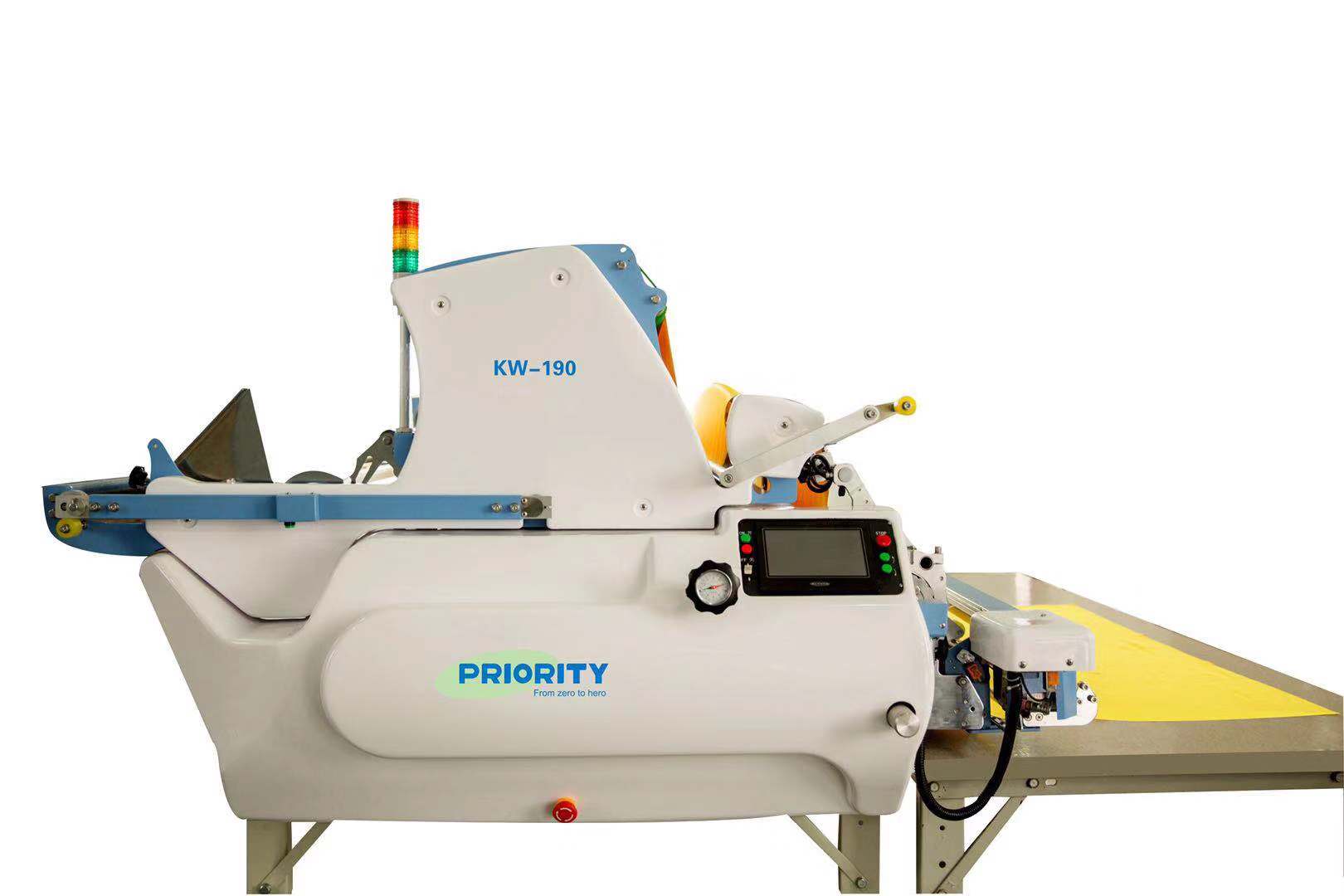
Knits behave exactly like rubber bands. They stretch easily under the slightest tension. Their edges constantly try to curl inward during the laying process. Your machine must possess a highly responsive dancer bar. A dancer bar is a pivoting roller detecting fabric slack instantly. A conveyor-belt feeding mechanism proves equally critical here. These tools prevent any elongation before the blade cuts the fabric. If you pull a knit fabric too hard, it distorts drastically. Once it relaxes on the table, the cut pieces shrink. This ruins your garment dimensions entirely.
Wovens present a very different physical hurdle. They remain rigid and noticeably heavy. They demand high spreading speeds to maintain your daily production targets. Because they do not stretch, edge alignment becomes the primary operational issue. You need robust edge-control sensors. These sensors ensure perfect vertical alignment as the carriage flies down the table. If the edge wanders, you waste precious material on the margins. Fast, precise edge control remains strictly mandatory for wovens.
How do you handle both fabric types effectively? Look for machines boasting modular, interchangeable catching devices. Wovens often need heavy-duty zig-zag catchers. These catchers allow for fast, face-to-face spreading. Knits require tubular or flat tension-free catchers instead. A versatile Fabric Spreading Machine lets operators swap these devices quickly. You cannot compromise on these physical contact points. The hardware must physically adapt to the unique structure of each fabric roll.
Look strictly beyond basic specifications when evaluating hardware. Verify the presence of servo-motor-driven control. Active tension control monitors fabric behavior continuously. It reacts instantly to minor changes in slack. Passive mechanical brakes simply drag against the roll. They are entirely insufficient for modern garment production. You also need dedicated pre-relaxation zones. Vibrating mechanisms are incredibly useful for high-spandex knits. They shake out residual tension before the fabric ever hits the cutting table.
Sensor quality dictates your end-loss waste directly. Evaluate the infrared or photoelectric edge alignment loops carefully. Photoelectric sensors read edges accurately across many different fabric colors and opacities. You must define strict acceptable tolerances upfront. Demand an alignment accuracy within ±2mm. Anything looser wastes too much expensive material. Reliable sensors ensure every layer stacks perfectly vertical.
Hardware requires a highly intelligent brain to perform well. Check for modern PLC touch screen interfaces. They should offer programmable lay lengths and precise ply counts. Step-laying capabilities are crucial for complex marker plans. Consider modern AI-assisted diagnostic features as well. These advanced systems adjust tension dynamically. They read real-time fabric behavior and tweak motor speeds automatically. This smart technology reduces reliance on operator intuition.
Do not ignore basic physical constraints in your facility. Match the maximum roll weight to your standard supply chain inputs. Ensure the machine handles 50kg or 100kg+ rolls based on your usual deliveries. Check the maximum roll diameter limits carefully. Ensure compatibility with your existing spreading tables. Track widths must align perfectly. Decide if you need air-flotation tables to assist operators in moving heavy stacked lays smoothly.
Fabric Type | Primary Challenge | Hardware Requirement | Optimal Spreading Speed |
|---|---|---|---|
Knit Fabrics | Stretch and edge curling | Conveyor feed and dancer bar | Low to Medium (Careful pacing) |
Woven Fabrics | Vertical edge alignment | Photoelectric edge sensors | High (Maximum throughput) |
High-Spandex Blends | Extreme residual tension | Vibrating pre-relaxation zone | Low (Requires vibration) |
Address your realistic footprint needed immediately. A spreader does not operate in total isolation on the factory floor.
You need designated space for loading equipment like fabric roll lifters.
These lifters prevent serious operator injuries during heavy lifting.
You require heavy-duty power routing across the floor.
Ensure your electrical panel handles the sudden power draws of servo motors.
Acknowledge the steep operator adoption curve early. A highly technical Fabric Spreading Machine requires significant team upskilling. Do not expect immediate peak performance from your operators. Plan for a two-to-four-week transition period. During this time, spreading speeds may temporarily dip. Operators must learn entirely new software interfaces. They need to understand dynamic tension feedback loops. Be patient and supportive during this critical adoption curve.
Highlight the daily reality of preventative maintenance needs. You cannot install and forget this complex equipment. Sensor calibration happens regularly. You will need routine belt and blade replacements. Software updates keep the AI features sharp and effective. Choose a vendor offering a highly transparent Service Level Agreement. You must secure access to fast, local spare parts to prevent crippling downtime.
Never buy based purely on glossy spec sheets. Demand a rigorous material test before signing any contract. Send your most difficult knit fabric directly to the manufacturer. Lightweight modal serves as a brilliant stress test. Include your standard woven fabric as well. Demand a comprehensive video-documented test run. Watch closely how the machine handles the edges and fabric tension simultaneously.
Calculate the true payback period strictly based on your operational data.
Factor in the total machine cost clearly.
Add installation fees and necessary training hours.
Offset these expenses by your estimated monthly savings.
Factor in a 2% to 5% reduction in fabric waste.
Include the financial benefit of increased daily ply-cut output.
Prioritize the right manufacturing partner for long-term success. Look for an automatic knit woven spreader machine manufacturer offering remote software diagnostics. This specific feature saves days of costly downtime. Check their proven installation track records thoroughly. Favor highly transparent warranty terms over cheap bottom-line pricing. A cheap machine lacking robust support costs you much more eventually through frequent breakdowns and ruined materials.
Choosing the right machine is ultimately an exercise in risk mitigation. You are matching capabilities to your specific fabrics, not just hunting for the most features. True ROI comes from a specific operational synergy. It blends tension-free mechanics, precise edge alignment, and robust post-purchase support.
Take action today by auditing your current fabric waste metrics. Document your most problematic fabrics causing the highest rejection rates. Contact your shortlisted vendors for tailored time-studies. Demand those video-documented fabric trials before finalizing any purchase order. Proper preparation guarantees a smooth installation and immediate financial returns.
A: Yes. A dual-purpose machine uses modular, interchangeable catchers to handle different fabrics. It employs advanced servo-driven tension motors. These motors actively feed delicate knits without stretching them. For heavy wovens, the system locks in high speeds and relies on rigid edge-alignment sensors to keep the heavy material perfectly straight.
A: You can realistically expect a payback period of 12 to 24 months. This timeline depends heavily on your production volume and specific waste reduction. By saving 2% to 5% on fabric end-loss and reducing rejected panels, the machine pays for itself quickly through material savings and higher daily output.
A: Not entirely. While active tension control minimizes mechanical stretch during laying, it does not change the fabric's inherent chemical structure. Certain high-elastane knits still require standard resting protocols overnight. Your factory's specific quality standards and the exact spandex content dictate whether resting remains necessary.
A: You must measure your current track width exactly. The machine wheels must fit your table rails. Evaluate your table surface friction as well. Heavy wovens drag heavily on standard wood. We highly recommend upgrading to air-flotation tables. They reduce friction and make moving thick, stacked lays significantly easier.


