


Views: 0 Author: Site Editor Publish Time: 2026-07-19 Origin: Site


The cutting room sets the absolute pace for the entire production floor in modern garment manufacturing. It serves as the primary bottleneck where efficiency directly dictates your overarching profitability. If operators move too slowly, downstream sewing lines stall and wait. Conversely, relying on manual laying hides massive operational costs. Workers struggle constantly to maintain consistent fabric tension. They fight uneven edge alignment and rack up high labor hours. Profitable margins demand exact precision, not guesswork. This article provides a comprehensive technical and operational evaluation guide. It is built specifically for production managers looking to scale operations or upgrade legacy equipment. We will explore how modern machinery resolves critical bottlenecks and boosts material yield. You will also learn the exact dimensions needed to evaluate new systems. Read on to discover how automation transforms daily operations and secures your bottom line.
An automatic fabric spreading machine replaces manual unrolling, ensuring consistent tension and precise ply alignment to drastically reduce material waste.
The primary ROI drivers are decreased fabric consumption, elimination of cutting room bottlenecks, and reduced dependency on specialized manual labor.
Evaluating a machine requires matching its tension control and feeding systems to your specific material types (e.g., high-stretch knits vs. rigid wovens).
Successful implementation demands operational readiness, including adequate cutting table preparation and operator training.
An industrial cutting room relies on strict material management. At its core, a fabric spreading machine is a sophisticated motorized system. It unrolls, lays, and stacks multiple plies of fabric onto a long cutting table. The equipment ensures exact length matching and perfect edge alignment. It removes the physical burden from operators. They no longer pull heavy textiles by hand. Instead, they program the desired length and ply count into a control panel. The system executes the task with mathematical precision. This baseline definition separates modern automated solutions from outdated manual tools.
Historically, garment factories relied entirely on manual labor. Two operators would walk up and down a table, pulling fabric from a stationary roll. They eyeballed the alignment. They manually snipped the ends. This method caused high variance and immense physical fatigue. Later, the industry introduced semi-automatic catchers. These motorized units pulled the fabric, but operators still controlled the speed and performed manual end-cuts. Today, the fully automated system dominates the market. It handles ply counting, automatic end-cutting, and continuous edge alignment. Operators simply load the roll and monitor the digital interface. This shift represents a massive leap in daily throughput.
You must understand the anatomy of these systems before making a purchase. Several core components dictate machine performance and reliability. We advise paying close attention to these parts during your evaluation:
The Cradle or Roll Bar: This section holds the raw fabric roll. Advanced models use a synchronized cradle. It supports the entire weight of the roll from below, driving it at a matching speed to prevent pulling.
Edge-Alignment Sensors: Infrared sensors track the selvage edge continuously. They adjust the machine's carriage laterally. This ensures perfectly straight edges on every single ply.
Tension-Control Dancer Bars: These sensitive rollers detect any slack or tightness in the web. They send instant feedback to the feeding motor. The motor speeds up or slows down to maintain a tension-free state.
The Cutting Knife Unit: A high-speed rotary blade travels across the width of the fabric at the end of each pass. It provides a clean, automated end-cut without fraying the material.
Manual spreading operations bleed profits through material waste. Operators struggle to cut fabric at the exact marker line. They usually leave a safety margin of one or two inches at both ends. We call this "end-loss."
Symptom: You notice inconsistent end-loss across your production batches. Uneven edges force the cutting team to shrink the usable marker width. You lose valuable yardage on every single roll.
Solution: Automated systems eliminate human error. Infrared edge-alignment keeps the material perfectly straight. The automated end-cutter slices the fabric millimeters away from the programmed marker limit. Over a stack of 100 plies, saving just one inch per ply recovers significant yardage. This directly boosts your overall material yield.
Handling modern activewear, elastane blends, and knits requires delicate precision. These textiles stretch easily when pulled. They store kinetic energy.
Symptom: Operators stretch high-stretch fabrics during manual laying. They cut the marker. The fabric sits on the table and relaxes. It shrinks back to its original state. Suddenly, your cut garment pieces are too small. You face disastrous sizing issues in the sewing department.
Solution: Upgrading to an Automatic Fabric Spreading Machine resolves these tension issues. Electronic dancer bars synchronize the unrolling speed with the travel speed. The fabric drops onto the table in a completely relaxed, tension-free state. Your garment sizing remains perfectly accurate.
Your production velocity relies entirely on human endurance in a manual setup. Spreading heavy denim or wide technical textiles is exhausting physical work.
Symptom: Operator fatigue sets in mid-shift. Production speeds drop drastically after lunch. Downstream sewing lines run out of cut parts. You experience severe delays.
Solution: A continuous, programmable operation changes the dynamic. The equipment maintains a constant velocity throughout the entire shift. It never slows down. This allows a single operator to manage multiple tables. They focus on quality control and flaw detection rather than strenuous physical labor.
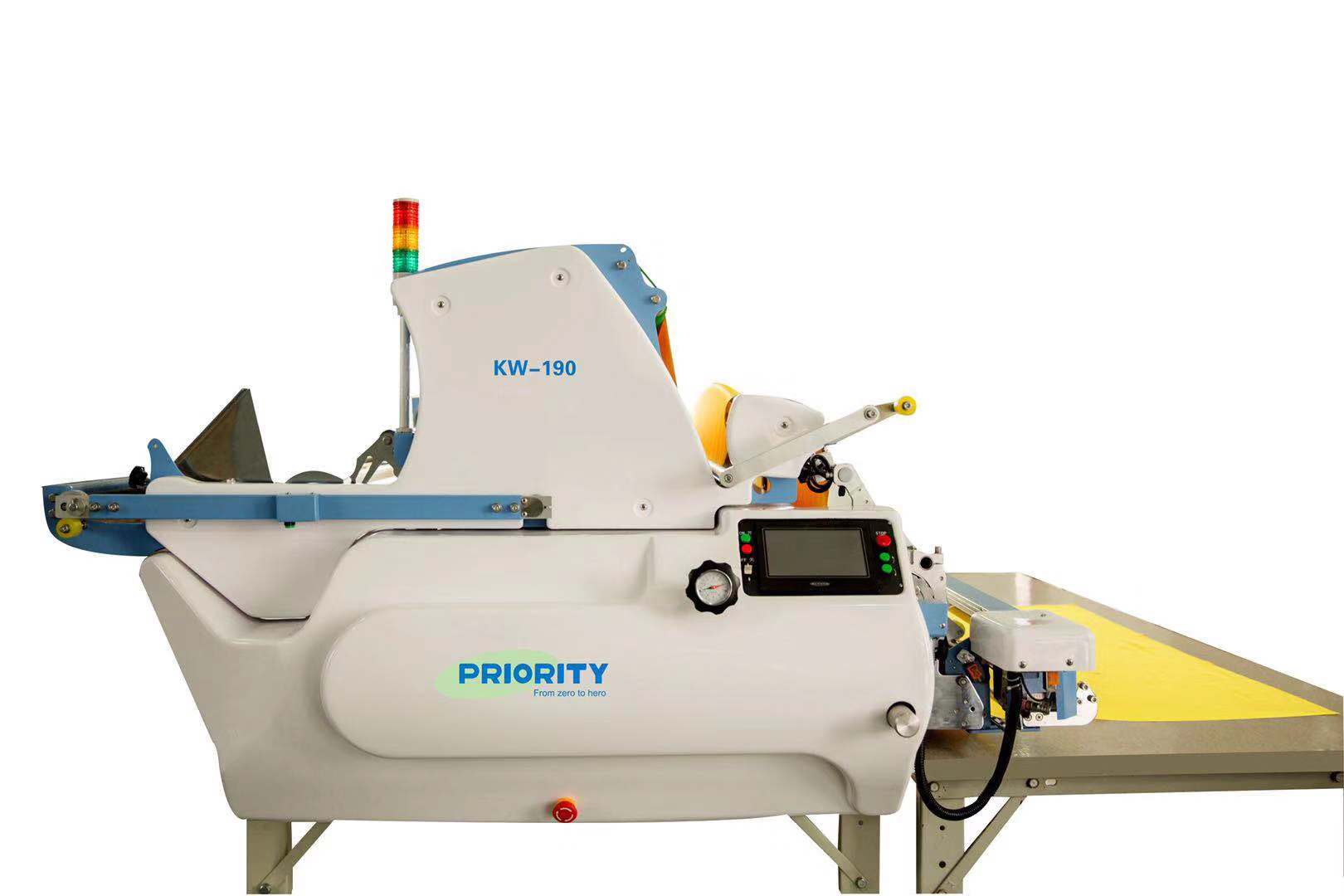
You cannot buy a one-size-fits-all solution. Your primary materials dictate the mechanical feeding system you need. We divide these systems into two main categories: cradle feeds and bar feeds. A cradle feed rests the roll on synchronized belts. It works best for heavy rolls and high-stretch knits. A bar feed runs a steel pole through the center of the roll. It works well for rigid, tightly wound wovens. You must also evaluate specific attachments. Do you process tubular knits? You need a specialized tubular attachment. Do you handle reverse-rolled technical textiles? Ensure the machine accommodates reverse unwinding.
Table: Feed Mechanism Comparison Chart
Feature | Cradle Feed Mechanism | Bar Feed Mechanism |
|---|---|---|
Best Material Match | Knits, Elastane, Slippery Synthetics | Denim, Cotton Wovens, Rigid Canvas |
Tension Control | Excellent (True tension-free unrolling) | Moderate (Requires manual drag adjustment) |
Roll Loading | Easy drop-in loading | Requires threading a heavy bar through the core |
Weight Capacity | Supports very heavy, large diameter rolls | Limited by the strength of the center bar |
Modern equipment relies heavily on intelligent software. You should evaluate the digital interface closely. Look for step-laying capabilities. Step-laying allows the machine to spread different lengths within the same marker stack. It accommodates mixed garment sizes effortlessly. Operators need a clean, intuitive touchscreen. Ask yourself these questions during a demo:
Can the operator easily input the target ply count?
Does the system allow quick adjustments to spreading lengths?
Will the machine automatically shut off when the roll runs empty?
An intuitive interface reduces the training timeline. It empowers operators to execute complex spreading patterns with minimal supervision.
Mechanical strain causes premature breakdowns. You must verify the maximum roll weight and diameter the machine can handle. Pushing a 150kg roll on a machine rated for 100kg burns out the drive motors quickly. Furthermore, evaluate your existing cutting room infrastructure. A high-speed Fabric Spreading Machine requires proper table width. It needs specific track installations. You must also decide between an overhead power rail system or a trailing floor cable. Overhead power rails keep the floor clear and improve safety.
Best Practice: Always measure your absolute heaviest material rolls before engaging a vendor. Use your maximum weight as the minimum baseline for your procurement specifications.
You cannot simply drop new equipment into an old room. Facility preparation dictates the success of your rollout. First, address your cutting tables. They must be perfectly level. A machine weighing several hundred kilograms travels down these tables at high speeds. Even a slight surface dip causes the chassis to derail or the edge alignment to fail. Use laser leveling tools across the entire table length. Second, install robust guide rails. Ensure your facility provides an adequate, dedicated power supply to prevent voltage drops during motor acceleration.
Set realistic expectations for the learning curve. Automation shifts the operator's role fundamentally. They transform from manual laborers into machine programmers and quality monitors. Some veteran workers may resist the digital interface initially. Provide comprehensive, hands-on training. Show them how the technology reduces their physical back strain. Empower them to pause the machine and inspect fabric flaws. High operator buy-in guarantees a smoother transition and fewer mechanical crashes.
Unplanned downtime destroys your daily production schedule. You must establish strict preventive maintenance routines. Dust and fabric lint accumulate rapidly in a cutting room.
Clean the infrared edge-alignment sensors daily with compressed air.
Sharpen the automated end-cutter blades weekly to prevent jagged fabric tearing.
Check the table track alignment monthly to ensure smooth carriage travel.
Lubricate the drive chains according to the manufacturer's manual.
Common Mistake: Ignoring lint buildup on the dancer bars. When lint blocks the sensors, the tension control fails, causing immediate fabric distortion.
Production managers must justify capital expenditures. You build a strong ROI case by tracking three specific metrics. First, measure your daily fabric savings. Calculate the exact inches saved per ply through precise end-cutting. Multiply this by your total plies per day. Fabric represents your highest variable cost. Second, quantify the reduced labor hours. A single automated table often matches the output of three manual tables. Third, measure the increased overall cutting room throughput. Faster spreading means faster cutting. The sewing lines receive parts faster, boosting overall factory efficiency.
Investing in automation transforms your manufacturing baseline. It is not just a simple capacity upgrade. It serves as a comprehensive yield-protection strategy. You eliminate unpredictable end-loss, prevent fabric distortion, and drastically increase daily throughput. Moving away from manual labor stabilizes your quality control and protects your profit margins. We highly recommend conducting a pilot evaluation. Send your most difficult, high-stretch fabrics to a manufacturer's facility. Test them on a demo machine before finalizing any purchase. Watch how the dancer bars handle the material. Observe the edge alignment. Take a clear next step today. Consult with an equipment integration specialist to audit your current cutting room bottlenecks and discover exactly how much yardage you can recover.
A: A semi-automatic model requires operators to manually cut the fabric at the end of each ply and control the travel speed by hand. An automatic machine handles exact ply counting, automated end-cutting, and continuous edge alignment entirely on its own. It operates without direct physical intervention once the sequence begins.
A: Yes, highly versatile models exist. However, handling high-stretch knit fabrics requires specialized "tension-free" cradle feeding systems. Rigid wovens can use simpler bar feeds. You must specify your need for versatile cradle feeds during the initial procurement phase to ensure knit compatibility.
A: You must calculate the total marker length, add the machine's dedicated parking space, and include the fabric catcher space. We advise maintaining a baseline minimum of at least 10 to 12 meters, depending heavily on your specific production volume and typical marker sizes.
A: No. The technology optimizes labor; it does not eliminate it entirely. An operator is still strictly required to program the initial setup, monitor the run for unexpected fabric flaws, and manage the physical roll changes when the material runs out.


