

Views: 0 Author: Site Editor Publish Time: 2026-08-06 Origin: Site


Quality inspection serves as the final defense against costly returns and brand damage in garment manufacturing. Yet, this critical phase frequently becomes the most physically demanding bottleneck on the factory floor. Inspectors must maintain intense visual focus while constantly handling heavy fabric bundles. When workstations fail to support their physical needs, quality suffers immediately. Standard, fixed-height inspection setups force workers into awkward postures for hours at a time. This sustained physical strain leads directly to fatigue-driven errors and high employee turnover rates. Standardized equipment ignores the diverse physical requirements of modern operators. Investing in a purpose-built, ergonomic workstation goes far beyond a simple worker-welfare initiative. It represents a measurable operational upgrade improving defect capture rates and overall throughput. In this comprehensive guide, you will discover how strategic ergonomic adjustments sustain focus, significantly reduce absenteeism, and directly boost your bottom-line return on investment.
Postural fatigue directly correlates with missed garment defects; ergonomic adjustments sustain inspector focus.
A true ergonomic quality inspection table integrates height adjustability, tiltable surfaces, and optimized lighting.
Upgrading workstations reduces absenteeism and musculoskeletal disorder (MSD) related compensation costs.
Evaluating suppliers requires balancing structural durability with specific material flow integration (e.g., heavy denim vs. lightweight knits).
Standardized workstations attempt to treat every operator exactly the same. They also treat every garment type equally. This broad standardization creates a severe mismatch between worker physiology and the daily task requirements. A traditional, fixed-height quality control table forces shorter workers to reach uncomfortably across wide surfaces. Taller workers must hunch over constantly to examine fine stitching details. You quickly see how sustained static loading occurs during long shifts.
When operators lean or strain for hours, their muscles remain in continuous tension. This static loading restricts blood flow and accelerates physical exhaustion rapidly. Physical exhaustion directly causes severe cognitive fatigue. Tired inspectors lose mental focus quickly during repetitive tasks. Consequently, the rate of "escaped defects" passed to clients spikes sharply. Missed flaws ruin client trust and often trigger massive financial chargebacks.
Furthermore, non-ergonomic setups create significant operational drag across the facility. Musculoskeletal Disorders (MSDs) are notoriously rampant in garment factories. Repetitive strain injuries cause frequent medical leave and chronic absenteeism. High turnover in the quality department damages inspection consistency severely. Constant retraining wastes valuable production time and strains supervisory resources. Factory managers lose seasoned, eagle-eyed inspectors merely due to preventable physical pain. Operating with a revolving door of novice inspectors compromises your entire quality assurance program. You cannot maintain strict quality standards when your workforce remains in constant physical distress.
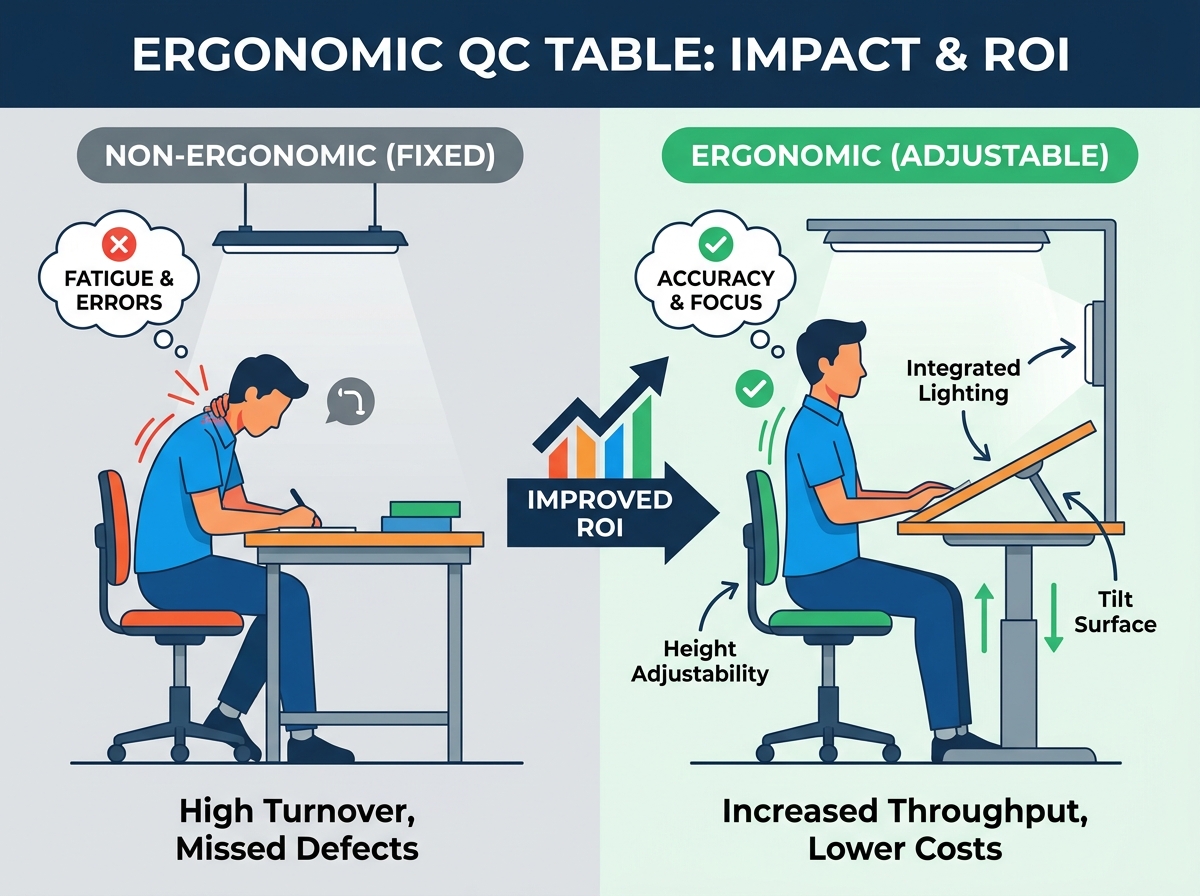
When upgrading your facility, you must evaluate specific functional requirements carefully. A highly effective quality inspection table needs features addressing real human physical limitations. You cannot rely on basic flat surfaces anymore.
Dynamic Height Adjustability: Factory operators range widely in height and physical proportions. Push-button electric or hydraulic sit-stand capabilities are absolutely essential. They accommodate the 5th to 95th percentile of operator heights seamlessly. Quick adjustments must happen rapidly without disrupting the daily workflow. Workers should transition between sitting and standing effortlessly to maintain healthy blood circulation.
Adjustable Surface Tilt: Inspecting large, flat garments like heavy coats strains the neck terribly. Angled work surfaces reduce cervical flexion significantly. Operators can view the entire piece naturally without bending their necks downward constantly. This tilt mechanism improves visual scanning speed immensely.
Integrated, Task-Specific Lighting: Standard ambient factory lights cast harsh shadows across workstations. Purpose-built setups offer dedicated overhead and under-surface illumination. High-quality backlit panels expose fabric flaws and dropped stitches easily. Proper localized lux levels reveal subtle color variations without causing glare-induced eye strain. Adjusting light intensity according to fabric color prevents rapid visual fatigue.
Optimized Reach Zones: Repetitive over-extension damages shoulder joints over time. Ergonomic designs place "Pass/Fail" bins strategically nearby. Marking tools and measurement tapes sit directly within the primary ergonomic reach zone. This careful placement eliminates dangerous stretching completely. Everything the operator needs remains within a comfortable arm's length at all times.
To understand the stark functional contrast, review the operational comparison below.
Design Element | Legacy Fixed Stations | Modern Ergonomic Stations |
|---|---|---|
Height Configuration | Fixed single height forcing unnatural posture | Dynamic sit-stand adjustment via electric motors |
Surface Angle | Strictly horizontal causing severe neck strain | Adjustable tilt mechanisms for optimal visual angles |
Lighting Integration | Reliance on ambient ceiling lights causing shadows | Integrated task lighting and internal backlit panels |
Tool Accessibility | Scattered tools leading to repetitive arm stretching | Optimized primary reach zones for bins and testing tools |
Upgrading to a specialized QC table delivers highly measurable financial returns. You must track specific performance metrics post-implementation closely. Factories typically see a notable percentage increase in first-pass yield accuracy almost immediately. Rested inspectors naturally catch more defects before packaging occurs. Throughput per hour also improves drastically as physical strain decreases. Comfortable workers process heavy garments much faster than fatigued workers. You will notice fewer workflow bottlenecks at the end of your production lines.
Cost avoidance provides another major financial benefit for manufacturers. Ergonomic stations drastically reduce costly worker's compensation claims. Medical leave drops significantly when you successfully eliminate awkward bending postures. You also save heavily on human resources recruitment costs. Replacing specialized inspectors drains operational budgets constantly. Retaining your best talent yields massive long-term dividends.
Finally, modern setups guarantee better regulatory compliance. Global brands conduct rigorous occupational health audits regularly today. They expect strict alignment with international safety frameworks. Adhering to OSHA standards or ILO ergonomics guidelines is no longer optional. Authoritative compliance secures major client contracts safely. Ignoring these vital ergonomic standards puts lucrative vendor relationships at severe risk. Demonstrating a clear commitment to worker health strengthens your brand reputation immensely in a competitive market.
Despite the clear benefits, transitioning equipment involves specific operational challenges. Factory floors usually lack abundant spare room. Ergonomic stations might require a slightly different footprint than legacy static tables. You must plan power routing carefully for motorized height adjustments. Motorized stations need reliable electrical drops nearby. Strict floor space constraints dictate careful layout planning before actual installation begins.
Material handling integration represents another critical hurdle. You cannot isolate the inspection phase from the rest of production. The new equipment must align seamlessly alongside existing conveyor systems. Heavy trolley carts and automated guided vehicles (AGVs) must interact smoothly with the new stations. Planners must calculate the correct transfer heights carefully. Otherwise, you risk creating entirely new material handling bottlenecks.
Worker adoption risks are equally critical to manage. Operators often resist changing long-standing work habits initially. They might leave adjustable features locked in a default position permanently. You must emphasize the absolute necessity of Standard Operating Procedures (SOPs). Comprehensive training ensures workers actually utilize the ergonomic benefits daily. Supervisors should actively encourage operators to change postures throughout their shifts. Ongoing coaching guarantees the equipment delivers the intended physical relief.
Choosing the right equipment supplier requires careful, methodical evaluation. You need partners who understand industrial apparel environments deeply.
Industrial Durability: Garment manufacturing runs continuously under harsh conditions. You must assess the overall frame load capacity strictly. Motor reliability is absolutely vital for continuous multi-shift operations. Weak lifting columns fail under heavy denim stacks very quickly. Demand industrial-grade actuators and robust steel frames.
Customization vs. Off-the-Shelf: Specific garment types demand uniquely tailored solutions. Determine if you require custom surface friction materials. Slippery fabrics might need textured mats. You might need specific backlit panel sizes for delicate knits or sheer materials. Modular shelving keeps essential tools organized beautifully. Off-the-shelf options rarely fit specialized inspection workflows perfectly.
Pilot Testing: Never rush a facility-wide rollout blindly. Operations managers should always demand a single-unit pilot first. Pilot testing allows you to measure real-world impact accurately. Workers can provide valuable feedback regarding light intensity and button placement. You can refine the specifications completely before committing larger capital budgets. Gathering empirical data during a pilot guarantees a successful mass deployment later.
Prioritizing these evaluation dimensions prevents costly procurement mistakes. A proven vendor always provides robust warranties and highly responsive technical support.
An ergonomic workstation successfully bridges the wide gap between human physical limitations and rigorous quality standards. Standardizing on outdated, fixed equipment compromises both worker health and product integrity. Protecting operator well-being ensures long-term operational success and consistently higher profit margins.
Consider these actionable next steps to begin your facility upgrade:
Audit your current quality station dimensions immediately.
Calculate your exact inspector turnover rates and related compensation costs.
Identify specific workflow bottlenecks caused by inadequate task lighting.
Request a professional workstation consultation or a customized spec sheet from a trusted supplier.
Survey your quality staff directly regarding their daily physical discomfort levels.
A: There is no single universal height for these stations. Different operators require different working levels to avoid strain. An adjustable range between 28 inches and 42 inches is necessary. This flexibility accommodates sitting and standing postures comfortably for nearly all workers.
A: Most garment manufacturers see a complete return on investment within 8 to 14 months. This rapid payback is driven primarily by reduced defect chargebacks. Lower employee turnover and fewer medical claims also accelerate the financial returns significantly.
A: Yes. Ambient factory lighting often casts problematic shadows across work surfaces. Localized, adjustable lux levels are absolutely mandatory for thorough fabric inspection. Backlit panels and focused overhead beams reveal subtle flaws easily without straining operator eyes.


