


Views: 0 Author: Site Editor Publish Time: 2026-07-15 Origin: Site


Handling down and feathers presents unique challenges on the factory floor. They are notoriously difficult to manage due to stubborn static electricity, highly variable cluster sizes, and the steep cost of material waste. When working with high-end apparel or bedding, every lost gram hits the bottom line directly. Scaling your textile manufacturing forces a critical operational choice. You must weigh the low upfront cost of manual labor against the high capital expenditure of specialized automation. Sticking with manual processes often strains long-term profitability as volumes rise, yet automation requires significant structural shifts in your facility. This guide directly evaluates both methods to clarify your best path forward. We examine them strictly on production volume, accuracy, long-term return on investment, and implementation realities. By the end, you will understand exactly when to switch and how to justify the operational upgrade.
Manual filling remains viable only for bespoke, highly customized, or extreme low-volume production lines where equipment ROI cannot be justified.
Transitioning to an automatic down filling machine typically reduces material giveaway by 5–15% through precision weighing (often accurate to within 0.01g).
Automation requires a shift in factory floor management, moving from managing manual laborers to maintaining pneumatic systems and calibrating load cells.
The break-even point for investing in automated equipment usually aligns with a production threshold of 300+ garments or bedding units per day.
Many facilities start their journey with manual operations. This approach requires zero capital expenditure and allows for immediate deployment. You also gain unmatched flexibility on the floor. Human workers adapt instantly to highly irregular product shapes, complex baffle designs, or on-the-fly custom repairs. You avoid installing heavy machinery, securing three-phase power, or running industrial air compressor lines.
However, relying extensively on human hands carries steep hidden production costs. These expenses compound silently over time, often eroding the margins of your premium product lines.
Material Waste (Giveaway): Operators naturally overfill garments. They do this intentionally to avoid failing strict quality control checks. A worker might add just three extra grams per baffle. Across a jacket with twenty baffles, you lose sixty grams of expensive material. This slowly drains profitability, especially when handling premium high-fill-power down.
Inconsistent Quality: End-of-shift operator fatigue leads directly to fluctuating fill weights. This results in uneven garment insulation. One jacket might feel exceptionally warm and robust, while the next suffers from severe cold spots. Customers notice these inconsistencies immediately.
Environmental & Health Factors: Manual handling inherently releases high levels of particulate matter into the factory air. This environment requires extensive and costly ventilation systems. It creates uncomfortable, messy, and potentially hazardous working conditions for staff on the floor, leading to lower morale.
Common Mistakes: Managers frequently fail to track daily material waste accurately. They often ignore small overages on individual garments. They do not realize these tiny discrepancies compound into massive financial losses over a standard production quarter.
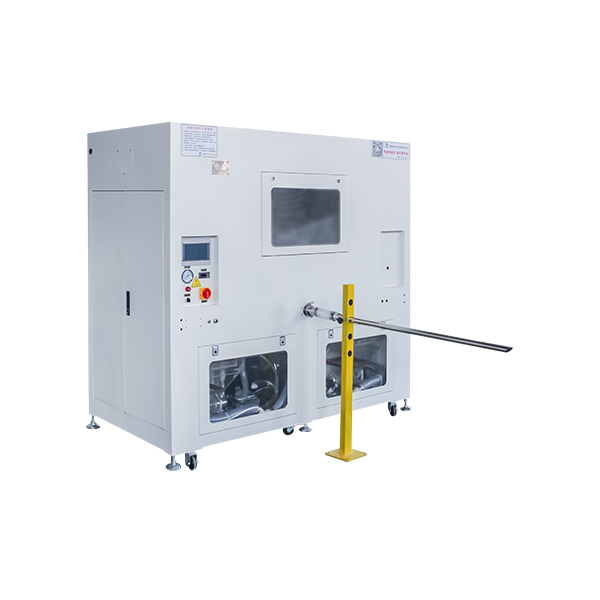
The shift to mechanical filling transforms your entire production floor. Installing a dedicated down filling machine removes the unpredictability of human handling. It replaces guesswork with absolute digital precision.
Mechanics of Automation: Modern systems rely on advanced pneumatic technology to transport materials safely. They utilize gentle vacuum suction, active anti-static chambers, and high-precision load cells. These components work together to eliminate physical handling entirely. The machine pulls material directly from bulk storage. It neutralizes static electricity so feathers do not stick to the chamber walls. Finally, it injects the material seamlessly into the garment.
Speed and Throughput: Automation fundamentally changes how you measure productivity. You transition from tracking progress in "minutes per baffle" to "seconds per port." High-speed injection nozzles drastically increase your total units processed per hour. A single machine operator can easily achieve the output of several manual workers. This parallel processing provides a massive operational speed boost.
Precision Weighing: Accuracy defines modern automated equipment. Advanced multi-scale systems isolate exact target weights before the injection cycle even begins. While one scale injects material into a garment, a secondary scale simultaneously weighs the next batch. This continuous cycle ensures exact compliance with your technical pack specifications. You get perfectly consistent insulation profiles across every single product run.
Best Practices: Always match your injection nozzle size to the specific garment port. Using an oversized nozzle restricts proper airflow. This slows down the injection cycle and risks damaging the fabric during insertion.
You need clear criteria to decide between manual labor and automation. Each factory possesses unique constraints regarding floor space, budget, and product variety.
Manual operations cap out very quickly. Scaling up requires linear increases in both factory floor space and payroll. If you want to double production, you essentially need twice the tables and twice the staff. Automated systems feature exceptionally high output limits. Scaling an automatic line merely requires optimizing how you supply raw materials to the machine. You accelerate upstream processes rather than adding headcount.
Manual filling typically yields a ±2g to ±5g variance per baffle. Automated systems drop this variance dramatically to ±0.1g or even ±0.01g. You must calculate these cost savings directly against the current market price of wholesale down. The savings generated from strict accuracy often pay for the machine faster than the labor savings do.
Manual lines require high headcount. This inevitably leads to high turnover rates, continuous recruiting, and endless onboarding cycles. Automation reduces your filling headcount by up to 80% per station. However, the skill requirement shifts. You now need one or two trained operators capable of navigating digital software, reading technical packs, and performing minor mechanical troubleshooting.
Modern factories rarely handle just one single material type. A broader Textile Filling Machine proves invaluable in these environments. Top-tier equipment expertly handles varying ratios of down, feathers, and synthetic poly-fill. You can switch between materials without requiring complete mechanical overhauls. You simply adjust the vacuum pressure and update the software parameters.
Evaluation Metric | Manual Filling | Automated Filling |
|---|---|---|
Volume Scalability | Low (requires proportional staff increases) | High (optimizes material supply chains) |
Weight Accuracy | ±2g to ±5g variance per segment | ±0.1g to ±0.01g variance per segment |
Labor Dependency | High headcount, constant turnover risk | Low headcount, specialized software training |
Material Waste | High (systematic overfilling to pass QC) | Negligible (exact parameter adherence) |
Upgrading your production line introduces entirely new operational realities. Buyers often underestimate the environmental and structural changes required to support advanced machinery.
Sophisticated equipment cannot operate in a vacuum. It relies heavily on consistent, moisture-free compressed air to function correctly. You must also implement strict climate control within the facility. Proper humidity management prevents aggressive static buildup. Left unchecked, static causes down clusters to clump together and clog the feeding tubes.
You must redesign your entire workflow during the transition phase. The automated filler works incredibly fast. Therefore, your cutting and sewing stages require dramatic acceleration. The operational bottleneck shifts immediately from filling to closing. If upstream processes lag, your expensive filling machine will sit idle waiting for open garments.
Automated lines demand rigorous, disciplined upkeep. Moving parts, vacuum filters, and injection nozzles need daily cleaning protocols. Unplanned downtime on an automated machine halts production completely, whereas a sick manual worker only slightly reduces output.
Strict maintenance protocols prevent catastrophic downtime. Adhere to the following routine:
Inspect and empty dust collection filters before beginning every shift.
Calibrate the electronic load cells weekly to guarantee absolute weighing precision.
Drain moisture traps in the air compressor lines daily to protect the pneumatic valves.
Wipe down anti-static chambers to prevent material bridging and blockages.
Knowing exactly when to make the technological leap prevents costly missteps. You must align your investment timeline with realistic production milestones.
Stay Manual If: Your daily production consistently remains under 100 units. It also makes strategic sense if labor costs in your specific operating region are exceptionally low. Additionally, if you frequently manufacture highly irregular, non-standard shapes, manual labor offers unmatched dexterity. Small repair workshops and bespoke tailoring studios rarely benefit from massive automation.
Upgrade to Automatic If: You process premium goose down where material waste destroys profit margins. Output exceeding 300 units daily strongly justifies the upgrade. If your quality control rejection rates keep climbing due to inconsistent weights, automated precision becomes necessary. Furthermore, if you pursue stringent compliance certifications requiring precise digital weight tracking, investing in an Automatic Down Filling Machine is mandatory. It provides the exact data logging and repeatability needed for international textile standards.
Moving to automated filling involves much more than just replacing physical labor. It represents a fundamental strategic shift toward standardizing material costs and tightening quality control. Automation transforms unpredictable, variable expenses into predictable, tightly managed workflows. Most importantly, it safeguards your most expensive raw materials from daily operational waste.
Your immediate next step requires precise data collection on the factory floor. Audit your current daily material waste immediately. Calculate the exact financial cost of manual overfilling across a standard production week. Use this hard data to establish a baseline return timeline. Doing this prepares you perfectly before you engage any equipment vendors. You will enter negotiations knowing exactly what performance metrics you need to hit sustained profitability.
A: Most operators achieve basic proficiency within three to five days. Training focuses heavily on software navigation, inputting tech pack parameters, and managing nozzle changes. Mastering routine troubleshooting and load cell calibration typically requires an additional two weeks of supervised on-the-job experience.
A: Yes, many modern units are highly versatile. They seamlessly handle premium down, feather blends, and synthetic poly-fill. However, switching materials requires thoroughly purging the storage silos and adjusting the anti-static settings. Synthetic fibers behave differently under vacuum suction than natural down.
A: Automated systems demand clean, dry, and stable compressed air. You typically need a rotary screw compressor delivering between 0.6 to 0.8 MPa of pressure. A refrigerated air dryer is also mandatory to prevent moisture from entering the pneumatic lines and ruining the raw down.
A: High-quality machines use gentle vacuum suction and enclosed mixing chambers. These features preserve the natural cluster structure. Unlike aggressive manual stuffing, this aerodynamic transport method prevents cluster breakage. It ensures the down retains its intended fill-power and maximum loft once inside the garment.
A: Daily maintenance involves cleaning vacuum filters and wiping anti-static surfaces. Weekly tasks include load cell calibration and inspecting pneumatic hoses for minor leaks. Monthly schedules require deeper mechanical checks, such as lubricating moving parts and testing the air dryer's efficiency to ensure uninterrupted production.


