

Views: 0 Author: Site Editor Publish Time: 2026-07-12 Origin: Site


Scaling down-insulated product lines introduces severe manufacturing challenges. Production managers consistently face material waste, inconsistent filling weights, and extreme labor dependency. Manual stuffing simply cannot keep pace with modern retail demands. Over the past decade, textile manufacturing evolved rapidly. We moved from chaotic hand-stuffing to high-precision automation. A modern down filling machine acts as more than a basic material transfer tool. It operates as an advanced precision-weighing system. This equipment ensures strict product compliance in outerwear and bedding production. By eliminating human error, it protects your material margins. Product uniformity becomes guaranteed rather than merely hoped for. You will learn how upgrading to automated technology transforms daily operations. We explore the complex mechanics behind these systems. We also examine distinct operational modes and outline the most critical evaluation criteria for facility upgrades.
Core Function: Automates the extraction, weighing, and injection of down, feathers, and synthetic blends into product baffles.
Primary Applications: Distinct operational modes for multi-chamber garments (puffer jackets, vests) versus high-volume bedding (quilts, sleeping bags).
Business Impact: An automatic down filling machine reduces material variance to sub-gram levels, cuts labor costs, and minimizes workplace hazards (dust and static).
Evaluation Priority: Purchasing decisions should index heavily on weighing accuracy, anti-static capabilities, and software integration (programmable recipes).
Many textile facilities struggle to scale their operations successfully. The root cause usually traces back to outdated manual stuffing methods. Operating without an Automatic Down Filling Machine creates immense production bottlenecks. Understanding these limitations helps justify equipment upgrades.
Manual filling inevitably leads to massive material variance. Operators often overfill garment baffles just to meet minimum weight specifications safely. Industry experts call this practice "giveaway." Giving away premium 900-fill goose down destroys your material margins rapidly. Conversely, underfilling creates severe cold spots in the garment. These cold spots lead to rejected batches during quality control. They also damage your brand reputation when products reach consumers. Precise weighing eliminates both extremes immediately.
Natural goose and duck down behave unpredictably in open environments. They possess high static electricity. This triboelectric effect causes delicate clusters to cling to nearby surfaces. Furthermore, raw down contains airborne dust. This dust creates significant respiratory hazards for floor workers. Clumping disrupts even distribution inside the baffle. More importantly, aggressive manual handling damages the material. When human hands force down through small openings, they crush fragile down clusters. This physical damage directly reduces the final product's loft and fill power.
Human operators always hit a strict mathematical ceiling regarding speed. Hand-weighing on standard bench scales takes considerable time. Stuffing the material manually slows the line further. High-season production runs demand rapid, continuous output. Manual lines fail entirely under this pressure. Workers experience fatigue, and their accuracy drops sharply as the shift progresses. Automation breaks this speed ceiling completely. It maintains identical cycle times from the first minute of the shift to the last.
Textile manufacturing requires highly specific approaches for different consumer products. High-end equipment must adapt quickly to specific product geometries. The workflow for a winter coat differs vastly from a king-sized quilt.
Apparel demands high-frequency, low-weight micro-filling. Jacket patterns feature highly complex, asymmetrical baffle designs. A single jacket baffle often requires precisely 1g to 10g of material. Precision remains paramount here. The solution relies on specialized mechanics. Factories utilize small-diameter nozzles to navigate tight fabric channels. Dual-scale precision systems weigh tiny material amounts continuously. Rapid start-stop cycles allow operators to fill complex apparel patterns swiftly. The machine tracks exactly which baffle needs filling next.
Bedding workflows look entirely different. Quilts require large volume, continuous bulk filling. The filling material needs even distribution across extremely wide surface areas. To manage this, specialized machines utilize high-capacity bulk hoppers. Larger injection ports handle heavy bursts of down smoothly. Many advanced facilities integrate automated spreading tables. These tables support bulky, heavy bedding items physically. This integration prevents operator shoulder and back fatigue during long shifts. Workers simply guide the large nozzle while the table supports the fabric weight.
Application Category | Typical Fill Volume | Preferred Nozzle Size | Core Operational Requirement |
|---|---|---|---|
Multi-chamber Apparel | 1g to 15g per baffle | Small (10mm - 20mm) | High-frequency start/stop cycles |
Winter Outerwear | 15g to 50g per panel | Medium (20mm - 30mm) | Strict anti-static control |
Premium Sleeping Bags | 50g to 200g per chamber | Large (30mm - 50mm) | Even bulk distribution |
Comforters & Quilts | 200g+ continuous flow | Extra Large (50mm+) | Automated table integration |
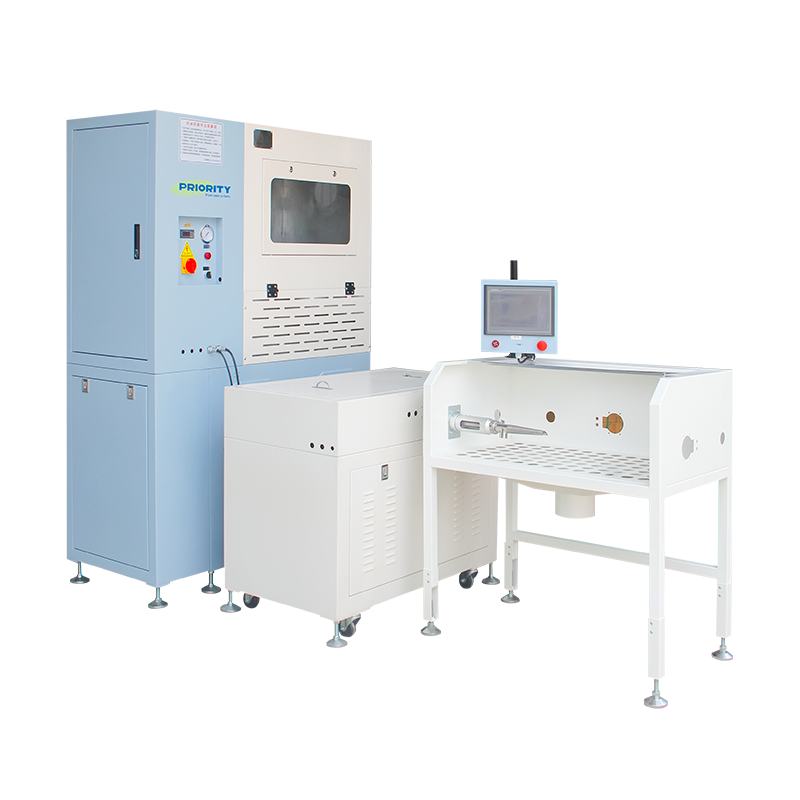
How does a high-end Down Filling Machine actually work? Modern automated systems rely on incredibly precise engineering. They protect fragile raw materials while maintaining aggressive production speeds. Every internal component plays a specific role.
Bulk bales of raw down arrive densely packed. Extracting this material requires care. Machines use gentle vacuum suction to pull the material. This suction moves down into the main weighing chamber safely. Internal agitator arms then rotate slowly. They loosen the compressed material gently. They ensure delicate clusters do not crush or break apart. This preserves the essential insulating trapped air space.
Overall accuracy depends entirely on advanced load cells. These crucial modules sit inside physically isolated weighing boxes. This isolation protects the sensitive strain gauges from external factory floor vibrations. High-end systems routinely achieve incredible 0.01g accuracy. Such micro-precision is impossible to replicate manually. The cells calibrate constantly to account for tiny environmental shifts.
Static electricity acts as the primary enemy of down processing. It makes the material cling stubbornly to acrylic machine walls. It also sticks to the product's outer fabric. To combat this triboelectric effect, machines employ industrial ionization bars. These bars release a corona discharge. This neutralizes static charges instantly. Following this, regulated compressed air management pushes the down smoothly. It glides through the nozzles without bunching.
PLCs serve as the entire system's brain. They store specific product "recipes" securely. For instance, an operator needs to fill Jacket Model A. This jacket requires 15 distinct baffle weights. The PLC stores this exact sequence. Operators select the recipe on an intuitive touchscreen. The machine adjusts its targets instantly for seamless product changeovers. You eliminate the need for paper spreadsheets entirely.
Selecting the right equipment requires careful technical analysis. Facility managers must evaluate several critical factors before finalizing any purchase. Not all machines perform equally across different textile categories.
Material Compatibility: Verify the equipment handles your specific insulation blends. Pure 90/10 goose down flows quite differently than synthetic alternatives. Ensure the system processes ball fiber or chopped polyester cleanly. It must do this without jamming the internal agitators.
Throughput vs. Accuracy Trade-offs: Assess the manufacturer's stated cycle time carefully. Calculate exactly how many ports operate per minute. Balance this theoretical speed against the guaranteed weight tolerance. Pushing mechanical speeds too high sometimes reduces weighing precision.
Footprint and Facility Requirements: Measure your existing factory floor plans thoroughly. Match the machine's physical dimensions to your available space. Consider vertical ceiling height requirements carefully. Bulk hoppers often stand quite tall. Calculate industrial air compressor needs accurately beforehand.
Compliance & Safety Standards: Validate all applicable CE or ISO certifications. Dust extraction efficiency matters greatly for long-term operator respiratory safety. Confirm that internal electrical safety ratings meet your local municipal codes perfectly.
Installing complex automation requires substantial facility preparation. Dropping a machine onto the floor represents only the first step. You must manage several environmental and personnel variables to ensure success.
Down processing demands a strictly climate-controlled room. High ambient humidity causes down clusters to clump heavily. Conversely, extreme environmental dryness creates massive static electricity buildup. Both extremes disrupt delicate sensor calibration severely. Maintaining stable temperature and relative humidity remains mandatory. Managers should isolate the filling department from open warehouse doors.
These units rely extensively on robust pneumatic networks. Utilizing shared-line air compressors presents significant operational risks. If another heavy machine triggers a sudden pressure drop, your filling accuracy suffers immediately. Facilities need dedicated, strictly moisture-free air lines. You must install high-quality air dryers near the compressor.
Transitioning staff takes considerable patience. Workers move from straightforward manual labor to technical machine operation. Training should focus heavily on proper, ergonomic nozzle handling. Operators must master touchscreen recipe management confidently. They also need to learn how to clear minor material blockages safely and quickly.
Routine mechanical care prevents disastrous mid-season downtime. Maintenance staff must follow strict protocols.
Establish rigorous daily cleaning schedules for the internal weighing chambers.
Replace specialized dust extraction filters at manufacturer-recommended intervals.
Execute load cell recalibration protocols weekly to maintain strict sub-gram accuracy.
Inspect internal ionization bars closely to ensure anti-static functions remain fully active.
Upgrading to modern automated equipment marks a fundamental operational shift. You transition away from chaotic, labor-intensive assembly. You embrace data-driven, precision manufacturing. When finalizing your vendor selection, always base decisions on verifiable accuracy data. Match your specific product portfolio strictly to the equipment's proven capabilities. Evaluate carefully whether you require agile micro-filling for jackets or bulk continuous flow for bedding. Always confirm the long-term availability of localized technical support and spare parts.
To move forward successfully, schedule a comprehensive factory audit soon. Request a live material test run using your facility's specific insulation blend. Contact equipment sales engineers to calculate tailored performance metrics based on your exact seasonal production volumes.
A: Yes, multifunctional machines do exist. However, they typically require specific hopper and nozzle changeovers. Synthetics behave differently than natural goose down regarding friction. Swapping internal components prevents cross-contamination. It also ensures the machine handles varying static levels properly without jamming the feed mechanisms.
A: The standard tolerance typically ranges from ±0.1g to ±0.5g. This exact variance depends heavily on the machine's tier and the raw material's quality. Environmental factors play a massive role. High ambient humidity or excessive static electricity negatively affects sensor calibration if left unmanaged.
A: Usually, one well-trained operator easily manages one to four filling ports simultaneously. This specific setup drastically reduces the total headcount compared to manual stuffing lines. The automated weighing cycles free the operator to focus purely on rapid garment positioning.
A: You must supply industrial-grade three-phase power. Additionally, the system requires a robust, strictly moisture-free compressed air line. Proper room ventilation and dedicated dust collection systems are essential. They protect operator health and keep sensitive weighing sensors free from airborne particulate buildup.


